
Training

All things training. Mostly advice and tips but maybe questions, general comments, or who knows what else.

Recovery aids

This article was originally posted by Ryan at the original HillRunner.com Blogs.
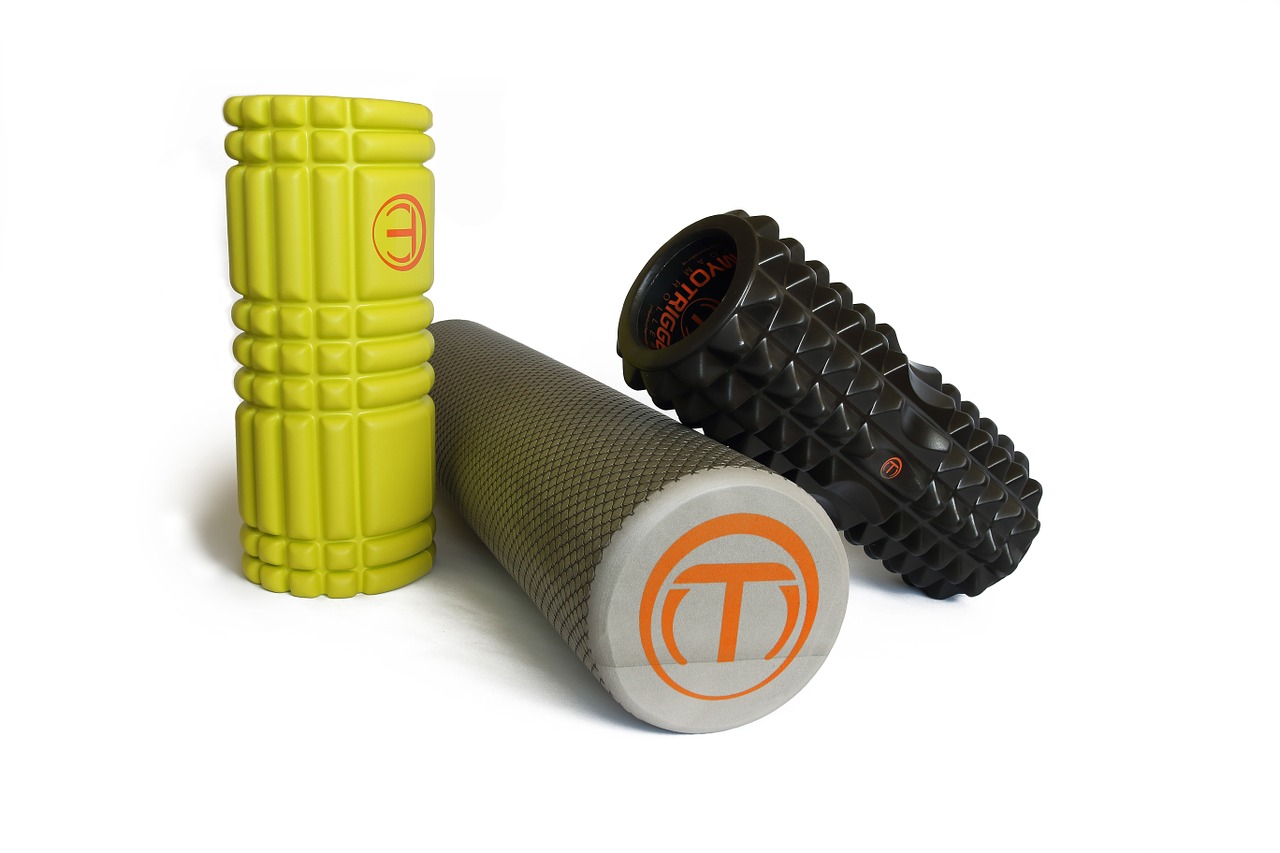
This spring, a runner I coach sent me this article and asked my opinion on it. Here’s how I answered (with a few edits and extra references).

I used to jump in the ice bath after every run. I used to ice anything that bothered me in the least and I’d take NSAIDs whenever something seemed wrong. I’d take antioxidants twice a day on my doctor’s advice.

Once I got out of college and didn’t have 50 gallon barrels and whirlpools with chest freezers full of ice right next to them and all the other resources of your typical collegiate training room, a lot of the “routine rehab” I did fell to the wayside. I just didn’t have the resources and facilities to make it easy and, after working an 8 hour day and spending 2+ hours a day running, didn’t have the time or energy to make it happen. You know what? I was just fine. I was running better than ever. So I looked at other things. I looked at icing every little thing that bothered me. I kept icing things that seemed like major problems but I didn’t ice everything that came along. Those little things cleared up just as quickly without ice as they did with.

Even earlier, I read a story of a runner who died from medical complications that were caused by his daily use of NSAIDs and I swore off using them as soon as I finished reading the story. Unfortunately, this was before every story was on the Internet and I can’t find it online but I do think this story points out some of the concerns.

Interestingly, alternating ice and heat was something I first heard about back in the early 90s. The idea was to reduce inflammation with the ice but increase blood flow with the heat. For probably over a decade, I have heard very little about it but it always seemed to work better for me than straight ice.

More recently, in the last 2-3 years give or take, there has been a lot of talk about whether these recovery aids really help us or lessen the training effect. In short, inflammation and muscle damage are the result of training stress and it’s the process of recovering from these things that stimulate our bodies to rebuild stronger. If we use all kinds of aids to lessen these things, are we affecting the stimulus and the response of our bodies? Here’s one example of this discussion.

Where I am now:

Personally, I’ve stopped taking antioxidant supplements. I try to get everything I need from my diet and there is reason to believe that mega doses may lessen the body’s response to training. Essentially, you’re sabotaging your training if this is the case. Besides, there are side effects to mega doses that are coming to light and aren’t very good.

As for ice and heat, I only do so when I have a problem that seems to be an impending injury. Then I alternate ice and heat on the problem spot. I haven’t done an ice bath since I graduated from college, although I can see the benefit of a post-race ice bath.

NSAIDs are out of the discussion for me. More hazard than they are worth.

One thing I am becoming interested in is hydrotherapy and compression in general. If you think about it, hydrotherapy is in many ways compression. Getting waist deep in water is essentially the most effective pair of compression pants you can find. Personally, I think simple low tech hydrotherapy of spending time with at least your legs submerged in water can make a big difference for runners. Whether the water is hot, cold or just right isn’t as important as the compression of the water on your legs. Whether I’m in a whirlpool with jets massaging my muscles or a swimming pool playing with my daughter doesn’t matter and I don’t have to tell you which one I can spend more time doing.

I’m also becoming more interested in compression socks for the same reason and because we don’t always have a pool available.

Now, I’m not sure if there will be a debate coming in the future about compression having the same drawbacks as ice baths but it’s an interesting technique and some of the concerns seem to be removed.

Finally, foam rolling and massage are widely accepted as very positive with, as of now, no negative side effects.

So what does this all mean in 5 sentences or less? I think ice baths are overrated, maybe useful after a race but overused in general training. Alternating ice and heat on a potential injury can be helpful but not on every little thing that comes up. NSAIDs are generally bad if used with any consistency. Massage and foam rolling seem to be very good and compression via socks or spending time submerged in water look promising. Hey, I got it all out in less than 5 sentences!


Recovery aids Read More »

The next big thing in running shoes

This article was originally posted by Ryan at the original HillRunner.com Blogs.

Yesterday, we were introduced to some new shoes we can expect to see in 2014. These introductions pointed us toward what may be the next trend in running shoes. It looks like the next big thing will be relatively lightweight, highly cushioned shoes.

Here are a couple promotional images of the upcoming Brooks Transcend:

Image

Image

So what’s going on here? We go from "barefoot" shoes to shoes with about as much cushioning as you could imagine putting in a shoe. I see two things going on that kind of fit together to make this a fairly unsurprising event.

First, the pendulum effect. The market went to an extreme with Vibram FiveFingers and similar shoes with little or, in some cases, no midsole at all. Those shoes worked for some people but others got hurt. Now, the market is going to go to the other extreme.

Second, much like Vibram gained enough market share to catch the eye of the more mainstream brands and set the minimalist trend on its way, a brand is doing the same in this market. Hoka is a brand I had never heard of until somewhat recently but it’s doing just what Vibram did. It came to market with a shoe that is distinctively different than any other shoe out there right now, much in the same way Vibram did. It’s gaining a base of fans who swear by it as the one shoe that works for them, much in the same way Vibram did. Now, mainstream manufacturers are beginning to take a page from the Hoka playbook, much in the same way they did with Vibram.

So what should we make of this new trend? Probably about the same as we should make of the minimalist trend. It will probably last a relatively short time, during which great claims will be made. Many people will try the shoes, they will work for some but they will not for others. For some, it will become like a religion and they will swear these are the shoes everyone should be using and that those who had problems with the shoes were just not doing it right. For some, it will become just the opposite. They will say people are harming themselves by even trying those shoes. The truth will be somewhere in the middle. Major brands will jump on the bandwagon and rush new shoes to market. They will for the most part be lagging, though, and come to market mostly at the end of the rush.

In the end, I hope – just as I do with the minimal market – that this will become a new niche segment of the overall shoe market. Some people will be helped by shoes like these and they should be available for these people. Others will find their corner of the market.

The next big thing in running shoes Read More »

Lydiard misconceptions explained

This article was originally posted by Ryan at the original HillRunner.com Blogs.

Note: I originally wrote this several years ago. While I may write it slightly differently now if I were to rewrite it, I want to preserve this as it was originally written.

Over the years since becoming familiar with the Lydiard style of training, I’ve come across several misconceptions of his methods. The two most popular misconceptions are that Lydiard is all about long, slow distance (LSD in running terms) and that his methods are outdated. However, the misconceptions go well beyond that. I must admit, when I first learned of Lydiard, I fell in the trap of believing some of the misconceptions, mainly that Lydiard is all about LSD.

Because of the widespread misconceptions and because I believe Lydiard’s philosophies are so important for competitive minded distance runners, I’d like to discuss the two most popular misconceptions, a little about why I believe they came into being and explain why they are false. Throughout this article, I will be referencing what I consider to be the premier online Lydiard resource, the Lydiard Clinic.

Lydiard is all about long, slow distance: I’ve found this to be the most popular misconception of the Lydiard principles. It seems like a significant number of people have come to this conclusion and are spreading it like wildfire.

I believe this misconception comes from the fact that very few people actually talk about base training. Lydiard, recognizing that base training is where champions are made, focused quite a bit of time on this in his discussions. In fact, because most "gurus" gloss over base training at best or, more likely, completely ignore the topic, Lydiard seemed to be the only one talking about it. As a result, the biggest difference between Lydiard and others was his thorough discussion of the importance of base building. Is it any surprise that people hear the name Lydiard and instantly think base which, to most people, means lots of long, slow miles?

There are two facts here to consider. First, base building is indeed important. Show me a successful runner who has never established a base and I’ll show you a runner who could be much more successful than he or she is. Second, while Lydiard focused more on base than most people, that does not mean that is all he focused on. When it was time to run hard, nobody – past or present – would promote as much intensity as Lydiard did. The Lydiard program is all about balance. When it’s time to establish your base, that is the priority. When it’s time to develop strength and speed, you don’t let base training get in the way.

Consider the following quotes from the Lydiard Clinic:

The Lydiard training system is based on a balanced combination of aerobic and anaerobic running.

If you continue reading, you will see that’s the case.

The conditioning phase of Lydiard training stresses exercising aerobically to increase your Steady State as high as possible given your particular situation. For best results, you should exercise between 70 and 100 of your maximum aerobic effort. This, therefore, is not Long Slow Distance. This is running at a good effort and finishing each run feeling pleasantly tired. You will certainly benefit from running slower, but it will take much longer than if you ran at a good aerobic pace.

Indeed, it is not long slow distance. You’re not just jogging around, you’re out working at a fairly solid effort. Of course, many people are constantly racing their training runs so it may seem like long slow distance to them but, if they do it right, they will realize that it is very beneficial.

Similar to the three long runs in aerobic conditioning, you should run hard (anaerobically) three times a week during the anaerobic phase. Be sure to allow yourself to recover between hard workouts, at least a day in between. The idea is to stress your system, recover completely, then stress it again. It is not all that important what the distances or speeds are, just run repetitions and intervals until you are tired and have had enough for the day. No coach can tell exactly how many repetitions you can do, or what your recovery intervals should be, on a particular day. So trust you instincts and use any schedule as a guide only.

A different phase, a different focus. How many programs that are supposedly not long slow distance like Lydiard have people running hard three times a week at any point? I’d challenge anyone to read that quote and then think the Lydiard plan is nothing but long slow distance.

Anaerobic training is essential if you want to race well. Bear in mind, however, that if you overdo anaerobic work, you will sacrifice the very thing you have worked so hard to achieve, your good condition, which determines your performance level.

Would anyone who is all about long slow distance say anaerobic training is essential? I doubt it. Once again, the first quote is the key. The Lydiard system is all about balance.

The Lydiard system is outdated: This is another widespread misconception. In a way, it’s easy to see why people might believe this. It has been decades since the Lydiard system was developed. Since the development of this system, virtually every sport except distance running has seen systems eclipse the training methods that were previously thought to be best. In some sports, this has happened several times. It would seem that the Lydiard system has been around for so long that something must have come along to eclipse it. Amazingly, though, this is not the case, which speaks to the effectiveness of the Lydiard system.

When considering whether the Lydiard system is outdated or not, consider the history of the system and the history of Lydiard himself. He began by testing the system on himself, where he progressed from a good club runner to one of the best runners in New Zealand at an age where most competitive runners were retiring. He then worked with a stable of New Zealand runners and took Peter Snell, Murray Halberg, and Barry Magee to the 1960 Olympics, where they all won medals (gold for Snell and Halberg, bronze for Magee). In the late 1960s, he worked with coaches, including Lasse Viren’s coach and American coaches such as Bill Bowerman. He also influenced or worked directly with runners such as John Walker, Dick Quax, and Dick Taylor and coaches such as Bill Dellinger and Mark Wetmore. His methods are still largely followed by the best and most respected coaches and athletes in the world.

When people say that the Lydiard system is outdated, they often cite the Kenyans as people who are supposedly succeeding on a system that is nothing like Lydiard’s. However, consider some facts before believing this conclusion. First, people who say this usually say that the Kenyans are running faster than Lydiard would suggest. Read the Lydiard Clinic and you will probably disagree with that statement. Second, they make wild claims of how fast the Kenyans are training, such as one individual who told me that the Kenyans never run slower than lactate threshold pace. That would be an impressive accomplishment, seeing as they frequently do two hour runs while rarely run for less than one hour at a time and lactate threshold pace is roughly the pace one can hold for a one hour race. Frequent one to two hour runs at one hour race pace? No wonder why they are so good.

In reality, though, things look a bit different. Are the Kenyans following a system different than the Lydiard system? Take Lydiard’s own observations on that into consideration. In 1992, Lydiard visited Kenya. He intended to discuss the Lydiard system with the Kenyans. When he got there, though, he observed them and realized that they were already following the Lydiard system. Without Lydiard’s help, the Kenyans had found the same thing that Lydiard had found three decades earlier. The Kenyan system is, in fact, so similar to the Lydiard system that he often used them as examples of what can be accomplished in future presentations.

Lydiard misconceptions explained Read More »

Shoes: wear what’s comfortable

This article was originally posted by Ryan at the original HillRunner.com Blogs.

Image

Article on NYTimes.com says what I’ve been saying for years.

It’s nice to see a study backing up what, to me, has seemed like common sense for some time. If your shoes don’t feel comfortable, how are they not going to cause problems?

Note/question: Would you like to see more quick link/comment type posts? I’m thinking of doing more of them but I feel a bit guilty because I don’t always have a lot to add, as is the case here.

Shoes: wear what’s comfortable Read More »

You DO deserve a coach!

This article was originally posted by Ryan at the original HillRunner.com Blogs.

I recently received an email from one of the runners I coach stating that a medical professional she is seeing laughed at her for having a coach. Needless to say, this didn’t go over well with her or me. It’s also an attitude I’ve seen all over the place since I’ve started "officially" coaching runners. In fact, at least three of the runners I am now coaching originally contacted me with almost apologetic tones, unsure whether I would "bother" with "middle of the pack adult-onset" runners like them.

First, my answer is yes. I absolutely love working with "middle of the pack adult-onset" runners! Second, my response to them and to the naysayers out there is why don’t these runners deserve a coach?

Some people seem to be of the mindset that only elites or those running in a school setting should have a coach. They seem to think that, if you aren’t running for a team or running for a living, a coach just doesn’t make sense. To that, I ask: why?

Why can’t someone who is new to running but not in school benefit by learning from someone with years of experience? An "adult-onset" runner hasn’t had the benefit of having a coach at the high school or collegiate level. These runners are essentially novices. They can read books and websites, which I would encourage whether or not they have a coach. However, there is a lot a coach can teach them about how to implement the multitude of philosophies and ideas and find the path that best works for them.

Why can’t someone who is not an elite have big goals and benefit from a coach in reaching toward those goals? We all can strive to do our best at whatever level we compete. Big goals are good things. Successful people set big goals. Sometimes, especially when we are new to something and aren’t experts on it, we need help in achieving our big goals. This is nothing to be ashamed of. We should be proud of setting big goals for ourselves and we should be proud that we can recognize when we need help achieving those goals and of being modest enough to go out and ask for that help but proud enough to not give up on those goals.

Most important, if you don’t believe in coaching for non-elites, that’s your choice but why do you have to pass judgement on someone else who believes otherwise? Maybe you don’t need a coach. Maybe you learned from a coach previously, maybe you think you have all the knowledge and advice you need without a coach. Good for you. If someone else makes a different decision about his or her own personal situation, what difference does it make to you?

Is this post self-serving? Sure, it probably is a little. I’m a coach of primarily "middle of the pack adult-onset" runners. I’ll be completely honest and say that the coaching service is my primary income source at HillRunner.com and allows me to do other things, like justify the time I use to write the code for this blogging platform and to write these blog posts. However, this is about much more than that. I’m terribly proud of the runners I coach. They work hard, they do what I ask them to do, they listen to my advice, ask questions and have a genuine interest in learning about running. There are many others like the runners I coach who are working with other coaches. These people benefit from coaching probably more than school age kids who don’t always listen so well and follow instructions given by authority figures. In my opinion, they should be applauded for their choice.

You DO deserve a coach! Read More »

Scroll to Top