Training

All things training. Mostly advice and tips but maybe questions, general comments, or who knows what else.

What I learned from 878 days

This article was originally posted by Ryan at the original HillRunner.com Blogs.

Image

Oops, not that kind of streaking!

Recently, I was out on a planned 10 mile run when, about 3.5 miles in, the driver of a truck decided to play chicken with me. With no shoulder and no safe place to go off the pavement, I got as close to the edge of the pavement as I could and hoped the driver wouldn’t be homicidal. Fortunately, he wasn’t.

About a half mile later, while running downhill, I felt something in my ankle. Just one step, like I stepped wrong, so I kept going. Shortly after, it came back and was there for every step. I stopped at 4.13 miles. …

When should I run my first marathon?

This article was originally posted by Ryan at the original HillRunner.com Blogs.

Image

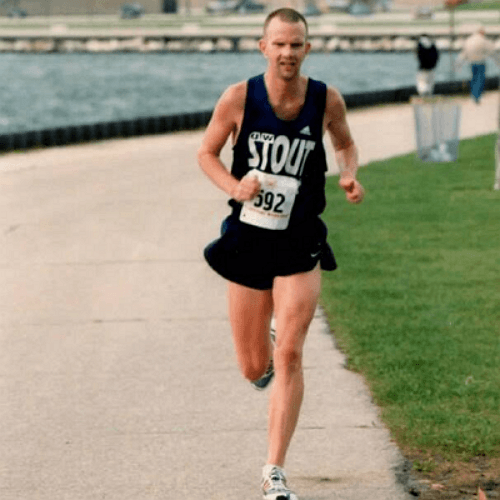
Shortly before the finish of my first marathon in 2002

This is a question posed by many new runners. It seems like such a straightforward question. Unfortunately, the answer is not as straightforward and, honestly, not what most beginning runners want to hear.

First, there is the question of what your goals in running are and may be in the future. Very few people run a marathon in their first few years of running and go on to reach their ultimate racing potential.

Second, age is a factor. There are countless stories of people running marathons in their teenage years, just to not keep improving beyond their early 20s. Considering the fact that many marathoners don’t reach their peak until their mid 30s, this doesn’t seem to be ideal.

Finally, there is previous exercise levels. Someone who never got off the couch before taking up running is going to take longer to become prepared for a marathon than someone who came from an athletic background, especially if that athletic background was in endurance sports.

What are your goals?

As I stated, the first question is of your goals. If you are not interested in trying to reach your racing potential and instead “just want to finish” a marathon, that is quite different than if you want to race marathons or other distances and want to try to reach your potential.

People who reach their full potential tend to build up to the marathon. They start with shorter races, like 5k and 10k, develop a good ability in those distances, then build up to 10 mile and half marathon type races, eventually possibly even working up to 25k, 30k, or 20 mile races. Once they have reached a high level in the shorter distances, they step up to the marathon. For many runners, their first marathon may come 10 or more years after they began running. Personally, my first marathon came after I had been running for nearly 12.5 years.

On the other hand, not everyone has goals like these. I still think it is a wise idea for anyone, regardless of goals, to build up to the marathon. I would love to say that nobody should run a marathon on less than 3 years of running but I know a lot of people don’t want to accept that. What I will say, and some people don’t even like this, is that you are not ready to run a marathon unless you have been consistently running for at least a year and have been building up for a marathon for at least 6 months.

Age – a touchy subject

Age is a much debated factor. Some people will tell you that a person should never run a marathon before the age of 25. Others will give stories about themselves or people they know who ran a marathon at 16 or 17 years old.

Personally, I fall more toward the first group, although I won’t give a definite age. To put it simply, I think a teenager has more to lose than gain by running a marathon. You have your whole life ahead of you to run marathons and you will be better prepared to run marathons if you wait a few more years.

As I said above, if you want to race marathons and push for your full potential, by all means, take your time. Many elite marathoners don’t run their first until they are in their late 20s or even early 30s. Even if you don’t want to race, your body will be more ready to handle the stress a marathon puts on it if you give it more time training.

Also, you shouldn’t look past the mental aspect. As a teenager, you are still mentally and physically maturing. The longer you give that mental and physical maturity to develop, the better your first marathon experience will be.

Experience matters

Finally, the experience factor. A lot of experienced marathoners take heat on this topic, in large part because of training groups that advertise that a person can go from inactive to running a marathon in 6 months or, recently, even 12 weeks.

I’m sorry to inform you but the large majority of people who try this come out of it with a bad experience in the closing miles. Sure, maybe they say it was the accomplishment of a lifetime but ask them how the last few miles felt. I’ve heard many torture stories.

Marathoning doesn’t have to hurt that badly if you give yourself adequate time for training. My suggestion is to not even think about running a marathon on less than a year of consistent running. I would love to say more but I know most people will just ignore my suggestions if I do. You need to give your body time to adapt to the stresses of running. Going from 0 to 26.2 in even a year’s time is a tall order for anyone. Doing so in 6 months time is playing with fire. Doing so in 12 weeks is downright dangerous. Once again, if your goal is racing or trying to become the fastest you can become, consider taking much longer.

In the end, only you can decide what time is right for you to do your first marathon. I stated my feelings on it here and I hope you will consider what I have to say. Weigh all the advice you are given, who it is coming from, what they stand to gain or lose by your following their advice, and make an informed decision.

One question to ask yourself every day

This article was originally posted by Ryan at the original HillRunner.com Blogs.

Image

Just a quick post this week. I want you to ask yourself one question today. Then ask the same question every day from now on.

What am I doing today to make myself better?

Sometimes the answer should be a workout that will accomplish a specific purpose. Sometimes it will be an easy run to recover from a prior workout or prepare for a coming workout. Sometimes it will be a rest day. Whatever the case, you should be doing something every day to make yourself a better runner. I want you to think about that every day and think about how you can best accomplish that.

Then execute the plan to the best of your ability.

When to modify the plan

This article was originally posted by Ryan at the original HillRunner.com Blogs.

Image

You are training for a race that is highly important to you. You have a detailed plan laid out. Month by month, week by week, day by day, you know what you’re supposed to be doing.

Then something happens. Do you push through or do you change the plan?

Many times, the answer is that you should push through. There are definitely times when we should push through some lingering fatigue or uncomfortable but not unsafe conditions.

There are other times, though, that we’re better off changing the plan.

How do we know the difference? Well, it’s not always easy. Experience goes a long way in determining what the right answer is. However, there are some general guidelines that you can think through to answer the question.

Is it safe?

Thanks to HillRunner.com’s partnership with the Seattle Marathon, I work with a number of runners in the Seattle area. If you haven’t heard, smoke from the wildfires in the area has been a real problem in and around Seattle. What advice have I been giving to them? Think twice about running outside. If it’s not safe, don’t do it. Take your running inside. If that’s not an option, think of your health first and don’t run. Don’t run is not a message I like sending to uninjured runners but sometimes it’s the appropriate thing to do.

Obviously, smoke from wildfires isn’t the only safety concern you have to think about. Severe weather of any kind is what most of us will most frequently face. If the weather is dangerous, don’t run. I’ve taken off or cut runs short due to lightning, snow storms creating slippery conditions where an out of control car may hit me, and various other reasons.

How will it affect my training/what is my training goal right now?

This past winter, I went through periods where I was very fatigued. I was laying my base for this year and I was far from any races, though. So I pushed through. Right now, I’m again experiencing a lot of fatigue. I’m trying to build to a peak and roughly 2 months out from my last race of the year. I’m adjusting my plan, making my easy days extremely easy so I can still get in quality work on my hard days. I’m also constantly monitoring my condition to decide if I need to skip a hard day.

Why push through in one situation and not the other? It’s all about the circumstances.

In the winter, I wasn’t trying to peak for a race. I was trying to log a lot of miles and build stamina. Fatigue was part of the equation. So I pushed through.

Right now, I’m trying to peak for 3 races in the next 2+ months. The stamina is as good as it’s going to get and I need to work on running fast. I want to be more rested so I can push my workouts and so I can ensure I’ll be feeling good two weeks from now when I’m lining up for my first race of the season. So I do whatever is necessary on my recovery days in order to both be ready for my next workout and recover from/benefit from my prior workout.

Sometimes it can be tough to know where to draw the line between these scenarios. What would I have done in June? July? That’s where experience comes into play. If you don’t yet have the experience, it’s probably better to play it safe. Very experienced runners will often just know, it’s like a sixth sense. We just need to make sure we’re doing what we know we should be doing.

Photo credit: Run by Jerzy Sobkowicz, on Flickr

Focus on one thing at a time

This article was originally posted by Ryan at the original HillRunner.com Blogs.

Image

When you’re asked to think about several things before a workout or race, what happens?

If you’re like me, you get started and, when the going gets tough, you forget what you’re supposed to be focusing on.

What good does that do?

Instead, consider focusing on one key thing. Maybe it’s your stride rate, maybe it’s a powerful stride, maybe it’s running tall. Whatever the case, pick one thing that you think is the most important thing to work on and focus on that.

Build one or two key phrases around that one focus that you can remind yourself of while you’re running. For example, if you’re focusing on your stride rate, maybe you want to think "quick steps". Then, while running, you can key into "quick steps" to ensure your stride rate is where you want it.

This one thought may change over time, either as what you’re working on becomes natural and you don’t need to think about it or as your needed focus shifts. For example, on a workout day your key phrase might be "quick steps". On an easy day, though, you have a different focus and your key phrase might be "recovery" or "rejuvenation" or "relax" to remind you to keep the pace relaxed, allowing that recovery and rejuvenation you need.

Are you going to give this a try? I hope so. If you do, I’d love to hear in the comments what you’re going to try.

Here’s what I’m thinking about this week. Tuesday, during some half mile repeats, I ran with "quick steps". Yesterday was a "recovery" day and I expect today to be all about running "smooth" on my tempo workout.

Photo credit: Training by Running Across Borders, on Flickr

Scroll to Top