News/Elites

What’s going on in the world of running?

Bekele to run his marathon debut in Paris, not London

This article was originally posted by Ryan at the original HillRunner.com Blogs.

Image

Debut marathon coming this spring in Paris

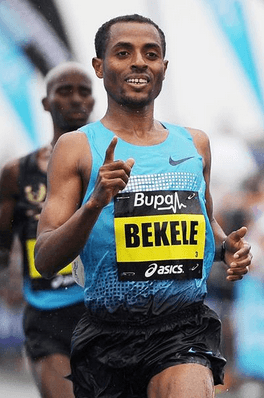
For those of you who don’t follow the HillRunner.com Twitter feed and may not have heard elsewhere, Kenenisa Bekele will run his debut marathon this spring in Paris. Previously, there was talk of him debuting in London, where Mo Farah will be debuting this spring.

Some people are questioning this choice. Why would such an accomplished runner, one of the best long distance runners on the track of all time and the current world record holder in the 5000 and 10,000, choose to debut at anything but one of the biggest marathons in the world? Why would he choose a second-tier (or third-tier?) marathon instead?

Personally, I think this is a good choice for him. Given his history, what would it take for his debut to not be considered a disappointment? The London field is always loaded and high profile debut marathoners rarely live up to the hype in their first efforts. In addition, with Mo Farah already essentially in for London, Bekele wouldn’t even be the highest profile debut marathoner as the hometown hero reigning Olympic champion would steal his thunder. By choosing Paris, he goes into a race with a much more manageable field as, by far, the highest profile debutante in the race. He can garner the full attention for his debut, get his feet wet without facing off against one of the best fields in the world and learn what it’s like to race the distance. Then, when he feels he’s ready to face off against the best in the world with some marathon experience behind him, he can go to London, Berlin, New York or whatever his choice might be.

What are your thoughts? Is this a good decision for him or should he jump in the deep end right away?

Big news morning in the US

This article was originally posted by Ryan at the original HillRunner.com Blogs.

Image

Going pro

Two big news headlines coming out of the US this morning.

First, in news that should surprise approximately nobody, Mary Cain is going pro after graduating high school. If you couldn’t see this coming, you weren’t paying attention. She wasn’t running for her high school. She was already on a pro schedule. She was already being coached by Alberto Salazar. Why would she go from that to running for a collegiate team? Instead, she will be joining AlSal’s group in Oregon upon finishing high school.

Is she ready to go pro? On basically a pro schedule this year, she did quite well for herself. It will be interesting to see how this turns out for her.

Second, Portland, Oregon will host the World Indoor Track & Field Championships in 2016. While the chances are probably slim, this makes me want to plan a road trip to Oregon. For the record, the last senior world championship (not counting the Olympics, which is a de facto world championship event) held in the United States was 1992 World Cross in Boston.

What are your thoughts? Is Mary Cain ready to go pro? Is it a good move by her or a mistake? Are you excited to see World Indoors come to the United States? Are you thinking about going?

2013 New York City Marathon recap

This article was originally posted by Ryan at the original HillRunner.com Blogs.

Image

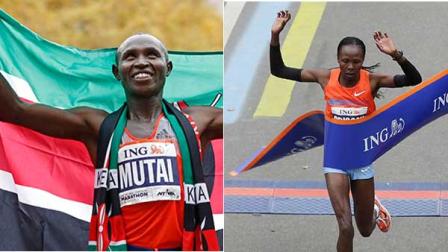
Mutai: He’s back! Jeptoo: Stunning second half!

I’m going to try something new here. When I get the opportunity to watch a major event, I’m going to do my best to offer a relatively short recap. This isn’t going to be a pages long recap with all the splits of all the elites or any extreme thing like that, just my gut reactions following the race on what I saw happening during the race. I’ll start with the women today.

Women

Early in the race, Buzunesh Deba asserted herself and only training partner and fellow Ethiopian Tigist Tufa Demisse went with. Interestingly, Deba did all the work. I never saw a shot where Demisse was anywhere but behind Deba. My initial reaction was that this was a replay of the 2011 race, when Mary Keitany ran a ridiculously fast pace and then faded. Deba would blow up in the second half and one or more of the very strong runners from the chase pack would blow by her. Then I started hearing the splits. In 2011, Keitany was running 2:15 pace and, even before 10K, I was saying she was going too fast and would not make it even while others were on Twitter discussing her gutsy and dominant effort. By the Queensboro Bridge during mile 16, while some were still talking about her dominance, I could see the wheels start falling off. This time, Deba was locked into 2:25 pace. Even with a predominant headwind, this was not a blistering, suicidal pace she was setting.

Deba hit the halfway point at 1:12:38. 2:25:16 pace, hardly blistering or suicidal for some of the world’s best women who were in this race. I was shocked that it was just her with Demisse there. Were the other runners letting her get too far ahead? The chase pack came through at about 1:16:00. 2:32 pace? Seriously? Now, if Deba could hold pace which didn’t seem impossible, someone would need to drop a 1:09 second half to have a chance. This seemed difficult at best.

Through the next two miles, nothing really changed. Deba built her lead up to over 3:30 and, by the time they hit the Queensboro Bridge, the chase pack would need to gain about 20 seconds PER MILE over the next 11 miles to catch her. This seemed like an insurmountable lead. Then it happened.

Pricah Jeptoo made a break from the chase pack. She took off hard and there was no doubt what she was doing. She wasn’t securing third place with that move, she was running to win. Shortly after, you could see Deba was working hard. The lead began shrinking but I still wasn’t convinced Jeptoo could pull it off. Then a few miles went on and Jeptoo was making up serious ground. We had a race again. Deba still had a chance to run away with it but she’d need to put the hammer down and I wasn’t sure she could. By 20 miles, it seemed certain Jeptoo would catch Deba. The only question remaining was whether Jeptoo would extend so much effort in catching Deba that she’d have trouble finishing her off. Or would Deba have extended so much energy in leading for 20-plus miles that she wouldn’t have anything left to respond? Things got interesting again.

By 22 or 23 miles, it seemed clear. Jeptoo would catch Deba somewhere around 24 miles and I was pretty certain power right by for the win. Deba’s running partner fell away and Jeptoo eventually made the pass somewhere past 24 miles. Deba led the race for over 24 miles but would come up short. Jeptoo ran an amazing second half and cruised in to victory.

Splits for Jeptoo: 1:16:00/1:09:07 for a 2:25:07 finish

Splits for Deba: 1:12:38/1:13:18 for a 2:25:56 finish

Deba did not set a suicidal pace. A second half that was only 40 seconds slower than her first half shows she got her pacing down pretty well if her target was an evenly paced race. Jeptoo, though, dropped an amazing second half after running a very relaxed first half. I honestly didn’t think anyone would drop a 1:09 second half. If someone would have told me at the halfway point that Deba would run a 1:13:18 second half, I’d say she has a very good shot at winning, as that would have meant someone would have had to go under 1:10 in the second half to catch her. All the credit to Jeptoo for an amazing finish.

As an aside, I don’t know if anyone here noticed but, when ESPN displayed the results, they had a Kenyan flag next to Deba’s name. Deba is Ethiopian. I’m guessing I’m one of only a handful of people who noticed that right away. I tend to notice little things like that. Still, oops.

Men

Honestly, I don’t have as much to say about this race as I do about the women’s race. Part of that is because the ESPN coverage seemed to be showing a lot more of the women and some of it is that the first 20 miles went off pretty uneventful and there was honestly only one big event in the last 10K that decided who would win. A large pack with all the main players remained intact for about 21 miles. The fairly large lead pack cruised through the first half at a fairly conservative split of about 1:05 (Geoffrey Mutai’s first half split was 1:05:06, 2:10:12 pace). Like the lead women, not a blistering pace. Maybe the wind was more consequential than I realized out there. The major players in the pack all remained until I believe about 21 miles with Geoffrey Mutai broke the race open. Stanley Biwott went with him but you could pretty much tell it was all Mutai at that point. This was the Mutai from two years ago, hanging with the lead pack until he got to a point where he knew he could drop the hammer and hold the pace to the finish line. Then he proved he was the class of the field with such a stunning display of strength that there was no doubt who would win. The rest of the race was his victory lap. Biwott dropped off as expected and ended up fading to 5th place. Tsegaye Kebede gave chase but was never really in it after Mutai’s break and could barely stay within a minute of Mutai.

Mutai ended up winning comfortably in 2:08:24, a 1:03:18 second half.

So the story of the New York City Marathon in the past two runnings follows a similar pattern. If you’re an elite woman, don’t make an early break if you want to win. Instead, make a decisive move at the Queensboro Bridge. The real racing for the eventual winner starts with about 11 miles to go. If you’re in the men’s race, somewhere past the 20 mile mark, Mutai is going to make a move that will leave everyone else running for second.

More from WADA: Jamaica and Kenya

This article was originally posted by Ryan at the original HillRunner.com Blogs.

Image

The regulars know I don’t want this blog to become the doping blog. I hate posting about doping because I think it detracts from the positives of the sport. That said, I’ve come to the conclusion that what the sport’s doping problem needs is to have a bright light shining on it. If I can do some part to make the light shining on it a little brighter, I will. For the good of the sport.

On that note, a couple of items broke overnight that I thought were worth mentioning.

First, WADA officials are in Jamaica. This is good news. It will be interesting to see what comes of this but it’s good to see that WADA is being proactive here in auditing a questionable anti-doping system. Of course, it’s bad that WADA isn’t getting answers. Is Kenya hiding something? Is Kenya’s anti-doping agency complicit? Right or wrong, these are questions that are naturally going to be asked. I hope WADA applies pressure until they get answers.

Second, WADA is "very frustrated" with Kenya. This has to do with the lack of investigation into the controversy Andrew and I mentioned in prior discussions. Again, I consider it good that this is being publicly mentioned. It has seemed for some time that this controversy got swept under the rug. Hopefully, this is a sign that it will again get the attention it deserves. Of course, the bad part of this news is that WADA is not getting answers. Why? Is Kenya hiding something? Not getting answers naturally raises more questions. I hope good answers come soon.

As for the case in Kenya, I see a lot of people insisting that they are sure Kenyans are clean. I want to believe them. However, if they are so sure they are clean, there’s one way to prove it to the world. Have a very stringent testing program and be as transparent as possible. If they are right and the athletes are clean, they have nothing to hide. In fact, I would argue they have every reason to be completely open and honest. Remove all doubt and suspicion by proving beyond any reasonable doubt that they are clean.

Could/would Jamaica be banned from the Olympics?

This article was originally posted by Ryan at the original HillRunner.com Blogs.

For those who haven’t been following, Jamaica has had some doping troubles recently.

Could the nation as a whole, including Usain Bolt, pay the price?

The obvious answer is yes, obviously, this is a possibility. It is within the power of international agencies to ban the nation that is performing its doping control responsibilities so poorly.

Would it realistically happen? The likely answer is don’t count on it. Would the IAAF, IOC or any other governing agency really want to take away the most famous name currently in the sport and one of the most famous names currently in the Olympics? Would they want to take away one of the premier rivalries (Jamaica vs. USA in the sprints)? Even if there is some short term punishment for the nation as a whole, don’t expect it to last. Everyone in power wants them to keep competing.

Scroll to Top