Training

All things training. Mostly advice and tips but maybe questions, general comments, or who knows what else.

Consistency matters

This article was originally posted by Ryan at the original HillRunner.com Blogs.

Image

This past weekend, I completed what I would consider my 2016 base phase. Looking over it, I accomplished the following:

7 weeks of 70-72 miles
4 weeks of 66-69 miles
2 weeks of 50 miles (cutback weeks)
1 week of 40 miles (ill)

I can sum up these results in one word: consistency. And I’m feeling very good about where my 2016 racing season will be going for that one reason.

I hope you’re accomplishing the same thing.

It’s not about the numbers to me. Personally, I respond well to 70 mile weeks and that’s what currently fits into my life. I’m not concerned with whether you find yourself saying the same thing about 30 mile weeks, 50 mile weeks, or 100 mile weeks.

What I am concerned with is how consistent you are at the level that works for you.

For years, I’ve said I don’t care what your peak weekly mileage was or what your peak long run was. Tell me what your fourth highest week was. Tell me what your third longest run was. This tells me much more about how your training has been than one big peak.

When you do a single 20 mile long run but your next longest are 18, 16, and 14 you’re less prepared for a marathon than if you’ve run three 18 mile long runs and two 16 milers.

When you do a single 60 mile week but your next highest was 45, you have less complete of a base and are likely more broken down than if you’ve run between 50 and 55 miles several times.

The consistent grind may not be as impressive as a single big blowout week or a single big workout or long run but it’s more effective in the end. It will lead to better results on race day. So, if that’s what you’re looking for, go for the boring in your training. Grind it out with consistent focus and effort.

You don’t need to impress people with the big number in training because you can impress people on race day, when it really matters.

“Altitude training” masks – worth it?

This article was originally posted by Ryan at the original HillRunner.com Blogs.

I’ve recently seen several people ask about “altitude training” masks. Recently, I was asked by a runner I coach. Because this seems to be a hot issue, I thought I’d cover what I’ve seen as of now.

What is an altitude training mask?

First, what is an altitude training mask? This is the one I’ve come across in discussions. Maybe you’ve seen them around. I’ve never yet seen someone running with one but I have seen a couple people wearing them while weight training at the local Y.

What’s the goal?

Next, let’s have a quick review of what endurance athletes are trying to accomplish when going to altitude. We are trying to live in air with relatively low oxygen levels in order to stimulate the production of red blood cells as well as their ability to carry oxygen. In recent years, it’s been discovered that you can get the benefits of altitude while living at altitude without suffering the drawbacks (primarily not as much oxygen available) if you travel to low altitude for training. That’s why we have the concept of “live high, train low” and why quite a few elite runners these days have altitude tents in their bedrooms. They can sleep at simulated high altitude but train at low altitude.

Altitude training? Not quite…

This specific mask’s promotional material states:

Training Mask 2.0 does not “change on the o2 molecular level” however your body does make adaptations for this “Simulation” to be considered “Altitude Training” also known as the “BOHR EFFECT”

So it’s not reduced oxygen. That’s a good thing because, if you were reducing oxygen levels, wearing the mask while running would have the opposite effect of what you’re looking for. You want to “live high, train low” and this would have you living low, training high if you wore it while running and not at other times.

Resistance training? Possibly…

But what does this mask actually do, then? It appears that the claim is that it simulates high altitude by restricting your air flow.

Elsewhere on the same site, I see the claim of resistance while breathing building diaphragm strength and surface area and elasticity of alveoli, improving anaerobic thresholds and lung capacity. They mention studies but don’t offer references.

Well, that’s not what training at altitude does. Instead, the mask is a type of resistance training. The restricted airflow would add resistance that your respiratory muscles have to overcome. While that’s not altitude training, is there a benefit to this?

I have now come across some references that help answering this question. In re-reading Science of Running by Steve Magness, I came across the topic of “respiratory training”.

As Magness notes (with references, unfortunately, to studies I can’t find online) a study by Romer evaluates the effect of respiratory muscle training and finds that it improves 20km and 40km cycling time trials by 3.8% and 4.6% respectively.

However, Magness also notes that similar studies have had mixed results and it appears the benefits are less significant in less well trained runners.

As noted in the book:

As we have seen, the degree to which the respiratory muscles contribute to VO2max varies based on training level. … For this reason, higher-level runners should consider respiratory training, while lower level runners probably will not see the same degree of benefit.

Note: The site mentions building surface area and elasticity of the alveoli, improving anaerobic thresholds and lung capacity. The anaerobic threshold claim would seem to have some credence based on what I noted from the Magness book. I still have found no evidence for the claims related to the alveoli and lung capacity.

Conclusion

At this point, given the science I’ve seen and what we currently know about the benefits and drawbacks of altitude, I see limited benefit in this product. In fact, it might be counterproductive for some if used while running.

For the record, I attempted to contact the company linked to above so I could discuss benefits and concerns with them directly but, over a year after my first attempt to contact them, I never received a response.

“Fatigue” is not a four letter word

This article was originally posted by Ryan at the original HillRunner.com Blogs.

Image

Are you base training right now?

Are you experiencing some fatigue?

Are you concerned about the fatigue?

In many aspects of our lives, we are told to avoid extremes. Even in running, some will tell you to avoid fatigue. A little tired after a hard day, fine. Relatively constant fatigue? You’re risking overtraining.

I disagree. Fatigue is simply a result of training hard and a sign that you’re applying stimulus for your body to grow stronger.

Now, you don’t want to bury yourself in fatigue. You don’t want it to last for months on end. You don’t want to keep going down the fatigue spiral to depths that are harmful. However, experiencing a low to moderate level of fatigue for a few days or even a week or two before backing off and refreshing your legs is a part of training and should not be considered something to avoid at all cost.

My experiences with an activity tracker

This article was originally posted by Ryan at the original HillRunner.com Blogs.

Image

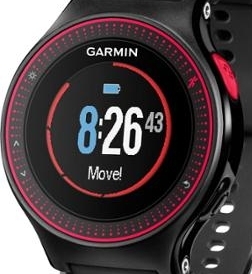
On December 15th, I got a new watch. The watch I chose (Garmin Forerunner 225) includes an activity tracker, something I didn’t necessarily need but thought would be interesting to experiment with and learn more about. Now that I’m almost a month in, I’d like to share my initial experiences.

As for the watch as a running device, I’ll offer a review once I use it a little more.

This post is focusing on the activity tracker features and, for the most part, not specifically about this device but my feelings on how these features in any fitness tracker may be useful and how they may not.

Heart rate monitor

The heart rate monitor in this device is interesting. It’s wrist based and works by shining a green light on your skin and measuring changes in how much light reflects off your skin (green light reflects off red blood cells better than other colors, hence the color choice).

Unfortunately, this specific device doesn’t automatically record heart rate except while running so I can’t automatically track my resting heart rate but at least it gives a convenient way to manually check my resting heart rate.

Of course, we know that our resting heart rate goes down as we gain fitness and when we’re well rested but spikes when we’re overtrained. This information can be useful. I haven’t been checking my resting heart rate much but I can see the potential usefulness of this.

Activity tracker/step counter

It’s important to note the pros and cons of wrist based activity trackers as compared to old fashioned pedometers.

The pros are that you don’t have to have something attached to your belt and they are on your wrist where you can easily check on your progress throughout the day.

The cons are that, being on your wrist instead of your hip, accuracy won’t be quite as good. I can definitely see times when my steps aren’t being counted. I see other times where I’m not walking and my step count is increasing due to something else I’m doing. In general, though, I do think the recorded step count is a pretty good proxy for how active you have been throughout the day.

So what’s the benefit of the step counter? Personally, I’ve found it to just be something fun to play around with. It’s fun to do a long run and see 20,000+ steps before noon. It has made it clear to me how little activity I do in the winter outside of running. Unfortunately, it hasn’t necessarily changed my habits but that’s on me, not the device.

I can see the benefit, though, if a person would use the step counter as motivation to hit a target. Anything to encourage more activity will result in a healthier lifestyle. Just because I don’t use it that way doesn’t mean it isn’t a benefit for those who do use it that way.

Move alerts

The Forerunner 225 comes with a "Move alerts" function. This basically buzzes or beeps at you and tells you to move if you’ve been sitting for an hour without a walking break. It then will not reset itself until you’ve walked for 2 minutes.

Conceptually, this seems like a great idea. We now know that sitting for long times is bad for our health and frequent short walking breaks like the 2 minutes needed to reset the move alert are all it takes to negate the negative effects of sitting.

In practice, it didn’t work for me. I ended up turning move alerts off. Partly because I didn’t want it buzzing me during meetings and partly because I couldn’t get it to reset just by walking around the house without basically walking laps. I just found it to be an annoyance more than a useful tool.

Again, though, this is on me. It could be very useful for people who use it to motivate themselves to get up and move around every hour.

Sleep monitor

This is something I was very curious about. The sleep monitor works basically by monitoring your movement throughout the night. It then tells you how much deep sleep (with very little movement) you had, how much light sleep (with a little more movement) you had and how much awake time (with a relatively high level of movement) you had throughout a night.

I found it surprising how much I move around overnight. Apparently I’m not getting as much deep sleep as I thought I was. This was an educational experience for me. It’s also interesting to see when I am sleeping deeply and when I’m not.

I suspect I might be able to use this information to help improve my sleep quality if I can find some correlation between my quality of sleep and things going on in the house. It would also be interesting to do things like adjust the thermostat and see how my sleep is affected.

While I have done very little with this information at this time, it’s actually where I’m most expecting to gain some benefit. Basically because I’m expecting to actually act on the data.

Conclusion

As usual, the tool is just a tool. It’s all about how you are going to use it. Personally, it seems like a fun toy for me for the most part. If I can convince myself to change some habits due to what this is telling me, maybe I’ll change my mind.

However, if you’re committed to change your habits based on what an activity tracker is telling you, I can definitely see where it can be useful.

Sure, you can change your habits without the use of an activity tracker. However, I’m a numbers guy. I know how it works for people like myself. If you will use the numbers to hold yourself accountable, then it could be very useful. The numbers may not be perfect but, in a general sense, they don’t lie. If your device records 10,000 steps yesterday and only 8,000 today, it’s a pretty sure bet you were a fair bit less active today. If you’ll act upon that information, then it can be a good motivator to improve your health.

Fundamentals: the key to success in basketball and running

This article was originally posted by Ryan at the original HillRunner.com Blogs.

Image

Bo Ryan, the recently retired fundamentals coach

I’m a fan of Wisconsin basketball. Not just because I’m a Wisconsinite, though that plays a role, but also because I like the Bo Ryan way of doing things (thanks Andrew for sharing the link with me). Fundamentals first and foremost. In basketball, those who practice fundamentals the way the Badgers do will always be good, though they may not be flashy. Regardless of talent, they will always be competitive. They may not always overcome talented teams, especially talented teams that also focus on fundamentals, but they will at times and they will always be the teams labeled overachievers.

So what does this have to do with running? Well, the same is true in running. Practice the fundamentels until they are routine, then keep practicing them, and you’ll be an overachiever.

We’re runners, though. We aren’t passing and dribbling in running, we’re just putting one foot in front of the other. What does practice the fundamentals mean in running? Well, it means you don’t try to overcomplicate your training. Don’t try to copy workouts you hear about just because someone you admire is doing them. Stick to the fundamentals of training. Build a good base of volume, do the core workouts that you’ve been doing for years and you know work, don’t skimp on the basics. Just because you did a lot of tempo runs and strides last year doesn’t mean you get to skip them this year. It means you do them better. You do them faster if you’re coming in with a greater level of fitness. You don’t ignore what you were focusing on last year but you pick a weakness you found last year and give it extra attention. Make it a strength.

This doesn’t mean you don’t look for new things. New workouts are great if you have a reason and plan to fit them into your schedule. Have a plan, though. Have a reason for everything. And never overlook those basic fundamentals that have gotten you to where you are.

Scroll to Top