Training

All things training. Mostly advice and tips but maybe questions, general comments, or who knows what else.

Life happens

This article was originally posted by Ryan at the original HillRunner.com Blogs.

During the holidays, our lives can get hectic. Traveling, family events, the weather (in some areas, including here in Wisconsin). Many things can get in our way this time of the year.

What do you do when life gets in the way of your running plans? How do you respond?

Most of the time, we can probably find a way to get our runs in. However, there are exceptions. When these happen, don’t beat yourself up if you have to cut a run short or even miss a run.

No single workout will make or break your year. As long as you’re getting in the large majority of your runs, you’ll be fine. Just roll with it and do your best to get your next planned run in.

Race day emotional control

This article was originally posted by Ryan at the original HillRunner.com Blogs.

Image

A different runner than 15 years ago

During my high school, college and even early post-collegiate years, I was an inconsistent runner. Anyone who knew me in the late 1990s and early 2000s knew I could put up a sub-16 5K or struggle to get home under 17 minutes in any given race. In any given 10K, I could go sub-33 or struggle to break 35 minutes.

Why? I was obviously capable of sub-16 and sub-33. It had nothing to do with my fitness or physical preparation. It had everything to do with what was going on above my shoulders.

At times, I’d enter a race with what I would now call a calm confidence. I’d be relaxed, knowing what I was capable of and knowing what I had to do in order to execute the good race. I’d feel the anticipation and excitement of race day but my mind was in a good place. My thoughts were positive, focused on executing the plan and knowing that the execution would lead to a good result.

Other times, for whatever reason, I’d enter a race a nervous wreck. I remember one race my sophomore year of college where I stopped during my warmup to retie my shoe. I put my foot up on a bleacher and I was so nervous I couldn’t even hold my foot still. I got myself too worked up about going after the result and I wasn’t centered and focused on executing the plan I knew I was capable of executing. I wasn’t thinking positively about how executing the plan would lead to a good result. I was thinking "I have to…" Those three words lead to bad thoughts, which lead to bad performances.

These days, I’m a different runner. Not every race is going to be a good race for anyone. No matter what, we all have bad days. However, I’ve stopped putting pressure on myself. I go in knowing that the best result will come from that calm confidence in going in with a plan that, once executed, will lead to the best possible result. I know what result I want but I also don’t put pressure on myself to hit that result. I know the best I can do is execute the race as close as possible to perfectly and see where that leads me.

So how did I get from where I was to where I am now and how can you follow the same path to more consistent results?

There are a few keys that I’ve learned along the way. Mostly alluded to above but I want to lay them out clearly.

1) Know what you can do and believe in it: Look at your training and how it has gone. Be honest with yourself about how your training has gone. Learn what this means and what result is possible. It can also be good to have a handful of workouts that you know well enough to know what kind of race times they indicate based on how you run them.

I would also note that it’s better to be a little conservative with estimating what you can do than to be too aggressive. Because…

2) Have confidence in your goal: …you need to believe you are 100% capable of what you’re setting out to do. This is why, when I’m helping runners set their goals, I let them set the goals. I want them to set a goal they fully believe in. I’d rather see someone say they want to run a 3:30 marathon than 3:20 if they don’t believe they can run 3:20. Even if I believe they can.

3) Focus on the process more than the goal: Plan your race to meet your goal. Then execute the plan. Focus on the plan. Because it was planned to meet the goal you have 100% confidence in, it should be a plan that you have 100% confidence in. If you execute the plan, which you have full confidence in executing, the result will come.

4) Roll with the punches: There are a lot of variables on race day. Something won’t go perfectly to plan. Be prepared for that and ready to adjust the plan as necessary. Most surprises aren’t as serious as we think they are when they first happen. If you can remain calm, you can adjust the plan usually pretty simply and still hit your goal.

If you get caught with a big surprise like a strong headwind or extreme heat, you may need to adjust your goal but everyone will either adjust their goals and plans in that situation or pay the price.

In the end, it’s about heading to the line with that calm confidence. Sure, you’re excited for the race but you’re also standing at the line ready because you know what you can do and how you’re going to go about doing it. When something unexpected happens, you’re ready for it because you know something was going to happen and you can calmly make the best adjustment to get back on track.

Racing in bad conditions

This article was originally posted by Ryan at the original HillRunner.com Blogs.

Image

Mudder’s race

What do you do when you wake up on race morning and it’s incredibly windy? Or raining? Or cold? Or cold and snowing?

I hope you adjust your race plan accordingly (if you didn’t already know this weather was coming and make those adjustments). Then I hope you embrace the elements.

I got thinking about this topic this past weekend when I was at the WIAC Cross Country Championships at a soggy Lake Breeze Golf Course just outside of Oshkosh. It wasn’t too cold and the rain/drizzle was pretty light but it had been a wet week leading up to race day and the course was saturated. The high spots were like a wet sponge and any low spot, no matter how minor, had standing water. It was a mudder’s race.

I was talking with someone at the meet about the conditions and said I liked these conditions when I was running cross country. I was not a mudder. I was too light and too much of a rhythm runner for a muddy course to not slow me down but I told myself everyone has to face the conditions. A lot of guys are psyching themselves out over the conditions and those are guys who I have the opportunity to beat because I’m preparing to deal with it and just run my best.

Of course you have to adjust your race plan accordingly. When I ran the Lakefront Marathon in 2002, there were some runners who didn’t adjust their plans. The wind beat them down and I made easy work of guys I had no reason to think I would be anywhere near on an ordinary day.

Once you adjust your plan, though, embrace the elements. Have fun with them. If you have your plan down and are ready to execute, you can enjoy the elements. Be a kid splashing through the mud puddles. Think of how great the stories of overcoming the heat, cold, wind or whatever else you’re facing will be once it’s over. Make a snow angel at the start line (I guarantee this will help you psych out some of your competitors while keeping yourself relaxed).

Whatever you do, don’t let the elements get to you. If you convince yourself that the elements will cause you to fail, you do nothing but ensure that you will be right.

Warm up

This article was originally posted by cesar at the original HillRunner.com Blogs.

Hi,

Warm up always has been an interesting topic for me because, I have read several opinions on warming up, and I would like to know how you warm up before races..

I have seen several types of warm up such as, easy running,easy running + some strides at race pace, easy running + LT pace running for 2-3 mins, drills+ strides just before the gun. The only people that I see doing strides before the gun are the top athletes, medium pack and back pack people are just running easy till " go" time.

Personally I warm up just running easy for 1k-1 mile, and in the starting line, I am not very warmed up, but I am afraid to try something new on race day, because on workouts I warm up that way, run easy for 3k or so ( on workouts), stretch, and start the workout.

Also, Doing strides before the gun would make me look like a top gun there, and I am not even close to that.

How do you warm up?

Numbers vs. Perception

This article was originally posted by Ryan at the original HillRunner.com Blogs.

Image

Modern technology is amazing, isn’t it?

We have devices these days that can measure all kinds of things. You can get a single device that can measure your heart rate, stride rate and a close approximation of your pace at any moment in your run.

While not running, it’s not nearly as hard as it used to be to get a VO2max or lactate threshold test.

You can get an approximation of your body fat percentage in your own bathroom. You can easily track your sleep, your resting heart rate. I’m sure I’m leaving things out.

In short, we have no shortage of numbers that we can use to track everything about not just our training but also about how our bodies are responding to the training.

Is all of this useful, though? Does it make us better runners?

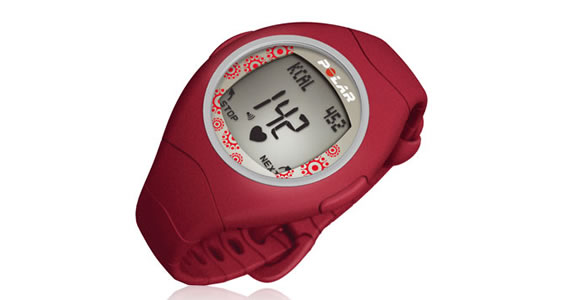
Back in the early 2000s, I got a heart rate monitor for myself. I’m a numbers guy and I believed the additional feedback with hard numbers that couldn’t be refuted would make me train smarter.

What I quickly discovered and, over the intervening months, couldn’t get past was that the numbers told me what I already knew and took longer to tell me those things. If I was beginning to run too hard, I could feel that before my heart rate began climbing. If I was slacking off, I could feel that before my heart rate dropped. If I was training too hard, I knew before I even saw that my morning heart rate was climbing.

The problem was that, with the heart rate monitor, I wasn’t always paying attention. I began relying on the device instead of paying attention to my body. I ended up reacting more slowly to these errors because I wasn’t listening to the early warning signals. So I stopped using the monitor. Today, I don’t even know where it is. I think I gave it away but I’m not even sure. It could be in a box in my basement somewhere.

As it turns out, a recent study suggests my gut feeling on this was right.

Subjective measures reflected acute and chronic training loads with superior sensitivity and consistency than objective measures.

In other words, paying attention to things like perceived effort and changes in our mood worked better than using "objective" measures such as heart rate, oxygen consumption or blood hormone levels.

I’m not suggesting that we should ignore these objective, numerical measures. However, if they get in the way of paying attention to your body’s responses, you might be better off either without them or finding ways to be less reliant on them in order to keep paying attention to how you actually feel.

Scroll to Top