Ryan

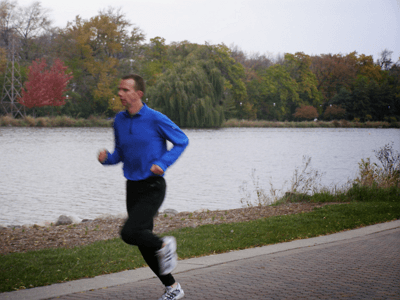
Be honest with yourself

This article was originally posted by Ryan at the original HillRunner.com Blogs.

Image
Maybe "toughing it out" is worth it if you’re in your goal race

When you’re not feeling the greatest, what do you do? Do you just plow through? Or do you give some serious thought to how you’re feeling and, if you feel necessary, adjust your training? At what point do you switch from just plowing through to adjusting? How long do you give yourself to return to normal training? Until you’re feeling 100%? 90%? 80%? Less?

One commonality I’ve noticed among runners is that we prefer to push through. Runners in general are highly motivated, very persistent individuals. We don’t want to give in, no matter what. That’s normally a good thing but it can be counterproductive if taken too far. I’ve seen runners run through stress fractures, serious illness that required antibiotics and all kinds of other things. Some even take pride in doing these things, even though running through serious issues like these often backfires and requires more time off later. Does that sound like something to be proud of?

If taking a few days off now or replacing a hard day with an easy day will allow you to prevent several days or weeks off later, what’s the obvious choice that should be made?

Next time you find yourself dinged up or ill, be honest with yourself. Sure, we all run through aches or the occasional sore throat or congestion. But ask yourself how bad is this really, will running through it just make it worse? Then answer honestly. Then do the right thing. You know what the right thing is if you’re being honest with yourself.

Note: One of the runners I coach motivated me to write this post I have been thinking about for a while by asking if taking off on a scheduled easy day would pose a problem. My response: "Wise choice. I wish all runners made such wise decisions."

Photo credit: nprpdx, on Flickr

Kinesio tape, how social distress affects physical pain

This article was originally posted by Ryan at the original HillRunner.com Blogs.

Kinesio tape

I’ve written before about how Kinesio tape likely helps athletes.

I think it’s also important to understand how it likely does not help athletes. On that front, we have a study looking at how Kinesio tape affects strength in fatigued muscles. Rugby players but, presumably, fatigued muscles are fatigued muscles. Whether you’re running a race or playing a rugby match, fatigue acts in similar ways.

The results in this case aren’t all that promising:

No statistical differences were found between the taped and un-taped conditions in non-fatigued and fatigued situation as well as in the interaction with fatigue. Therefore, taping the gluteal muscle does not influence the leg explosive strength after fatiguing in healthy rugby players.

I believe the importance here is that we now know a little about how Kinesio tape likely does help and a little about how it likely doesn’t help. It’s important to know where we can expect to see benefit and where we can’t with any tool so we can make sure we are using the tool in the best ways. In this case, use Kinesio tape to reduce pain and aid in recovery. Do not use it to try to beat fatigue.

Social distress and physical pain

Have you ever run a race or a hard workout after getting in an argument with a significant other or good friend? It probably didn’t go well, did it?

Well, we shouldn’t be too surprised:

The current study results indicate that participants’ pre-Cyberball unpleasantness threshold is related to their responsiveness to social distress and that physical pain may be modulated by social events. Further studies are needed to clarify the clinical relevance of these results.

We know that social stress does some of the same things within our brains as physical stress. It shouldn’t be shocking that social stress would lower our threshold of physical pain. That’s what this study seems to confirm.

So next time you have a bad race or workout while dealing with a heavy social situation, cut yourself some slack. It’s possible you are just feeling the effects of that situation. Take care of your personal life and your running will bounce back.

Running “too much” or “too fast” (probably) won’t kill you

This article was originally posted by Ryan at the original HillRunner.com Blogs.

Image

I was thinking of doing what would look more like a typical Monday post today with some content from last week. However, this week, some bad analysis of a study that’s been around for a while began appearing.

You may have seen the headlines: Fast running is as deadly as sitting on couch, scientists find or Too much jogging ‘as bad as no exercise at all’ or Stop that binge jogging! Three times a week is best for you… and too much is as bad as doing nothing

Whoa! Seriously? Sounds like I should reconsider my training routine. Or…maybe not.

Alex Hutchinson did a fine job covering this.

This quote sums things up pretty well:

Yes, the conclusion of the study (that "strenuous" jogging is as bad as being sedentary) is based on two deaths over more than a decade of follow-up. (Thank goodness a third person didn’t die, or public health authorities would be banning jogging.)

To summarize, there were simply not enough "fast" or "high frequency" runners to have a statistically significant result. The basic concept here is a fundamental rule of statistics. There is always variability in numbers. There are always random events happening. In order to truly pick up trends, you need a large sample size. If you only sample 10 smokers and 10 non-smokers, you might simply by chance find that both groups have the same number of people who have died from lung cancer. Sample 1000 of each, though, and you’ll start to see a trend where smokers more frequently die of lung cancer.

The same thing is going on here. You had sample sizes of 413 sedentary individuals, 640 who ran less than 1 hour a week but only 50 who ran more than 4 hours a week. If you look at the raw numbers, only 2% of those who ran more than 4 hours a week died in the next decade. A far lower percentage than the sedentary subgroup (though other factors such as age came into play also). However, because there were only 50 individuals, you didn’t have a statistically significant result.

Somehow the media spins "not statistically significant" into "running a lot is as dangerous as not running at all". That’s not at all what this study suggests. It just suggests there isn’t enough information to be sure the results mean anything.

So don’t fear the headlines. Understand what this data really says. We simply don’t know what the numbers would look like with a larger sample size.

2015 Visitors Survey

This article was originally posted by Ryan at the original HillRunner.com Blogs.

Image

As I’m sure the regulars have figured out, I’m mostly interested in building a site that will be useful to you. I want to build what you want and need to make the most of your running, whatever your goals.

In the past, I’ve always done that by asking what tools would help me make the most of my running. Some generous people have helped me along the way with requests or suggestions but it’s been largely myself just deciding what would be helpful.

I want to change that. I realize that I don’t always know what other runners want and I don’t want to guess anymore. So I created a simple survey to get some input on what you think of the site. The questions are basic right now but they will give me a feel for what you use, what you would like to see improved and what ideas I may have not thought of for what to add to HillRunner.com.

You will also notice a couple of questions pertaining to a new addition to HillRunner.com that I plan to make available in the first half of this year. Some of you have asked for more involved offerings, some of you have asked if there is a way to financially support HillRunner.com without signing up for coaching. I believe this new offering, Club HillRunner.com, will accomplish both. Because it takes time and money to produce the more involved offerings, it will be a paid offering but I believe the price will be very reasonable for what you will receive. If you do want to help the site financially, this will be your way to do so and get something for your investment.

The survey take less than 5 minutes and results are completely anonymous. I will take your responses very seriously and prioritize my work according to the results. I will also keep your responses at the forefront of my mind as I work on the new Club HillRunner.com.

One more time, here is the link to the survey. I hope you can take it and help me help you by building the best HillRunner.com possible.

Timing matters, we’re all individuals

This article was originally posted by Ryan at the original HillRunner.com Blogs.

Quite a few interesting things popped up in my reading list this week. So many that I’m considering another post of this style for Thursday so I don’t have to throw out so many interesting things. We’ll see how it goes.

As for now, here are a couple of my favorite from the past week:

Race time matters

More specifically, given that we don’t usually get to choose the time of the day that we race, being a morning person or a night person matters depending on the time of the race you’re running.

Early morning risers (defined here as those who woke around 7:00 on weekdays and 7:30 on weekends) performed best around midday.

Mid-morning risers (8:00 wake up time on weekdays and 9:10 on weekends) performed best in the afternoon.

Late morning risers (9:30 wake up time on weekdays, 11:00 on weekends) performed best in the evening.

Let me pause as you sit in shock and absorb that. Ok, maybe not. We all knew that, right?

What I’d like to use this to point out, though, is what we can do to take advantage of this common knowledge. If you’re going to be running a morning race in the near future, it might be wise to become an early morning riser. If you’re going to be doing an evening race and it’s possible to do so, you might want to consider becoming a late morning riser.

We’re all individuals

Next, a study on individual responses to training. As we know, response to exercise is usually talked about in very general terms. We seem to expect everyone to respond in the same way, even though we should know everyone is an individual and will respond differently.

Basically, this says what we all know. A lot of factors could play into how we respond to training, including but not limited to the stress of the training session (certain types of training sessions can stress one runner harder than another), stress outside of running, sleep, diet and so on.

In conclusion, there are several factors that could contribute to individual variation in response to standardized training. However, more studies are required to help clarify and quantify the role of these factors. Future studies addressing such topics may aid in the early prediction of high or low training responses and provide further insight into the mechanisms of training adaptation.

Honestly, I don’t know if these can be quantified in a general sense. Their effects could be different for different individuals. It’s nice to see the topic addressed, though.

Scroll to Top