Ryan

Shoes: injuries and running economy

This article was originally posted by Ryan at the original HillRunner.com Blogs.

I’m going to focus this week on research involving running shoes. Exciting, right? Well, here it is:

Why aren’t shoes preventing running injuries?

Good question, explored here.

A change in footwear can affect the amount of impact the body absorbs during running, but it doesn’t change the fundamental stress of the activity.

I would change that slightly. Based on what I’ve seen and some basic laws of physics, I believe it would be better stated that a change in footwear can affect how the body absorbs impact during running. The amount is at least very close to constant and the fundamental stresses are still very similar. You’re just moving those stresses from one joint or muscle group to the other when you change shoes. If you know that, for you individually, you have strengths and weaknesses, you might be able to find a shoe that works with them and reduce your injury risk. As a whole, though, no one shoe is going to reduce our injury risk. Only move the injuries from one part of the body to the other.

Shoes and running economy

What kind of shoe is the most economical? Interesting question. Here’s a meta-analysis (review of many studies) that looked at different kinds of shoes and running economy.

Certain models of footwear and footwear characteristics can improve running economy. Future research in footwear performance should include measures of running performance.

I agree with that second sentence. As for the results of this meta-analysis, it’s basically the following:

Cushioned shoes appear to improve running economy more than stiff-soled shoes.

Weight matters a lot. Minimal shoes and light shoes are more economical than more standard or heavy shoes.

No surprises here, based on what I’ve seen in the past. Is anyone surprised that having a heavier weight on the end of the pendulum that is your leg will require more energy to move it? This is why racing shoes are light and the lightest racing shoes heavily advertise their featherweight features. We all know lighter is more economical. Also, past studies have shown that cushioned shoes allow us to relieve our muscles from some of the demands of cushioning our step. Less hard working muscles means less energy expended means more economical.

I’ve said this before and I’ll say it again, though. It’s good to see the science confirming what we’ve already known.

Placebo doping? Foam rolling and DOMS

This article was originally posted by Ryan at the original HillRunner.com Blogs.

This week, I’d like to focus on two interesting studies I’ve seen in my feeds recently.

Placebo doping?

Image

I’ve wondered for some time how much doping really helps athletes and whether there’s some placebo effect going on. It would only make sense really that there is some placebo effect.

Well, along comes a study to test this:

Compared to control, the injected placebo improved 3 km race time by 1.2%. This change is of clear sporting relevance, but is smaller than the performance improvement elicited by r-HuEPO administration.

This result shouldn’t be surprising. There is a placebo effect but we know those drugs do benefit runners so we should expect that the real thing is even more effective. Nevertheless, interesting to see some actual results and numbers behind all of this.

Foam rolling and DOMS

Image

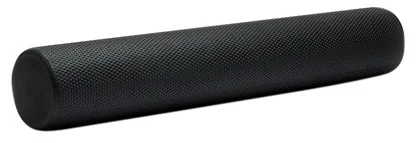
I’m sure most runners who use foam rollers have realized that DOMS can be reduced in some cases significantly and that we run better when using it.

Again, to little surprise, we have a study that confirms this:

Foam rolling effectively reduced DOMS and associated decrements in most dynamic performance measures.

No surprises. Sometimes, even when we’re sure we already know something, it’s nice to see science confirm this knowledge. Above are two cases where science has recently done just that.

Seattle Marathon: 4 days to go!

This article was originally posted by Ryan at the original HillRunner.com Blogs.

Image

The time is here! Only four days to race day! The work is done, you’ve been resting up and you’re probably bursting with energy right now. Don’t you wish the race was tomorrow?

Well, it’s Sunday. So what do you do between now and then to best be ready to go?

First and foremost, you don’t over think the race or spend too much time stressing out about it. Believe me, the weather forecast isn’t going to change every 5 minutes so there is no need to check it every 5 minutes. (For the record, I just checked for you and it looks chilly but dry!) Take care of the details but, after you’ve checked that you packed your shoes the first 10 times, you don’t need to check the next 20 times. Lay out a sound race strategy (think even splits/effort) and have faith in it. Don’t second guess it every 15 minutes. All of these things and all the other nervous habits you do will not help you and will in fact waste mental energy you could be using in the race.

Beyond not stressing over the details you’ve already worked out, what else do you need to do?

Hydrate. Now. Hydration is not something that’s accomplished in the 2 hours before the race or even in the day before the race. Hopefully you’ve already been taking care of hydration. If not, start right now by taking a break from reading and going to get a big drink of water. It can be hard with family Thanksgiving meals and other events going on but try hard to take care of your hydration.

Speaking of Thanksgiving meals, fuel healthfully. Stick with food you know and are comfortable with but focus on healthy food. And try not to overeat in a single meal tomorrow. Enjoy your Thanksgiving dinner but try to do so in moderation. In the past, aggressive carb loading or even depletion/loading for marathoners made a lot of sense. These days, with the amount of carbs most marathoners consume on the course, it’s not as critical and there are risks associated with changing your diet too significantly. The better approach is to eat a normal, healthy diet and maybe add on a few high quality carbs along the way.

As for race weekend, I also have a few thoughts:

I’m not sure what the Seattle Marathon people will think of me saying this but, when you go to the expo, try not to spend too much time there walking or standing around. Get your race packet. If you want to listen to a speaker get there early and get a seat. If you want to visit a few vendors plan it out ahead of time and do so quickly. Then get out and get off your feet.

Have a plan for dinner. Whether you’re doing the race’s pasta feed, eating at home if you’re a local or working out your own restaurant plans, have this plan in place ahead of time so you can eat what you want when you want.

In the evening, do something to take your mind off the race for a while so you’re not wasting energy stressing over it. Watch a movie, read a book, whatever you want. Just distract yourself.

On race day, it all comes down to execution:

You should have your pre-race plan down. You’ve practiced with long runs and you know what you need to do. When you need to get up, when and what you need to eat before the race. Execute this plan. Then get to the start line early enough that you don’t have to stress over whether you will be there in time.

You also should have your race plan down. How you’re going to handle the hills early and late, what kind of pace you want to carry, how you should feel at different points in the race, what to do when you hit a rough patch, what to do when you hit a good patch at different points in the race. Execute the plan. Enjoy the run and the accomplishment.

Then, after the race, be sure to celebrate!

For the runners I’m coaching, you’ll get a more detailed, personalized version of this post tomorrow. For the rest of you, I wish you well.

Shoes and forces of running, strong calves to fend off age related decline?

This article was originally posted by Ryan at the original HillRunner.com Blogs.

This week, a couple bloggers I follow posted some interesting things that I definitely would like to comment on.

Shoes and forces of running

First, Pete Larson at Runblogger had this interesting post about a study of rocker-soled shoes and forefoot pain.

I’d especially like to focus on what Pete says here:

I’m a believer that different shoes modify how forces during running are applied to the body…

This is a very important point that I think often goes unmentioned and even ignored. People talk about cushioned shoes absorbing impact for you or minimal shoes changing your stride in a way that reduces impact. I admit I’ve probably oversimplified and said these things at times myself. However, I don’t think these claims are sound. Regardless of how much cushioning you have between yourself and the ground, at some point your foot is going to come to a stop and has to support the weight of your body. Regardless of what part of the foot comes into contact with the ground first, some part has to absorb that impact.

While some might say a higher stride rate means the impact forces are lower, I’d point out that unless you are running faster a higher stride rate also means you’re going to be coming into contact with the ground more times per mile. So are you really reducing forces or just spreading them out over more impacts? I’m not sure about that answer but simple math suggests it’s not as simple as some try to make it, that it’s at least closer to a zero sum game than most people realize.

As for what to take with this information, I think the key point is to consider what gives you problems. If minimal shoes give you forefoot problems, consider shoes such as those with a rocker design or more cushioning that may shift some of the forces off the forefoot. If you have knee problems, consider shoes that will allow your foot to take more of the forces.

As usual, I’ll say there is no right shoe for everyone. There is almost surely one right type of shoe (most likely available from more than one manufacturer in more than one model so you can find all the details that will work just right for you) for you but that may not be the right shoe for me or for your cousin who is asking for shoe advice. This is why I dislike shoe advice. When asked, I usually suggest going to a good shoe store instead of offering a specific model as some people seem to expect.

How to fend off age related decline?

There has been a lot of research recently on age related performance decline. Well, Alex Hutchinson at the Runner’s World Sweat Science blog posts about another one.

In this case, runners were split into three different groups with average ages of 26, 61 and 78. Then average power at ankle, knee and hip were compared while walking, running and sprinting.

Interestingly, no significant differences were found at the knee and hip but there were some found at the ankle. A possible answer given is that we are using much stronger muscles to control the knee and hip than to control the ankle. As a result, as we lose muscle while we age, we can still maintain the same power output in those stronger muscles because they have more reserve power available. In the lower leg muscles, primarily the muscles making up the calf, we’re already using a higher percentage of total capacity in our youth. As we age and lose power, we reach maximal power output and can’t maintain.

So what does this mean? Well, it’s obviously too early to make any definitive statements. However, it suggests that maybe strength work for the lower legs would help reduce age related performance declines. Given the fact that there’s little downside I can see to doing some lower leg strengthening, I’d consider this another reason to in fact do what we should already be doing. That said, I am looking forward to more research to confirm this result and test the theory that strengthening the lower legs might help mitigate age related performance declines.

Seattle Marathon: Just 10 days to go!

This article was originally posted by Ryan at the original HillRunner.com Blogs.

Image

It’s getting close! Are you getting nervous yet? Checking the weather forecast every hour?

I often say this time the hardest time of marathon training for many runners. You’re used to working hard. There is a certain level of comfort that comes in doing the hard work. Now, that’s being taken away from you. You’re not working hard anymore and, after months of consistently working hard, you’re being asked to rest. Rest? What? That’s like a foreign language to runners. We know work!

It’s very important to get the rest in now, though. We’re 10 days out right now. The most optimistic estimates are that a workout begins to benefit you 10-14 days out from when you do it. That means, under the most optimistic assumption, today is the last day that you can do a workout and it will result in you being more fit when you line up on race day. In other words, nothing you do from here on out is going to make you more fit on race day. Your focus needs to shift from building fitness to resting and refreshing your body, while doing just enough to remain sharp and ready to run hard when race day comes.

So how do you do this? Well, the first thing I always say and the thing I’ve told several people already this week is that it’s time to think differently. Remember that you are far more likely to do harm by doing too much than by doing too little. If you are at all unsure about how much you should do now, err on the side of doing too little.

In a more broad sense, the general consensus, if there is such a thing when dealing with a taper, is that cutting volume while maintaining intensity is the most effective way to taper. This means cut your weekly mileage but not your workouts. You can do a lower volume in your workouts but keep doing them. How much to cut your volume depends on many variables and is different for everyone but I find that a range of reducing by 25% to 50% two weeks out and 50% to 75% on the week before the race works for most people. That’s a pretty broad range so here are a few things to consider when deciding how much to cut:

1) What was your training volume going in? If you were running 40 miles per week before, it’s harder to cut 50% and 75% than if you were running 80 miles per week.

2) How are you feeling? If you’re feeling good, you may not need to cut back as much. If you’re feeling beat up, physically or mentally, a more significant cut may help you recover and feel better by the time race day comes around.

As for workouts, keep doing them but cut the volume similarly. So what would have been a 4 mile tempo run might turn into 2-3 miles this week and 1-2 miles next week.

It can be tough to cut back on your training and keep up your confidence, especially if you identify as a hard working runner. If you’re struggling, review your training log. Look over all the miles and workouts you’ve been logging, all the hard work you’ve been putting in. You’ve done the work. Now is the time to rest up and absorb all that hard work so it will pay off on race day.

As for the pre-race nerves, they are normal. Reviewing your training log may help soothe those nerves. Checking the weather hourly probably won’t. For that, you may want to find some distractions.

Next week, I’ll post on Wednesday so we all can enjoy our Thanksgivings. In the meantime, rest up, make sure you’re still drinking plenty of fluids and eating healthy. And try to check the weather sites only once or twice a day.

Scroll to Top