
Ryan

2016 US Olympic Trials Marathon preview

This article was originally posted by Ryan at the original HillRunner.com Blogs.

Image

The US Olympic Trials for the marathon is this Saturday in Los Angeles. The races will be broadcast live starting at 1pm Eastern on NBC or you can check NBC Live Extra for online viewing.

Below is a bit about some of the favorites in each race, as well as a list of others who I think will run well and be in position if some of the favorites don’t come through.

Women

The women’s race is, in my opinion, the one with more drama. There are several contenders for the top 3 spots and just enough questions about most of them to be pretty unsure about what will happen.

Note: It was announced yesterday that Deena Kastor is out with an injury. I originally had her among the favorites listed. Sadly, I had to remove her before this got published.

Desi Linden

Linden is out for redemption. After qualifying to the 2012 Olympic marathon, she got injured and couldn’t finish in London.

Her most well known race would have to be the 2011 Boston Marathon, when she was leading very late in the race and took both herself and Caroline Kilel to the very limit before Kilel edged her out for the win. She returned to near form in the 2015 Boston Marathon, where she ran with authority and didn’t give in on her way to finishing 4th. It looks like she’s ready for redemption and might be able to put some pressure on Flanagan.

She’s healthy this time and, outside of Flanagan, clearly a cut above the rest. I wouldn’t be surprised if she wins.

Shalane Flanagan

Bottom line, Flanagan is the class of the field. Her version of an off day is still good enough to finish in the top three, if not win the race. However, she may not be at top form.

Flanagan has a long list of credentials. Olympic bronze in the 10,000. World Cross Country bronze. 18 US Championships. 6 American records. Just to name a few.

The one red flag on Flanagan is that she apparently has had some injury issues in her buildup to the Olympic Trials that have hampered her training. I still would be surprised if she isn’t fit enough to finish in the top 3. What would surprise me less is if those injury issues aren’t completely resolved and strike on race day.

Amy Cragg

Fourth place at the Olympic Trials is a tough place to be. Cragg (Hastings at the time) was that runner in 2012. She knows the top contenders well, being a college teammate of Linden’s and current training partner of Flanagan’s.

She has one of the faster qualifying times and has to be mentioned among the favorites given her history.

Kara Goucher

She has the credentials. Not quite as spectacular but similar career credentials to Flanagan. However, she seems to have been on a downward slide recently. Her coach says she’s ready. How ready? If she’s living up to her credentials, she would seem to be a pretty sure thing. If recent history is a guide, though, she’d be a well known dark horse.

Others to watch

While there are more "favorites" than on the men’s side, most of them have weaknesses or question marks. Don’t count out runners like Annie Bersagel, Sara Hall, Becky Wade, or (for my fellow Wisconsinites) Lauren Kleppin (originally from Milwaukee) or Kellyn Taylor (originally from Sussex).

Men

The men’s field has changed significantly due to recent announcements. From a somewhat surprising late entry (Galen Rupp) to two late withdrawls (Ryan Hall and Matt Tegenkamp), this field looks quite a bit different than we were expecting a month ago. Regardless, this is a field that looks pretty top heavy, with the top three on paper at least separating themselves from the rest.

Note: I originally had Ryan Vail listed as one of the other contenders. Sadly, it was announced yesterday that he is out with injury so I removed him from that list.

Meb Keflezighi

Who doesn’t know Meb? 2004 Olympic silver medalist. 2009 New York City Marathon champion. 2014 Boston Marathon champion. Especially with Ryan Hall out (and I’d argue even if Ryan Hall was in) the most credentialed marathoner in the field. We’ve been saying for years that he has to slow down at some point but he keeps surprising whenever you want to count him out.

Meb is aging but name three runners who you expect to beat him. Unless he has a bad day, which does happen with him at times, I don’t see him finishing outside the top 3. His greatest accomplishments come in slower, more tactical races. Saturday’s race will be just that. He has the proven experience and tactical intelligence. Nothing is a sure thing in the marathon but I’d be surprised if he doesn’t make the top 3.

Galen Rupp

Rupp announced he’s in just two weeks ago but his entry shakes things up quite a bit. While some suspect he still won’t run, I expect him to at least line up. He may not finish, especially if he finds himself outside the reach of a top 3 finish, but I expect him to give it a shot.

Rupp has the credentials at shorter events. He has the speed. His performances at the 10,000 on the track and the half marathon suggest he is capable of big things in the marathon. However, he’s never run one before. Who knows how he will respond to the distance? He’s the wild card of the event. I don’t expect him to lead early. However, if he can hang with the leaders to the late miles, it will be interesting to see if he can use his track speed or if the distance took that speed out of his legs. Given the fact that he won’t be going out at a suicidal pace like his teammate Mo Farah in his debut, I think he will hold on and have enough in his legs to at least finish well.

Dathan Ritzenhein

Ritz is the last "surviving" member of that great trio of high school phenoms from the early 2000s. Alan Webb became a middle distance runner and retired a while ago. Ryan Hall went straight to the marathon after college and just recently retired. Ritz took the middle road and is still a contender. He now has the fastest PR in the field, though that PR is now almost 3.5 years old. When he’s healthy, he’s very dangerous. From what I’ve heard, he’s healthy.

Ritz doesn’t quite have the big name of Meb and Rupp but, if he is healthy, I’d actually pick him as the most sure bet to make the team.

Others to watch

While I think these three are a step above the rest, there are other contenders. Don’t forget to watch for guys like Luke Puskedra, Bobby Curtis, Matt Llano, and Nick Arciniaga to name a handful of contenders.
“Fatigue” is not a four letter word

This article was originally posted by Ryan at the original HillRunner.com Blogs.

Image

Are you base training right now?

Are you experiencing some fatigue?

Are you concerned about the fatigue?

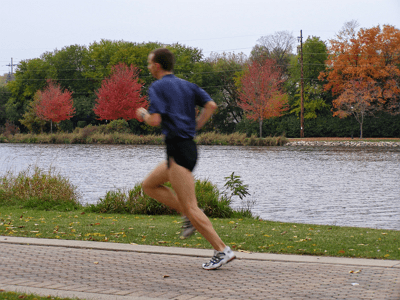
In many aspects of our lives, we are told to avoid extremes. Even in running, some will tell you to avoid fatigue. A little tired after a hard day, fine. Relatively constant fatigue? You’re risking overtraining.

I disagree. Fatigue is simply a result of training hard and a sign that you’re applying stimulus for your body to grow stronger.

Now, you don’t want to bury yourself in fatigue. You don’t want it to last for months on end. You don’t want to keep going down the fatigue spiral to depths that are harmful. However, experiencing a low to moderate level of fatigue for a few days or even a week or two before backing off and refreshing your legs is a part of training and should not be considered something to avoid at all cost.

January Update

This article was originally posted by Ed at the original HillRunner.com Blogs.

Wow what a month! January – even with its very cold days and a bunch of ice and snow gave me some great numbers. I had my highest ever weekly mileage total at 62.89 miles. I also had my highest ever monthly total at 245.17 miles besting my previous high of 229 miles. Unfortunately, I missed one scheduled run of seven miles. The route that I have been using has a number of good hills in it so I got some great hill training as well. Even though the pace was slow at a hair under eight minutes per mile I had plenty of great effort in almost every run.

I am feeling very good right now. This January I had more miles than I did September 2014 through April of 2015 and I had a successful 2015 racing season. I think there are great things to come this year.

Twenty nine days until the February update – see ya then folks.

Run – run – run!

Sometimes we just don’t know

This article was originally posted by Ryan at the original HillRunner.com Blogs.

It’s been a while since I’ve done a recap post. Here’s one in a slightly different format than we’re used to.

I’ve long believed that anyone who says they don’t have the answer to everything probably knows more than the self-proclaimed "expert" who claims to know everything. Let’s be honest, it’s impossible to know everything about every topic that can come up, even in a field in which you’re an expert.

For most questions, you can find an answer. However, sometimes there simply isn’t an answer.

For example, stretching before working out. First, we thought it was a good thing. Then we thought it was a bad thing.

The truth?

The review found few lingering negative impacts from these short stretches, especially if the volunteers followed that stretching with several minutes of jogging or other basic warm-up movements. … People who stretched in this way for at least five minutes during a warm-up were significantly less likely to strain or tear a muscle subsequently.

Now, distance runners are highly unlikely to suffer a strain or tear. These are injuries that typically occur in explosive sports. So the result for distance runners seems to be minimal likely benefit but also minimal likely detriment. So do what you’re comfortable with.

For another example, what will help with running injuries?

The answer isn’t all that clear cut. I’ve experienced this with plantar fasciitis, a very stubborn injury for some people. Depending on the individual, I’ve seen various treatments work. From shoe changes or inserts to direct stretching of the plantar facia to strengthening of the muscles of the foot to stretching of the calf or even hamstring to the Strassburg Sock. Sometimes it’s a combination of more than one of these things, sometimes just one of them gets the runner past the problem.

There’s not always a rhyme or reason for what works, either. So what do I usually tell a runner who experiences plantar fasciitis or any kind of soreness in the bottom of the foot? Try several things. See what works for you. Then be serious about doing it until the problem is completely resolved.

Sometimes this is what works best. Sometimes smacking the side of the TV was the best option (to use the analogy Hutchinson did in the link above). Sometimes trying whatever you can think of is how you will get over that injury. Why? We may never know. However, if it works, does why really matter?

My experiences with an activity tracker

This article was originally posted by Ryan at the original HillRunner.com Blogs.

Image

On December 15th, I got a new watch. The watch I chose (Garmin Forerunner 225) includes an activity tracker, something I didn’t necessarily need but thought would be interesting to experiment with and learn more about. Now that I’m almost a month in, I’d like to share my initial experiences.

As for the watch as a running device, I’ll offer a review once I use it a little more.

This post is focusing on the activity tracker features and, for the most part, not specifically about this device but my feelings on how these features in any fitness tracker may be useful and how they may not.

Heart rate monitor

The heart rate monitor in this device is interesting. It’s wrist based and works by shining a green light on your skin and measuring changes in how much light reflects off your skin (green light reflects off red blood cells better than other colors, hence the color choice).

Unfortunately, this specific device doesn’t automatically record heart rate except while running so I can’t automatically track my resting heart rate but at least it gives a convenient way to manually check my resting heart rate.

Of course, we know that our resting heart rate goes down as we gain fitness and when we’re well rested but spikes when we’re overtrained. This information can be useful. I haven’t been checking my resting heart rate much but I can see the potential usefulness of this.

Activity tracker/step counter

It’s important to note the pros and cons of wrist based activity trackers as compared to old fashioned pedometers.

The pros are that you don’t have to have something attached to your belt and they are on your wrist where you can easily check on your progress throughout the day.

The cons are that, being on your wrist instead of your hip, accuracy won’t be quite as good. I can definitely see times when my steps aren’t being counted. I see other times where I’m not walking and my step count is increasing due to something else I’m doing. In general, though, I do think the recorded step count is a pretty good proxy for how active you have been throughout the day.

So what’s the benefit of the step counter? Personally, I’ve found it to just be something fun to play around with. It’s fun to do a long run and see 20,000+ steps before noon. It has made it clear to me how little activity I do in the winter outside of running. Unfortunately, it hasn’t necessarily changed my habits but that’s on me, not the device.

I can see the benefit, though, if a person would use the step counter as motivation to hit a target. Anything to encourage more activity will result in a healthier lifestyle. Just because I don’t use it that way doesn’t mean it isn’t a benefit for those who do use it that way.

Move alerts

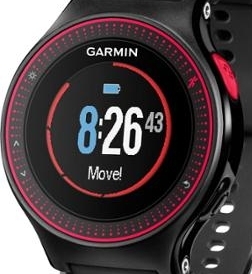
The Forerunner 225 comes with a "Move alerts" function. This basically buzzes or beeps at you and tells you to move if you’ve been sitting for an hour without a walking break. It then will not reset itself until you’ve walked for 2 minutes.

Conceptually, this seems like a great idea. We now know that sitting for long times is bad for our health and frequent short walking breaks like the 2 minutes needed to reset the move alert are all it takes to negate the negative effects of sitting.

In practice, it didn’t work for me. I ended up turning move alerts off. Partly because I didn’t want it buzzing me during meetings and partly because I couldn’t get it to reset just by walking around the house without basically walking laps. I just found it to be an annoyance more than a useful tool.

Again, though, this is on me. It could be very useful for people who use it to motivate themselves to get up and move around every hour.

Sleep monitor

This is something I was very curious about. The sleep monitor works basically by monitoring your movement throughout the night. It then tells you how much deep sleep (with very little movement) you had, how much light sleep (with a little more movement) you had and how much awake time (with a relatively high level of movement) you had throughout a night.

I found it surprising how much I move around overnight. Apparently I’m not getting as much deep sleep as I thought I was. This was an educational experience for me. It’s also interesting to see when I am sleeping deeply and when I’m not.

I suspect I might be able to use this information to help improve my sleep quality if I can find some correlation between my quality of sleep and things going on in the house. It would also be interesting to do things like adjust the thermostat and see how my sleep is affected.

While I have done very little with this information at this time, it’s actually where I’m most expecting to gain some benefit. Basically because I’m expecting to actually act on the data.

Conclusion

As usual, the tool is just a tool. It’s all about how you are going to use it. Personally, it seems like a fun toy for me for the most part. If I can convince myself to change some habits due to what this is telling me, maybe I’ll change my mind.

However, if you’re committed to change your habits based on what an activity tracker is telling you, I can definitely see where it can be useful.

Sure, you can change your habits without the use of an activity tracker. However, I’m a numbers guy. I know how it works for people like myself. If you will use the numbers to hold yourself accountable, then it could be very useful. The numbers may not be perfect but, in a general sense, they don’t lie. If your device records 10,000 steps yesterday and only 8,000 today, it’s a pretty sure bet you were a fair bit less active today. If you’ll act upon that information, then it can be a good motivator to improve your health.

Scroll to Top