Ryan

Priorities

This article was originally posted by Ryan at the original HillRunner.com Blogs.

Image

I’ve seen more of this than my running shoes over the past few days

I’m purposely scheduling this to appear while I’m on a family vacation. I’ll have spent 3 days at Disney parks with my wife and 7 year old daughter by the time this appears. I have no idea what my training will have looked like during those 3 days or in the days following as I’m spending time in airplanes and visiting family I see very infrequently. You know what? I don’t really care what my training looks like. I hope I can get out for some runs but I’m not worried about what those runs will consist of.

I say that just as I’m approaching my spring racing season. Seems crazy, doesn’t it?

We all need to decide where running fits into our list of priorities. I can only hope that, for anyone reading this, family comes before running. Beyond that, there may be other priorities ahead of running or there may not. When you figure out your priorities, though, you have to keep them in mind. For me, this week at least, that means running takes a back seat. I’ll be back at it soon enough but, for now, I’m busy creating memories that I will have for the rest of my life and I can only hope my daughter also will. That’s far more important than one week’s worth of training.

So, next time you have to decide between running and something else, decide what your priorities are and make the wise decision. I believe that, this week, I’m making the wise decision even if it means I’m a few seconds slower in my next 5K. I won’t regret missing out on those few seconds at all.

Running in polluted air

This article was originally posted by Ryan at the original HillRunner.com Blogs.

Just one topic this week. The reason will be more clear if you read Thursday’s blog post.

This is a very interesting question, though. I think we’ve beaten the "running is good for you" topic to death recently.

But what about in pollution? This is a question I’ve wondered about frequently. I’ve always felt that running in pollution is probably better than not running at all and what limited research has been available has mostly confirmed that. However, there has been a lack of long term research on this topic.

Well, Alex Hutchinson found a study that covered this topic.

The result?

There were a few hints of possible interactions. For example, people who cycled or gardened were 45 percent less likely to die from respiratory diseases during the study than non-exercisers if they lived in low- or moderate-pollution areas, but only 23 percent (for cycling) or 19 percent (for gardening) less likely in high-pollution areas.

Common sense of course says breathing polluted air is bad for you and that’s clear in these results. That means, as much as possible, it is wise to avoid the most polluted areas. Try to stay away from busy highways when running and things like that. However, more importantly, exercise is better than none regardless of the air you’re breathing.

Going to the track? Ignore the GPS

This article was originally posted by Ryan at the original HillRunner.com Blogs.

Image

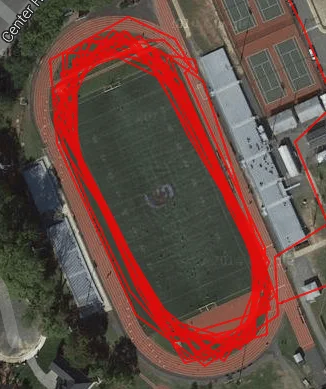
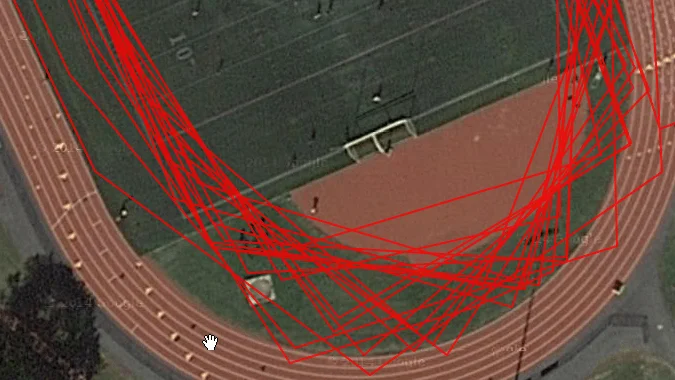
It doesn’t take much to create very poor measurements on a track

Last week, one of the runners I coach decided to take her workout to a track. Personally, I think this was a good idea as there are advantages to the track that she could benefit from. However, she decided to still keep track of her pace using her Garmin. With her permission, I’d like to share some of her experience because I think she got caught in a worst case scenario of what can go wrong with GPS devices at the track.

In short, she was doing a 2×2 mile workout. She knew to run 8 laps for 2 miles* but, in her first 8 lap repeat, Garmin recorded her as only running 1.76 miles. On the second, I believe she forgot to hit the lap button at the end of her 8 laps and she actually ended up running roughly 9.25 laps before her Garmin registered her going 2 miles. As a result, when she checked her Garmin to see the pace she was running, it was reporting her running about 30 seconds per mile slower than her target pace. Even though she was in fact running about 30 seconds per mile faster than her target pace. She finished the workout very frustrated until I looked at her Garmin tracks and recognized what was going on.

So what happened? How were her distances and paces off by so much? Well, the picture at the top of this post tells most of the story. Garmin recorded her route as being inside the actual track the whole way around. Below are a few close-ups that demonstrate what went wrong.

Again, I think this is a worst case scenario of what can happen but I think it serves as a good warning of what you can experience while running on the track. So, here’s what went wrong:

A little off adds up to a lot:

Image

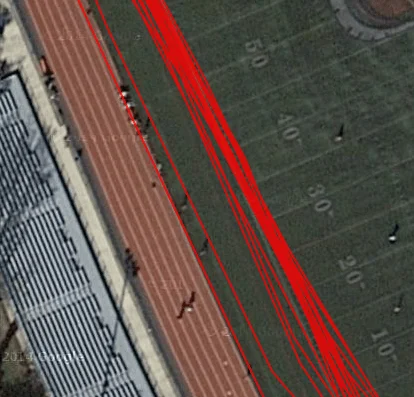
Garmin was "a little" off. Over 8 laps, a little each lap can add up to a lot.

The first problem was what was happening on the straights. As you can see in the above picture, Garmin tracked her as running down the straight on the inside of the track. This may not seem like a big deal. It’s not when you’re running down a straight road or trail. Whether it tracks you right where you are, 5 feet to the right or 5 feet to the left doesn’t really make a big deal. On the track, though, if it’s tracking you consistently 5-10 feet (or more) inside the track, that adds up when you’re running multiple laps.

Image

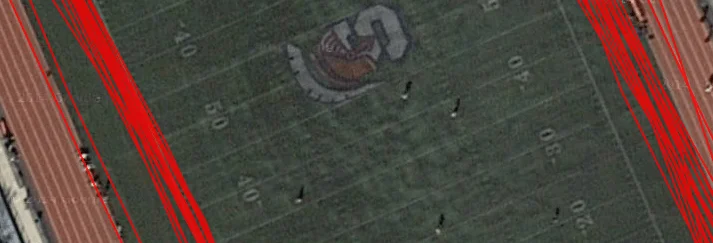
Worse yet, Garmin recorded her inside the track on both sides

This might not be a problem if Garmin consistently tracks you 5 feet off to the same direction. That’s not what she was experiencing, though, as you can see in the image above. Garmin was consistently tracking her on the inside – on both sides of the track. That’s where you get inaccurate distances from.

Cutting corners

Image

Nobody in their right mind would run like that!

The other big problem with GPS devices on the track is what you see happening above on the turns. GPS devices aren’t constantly tracking you every millisecond. They record your location once every several seconds and "connect the dots" to estimate the route you actually took. Again, this isn’t a problem when you’re running straight ahead on a road or trail as we do most of the time. It’s a big problem when you’re spending half of the time turning.

As you can see, Garmin assumed that she took perfectly straight lines between the points it recorded her location at. In this case, it meant Garmin recorded her running well into the infield, significantly shortening her route over 8 turns per mile.

These two factors combined resulted in Garmin roughly turning her 8 lap repeats into the distance of an actual 7 laps and greatly messing up her reported pace and distance. This is an extreme example of what can happen but I’ve seen this happen with other runners.

What to do?

So how do we avoid these inaccuracies? Well, you don’t have to avoid the track. There are some good reasons for hitting the track. However, you have to understand that tracks and GPS devices don’t get along well together. Instead, just use the stopwatch. If you want to check your pace, know what lap splits you’re going to be looking for and you can check every 1/4 mile if desired.

* Note: Yes, I know 4 laps on a track isn’t exactly 1 mile. It’s roughly 9 meters short of being an actual mile. 9 meters, though, is less than 3 seconds at 7 minutes per mile. Unless you have some need to be extremely precise, it’s close enough to serve the purpose.

Good kinesio tape? Bad antioxidants?

This article was originally posted by Ryan at the original HillRunner.com Blogs.

I came across a good summary of what we know currently on kinesio tape that I wanted to pass along. Also, mixed results for mega doses of antioxidants.

Good kinesio tape?

Well…maybe not. Unless you like the placebo effect. (Note: I’m not opposed to using placebos if they will help.)

Bad antioxidants?

In recent years, we’ve heard of the bad side of long term megadoses of antioxidants.

There’s a new review of studies out looking specifically at Vitamin E and some related compounds with some interesting results:

[quote]On the basis of vitamin E and NAC studies, acute intake of antioxidants is likely to be beneficial. However, chronic intakes of most antioxidants have a harmful effect on performance.[/url]

In other words, short term intake appears to be good. Long term intake, not so much.

Measure what matters

This article was originally posted by Ryan at the original HillRunner.com Blogs.

Image

How useful are lab tests?

Would you believe that I, a competitive runner of 25 years, have never taken a VO2max or lactate threshold test?

It seems like everyone has taken one or both of these tests. I’ve been asked what my test results are and people are shocked when I say I haven’t taken them.

The question I’d like to ask, though, is what we get out of these tests. What do they tell you that will help you become a better runner? We now know that training right at VO2max and lactate threshold isn’t necessary. In fact, it’s better to train at a range of paces around but not necessarily directly at those paces.

For example, with lactate threshold, we now know that, by training below lactate threshold, we can improve our ability to produce less lactate while running at relatively high intensities. By training slightly above, we improve our ability to clear lactate from the bloodstream by reusing it as an energy source or shunting it to other muscles so they can use it as an energy source. These benefits are stronger when you’re not right at lactate threshold than when you are.

But don’t you need to know your lactate threshold pace in order to know what paces to train at in order to be above or below? Here’s the cool thing. You don’t have to be precise. It’s actually not a bad thing to feel your way into these paces. It’s not the end of the world if you’re a little off. There is leeway built into this.

Besides, if you train at race efforts which I’m a big fan of, you’ll get the physiological benefits of the workouts, plus you’ll be getting practice feeling race pace. That makes you better able to feel your way into the right race pace on race day instead of relying on external measures. I’ve covered the benefits of running by feel instead of relying on external measures previously.

So what should we be measuring instead? Performance measures. How fast are you running your races? Are your workouts getting faster (or easier) from month to month? These are the things that are going to tell you how your running is progressing. A VO2max or lactate threshold test, while it may be fun to know the numbers, doesn’t produce a lot in regards to actionable information.

Note: This was inspired by a post written by Steve Magness at his great blog. I thought it was a topic very much worth bringing up here.

Scroll to Top