Ryan

Become a writer

This article was originally posted by Ryan at the original HillRunner.com Blogs.
Just one link this week but I think it’s a very good one.

We’ve probably all heard by now about the importance of keeping a training log. I hope we all are keeping a training log.

In addition, have you considered writing before a race about not just your training but also your upcoming race? Especially if you’re nervous about the race, it could be helpful.

This article about writing about your running makes a good case for writing more about your running.

It covers the training log aspects. The idea of reviewing your training to gain confidence in the work you have done, seeing where your strengths and weaknesses lie and so on.

In addition, it puts a real focus on writing about your race ahead of time. By getting your aspirations, apprehensions and other feelings about a race down on paper (or, I suppose, pixels) before the race, I believe that allows you to deal with your emotions ahead of time. As mentioned in the article, it also allows you to remember what your goals are, why you set those goals in the first place and plan out the best strategy, including backup plans in case something doesn’t go as originally planned, to accomplish those goals.

Writing out your plans and reviewing your logs also allows you to ensure your goals truly fall in line with where you are in your training. Maybe you find that your original goal was too aggressive and you can back off it a little. Or it was a little too conservative and you can bump it up a little.

So, if you’re not keeping a training log right now, what are you waiting for? Get started! If you are, great but are you doing more? Try writing down your goals and your plan to accomplish those goals before your next race.

Crazylegs

This article was originally posted by trivianut at the original HillRunner.com Blogs.

This is the largest road race in Wisconsin, with 10,000 runners. There are some similarities and differences to Al’s Run. They’re both 8k races, with large fields and plenty of competition. The main difference is Crazylegs has a wave start, based on predicted time. Waves of 200 runners go off every 30-45 seconds. My estimated finish time of 38 minutes put me and my son in wave G. On the one hand running around a bunch of slower runners in waves that went off earlier was a bit frustrating, and it meant that the course was always full of runners. The benefit for me was it allowed me to focus on my effort and not get sucked out into too fast of a pace. Plus I always had people to focus on and pick off. The course winds from the Capitol down to campus, along lake Mendota, and then returns to finish inside Camp Randall stadium where the badgers play football.

Having no real idea where I might finish (35-38 minutes I was guessing), I focused on a hard steady effort. My splits were pretty indicative of that, with the possibility that I had more to give with the last split…

7:05

7:05

7:21

7:22

6:40 (.97)

Overall 35:33, 606 out of 10,000, 21 out of 444 in 50-54 AG

I was really happy with the result, since my last race (Al’s Run) was frustrating with the ankle turn. My training has focused on just getting out there 5-6 days a week, 5-6 miles a day. No special runs or speed workouts, and I am running a half marathon next Sunday so I didn’t want to hurt my recovery. I’m running the half with my daughter most likely, so my time will be slower. At 51 I do recover more slowly from workouts in general, and I’m careful about my balky right knee, so I plan continuing with the steady runs an will try to add a bit more mileage as the warmer weather comes.

Do you understand what’s being said?

This article was originally posted by Ryan at the original HillRunner.com Blogs.

Image

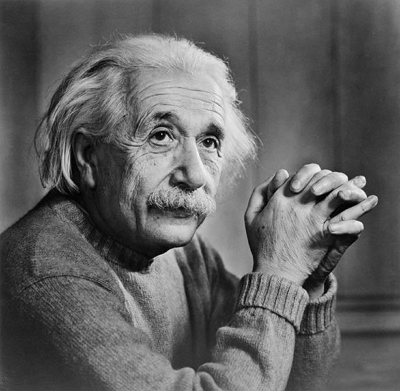
"If you can’t explain it to a six-year-old, you don’t understand it yourself." – Albert Einstein

We all know the person who knows it all. This person has no trouble talking your ear off with big words and scientific names. You’re blown away by this person’s knowledge. You can’t keep up with all the terminology. Unfortunately, a lot of what this person has to say is lost on you because you simply can’t follow along.

However, here’s something to think about. Does the person really know what he or she is talking about? How are you to know? All you know is you don’t know what he or she is talking about.

It’s easy to memorize and use a few big words. For certain personality types, it can also be quite fun. It makes them feel smart, even if they aren’t totally sure of what they are talking about.

In my experience, the bigger the words and more inaccessible the language the person uses, the less the person actually knows about what he or she is talking about. The better one’s ability to explain things in plain, everyday language, the better grasp of the topic that individual has. The Einstein quote above articulates this phenomenon quite well. If a person can’t explain what he or she is talking about in plain language that anyone can understand, how well does that person really understand what he or she is talking about?

More important, if you don’t understand what that person is talking about and that person can’t or won’t use plain language, what are you getting out of the discussion? Frustration? Confusion? Certainly not useful, actionable knowledge.

Next time you encounter someone using big words, don’t hesitate to ask them to explain in more plain language. If they are truly knowledgeable on the topic, they will appreciate your request and gladly do so. If they don’t, they probably don’t know the topic as well as they would claim and you’re not going to get anything out of the conversation anyway so you’ll know all you need to know to end the conversation with the confidence that you’re not losing anything by doing so.

Running and knee osteoarthritis, pre-run static stretching

This article was originally posted by Ryan at the original HillRunner.com Blogs.

Two studies in this post that remind us to keep an open mind until the science is settled.

Running and knee osteoarthritis

If there is one health factor for which it seems running may be bad for us, that would be knee osteoarthritis. Do we essentially wear our knees out by running? Possibly.

Or, possibly, not.

These results, the team says, suggest that regular running does not raise the risk of knee osteoarthritis among the general population; it may actually protect against the disease.

Is it a sure thing? Hardly. However, this is a positive sign and this also makes sense intuitively. While we do place a lot of strain on our knees while running, most runners will not run upwards of 1 hour per day. For the other 15 hours (if you figure 16 waking hours a day) we’re carrying less weight around on our knees as the average runner weighs less than the average non-runner.

Which is harder on the knees? Running 1 hour or less per day or carrying extra weight all day? It’s hard to say for sure but this gives us some hope that there is another positive health aspect to running. At the very least, it might not be bad for us in this one way it has seemed it could be. Again, hardly a sure thing right now but definitely something I’d like to see more on.

Pre-run static stretching

We’ve heard a lot in recent years about how pre-run static stretching is probably bad for your running performance. It makes sense. Elastic muscles are more efficient as they can act like springs or rubber bands to store energy when stretched and release that energy upon contraction.

However, a new study suggests this may not be the case:

These data suggest that SS of short duration (<30 sec) may actually improve acute speed performance, whereas SS of moderate duration may not hamper speed and agility performance.

What to make of this? Personally, I’m not taking too much into this at the moment, other than to keep an open mind. Maybe static stretching is bad. Maybe it’s actually good. It’s hard to say right now. This is the nature of science, though. We don’t always have a clear picture of things.

2015 Boston Marathon prediction contest

This article was originally posted by Ryan at the original HillRunner.com Blogs.

Image

Win some cool HillRunner.com gear!

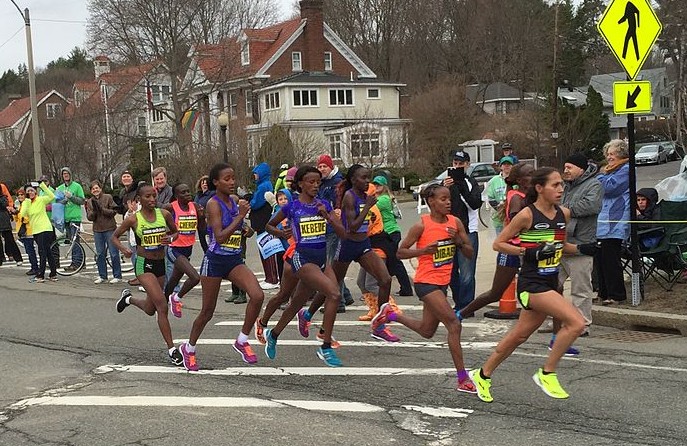
It’s Boston Marathon time! You know you’re already thinking about who will win and how fast the winning times will be. Why not win something with your predictions?

We’ll have two winners, one each for the men’s and women’s races.

How to enter:

– Pick the top 3 for each race

– Pick the winning time for each race

– Get them to me, via comments, contact form, email, Twitter, Facebook or any other method available.

Scoring

If one of your chosen top 3 wins: 5 points

If one of your chosen top 3 finishes second: 3 points

If one of your chosen top 3 finishes third: 1 point

2 bonus points for each runner who finishes the exact place you pick for them.

In case of tie, the tiebreaker will be whose predicted time is closer to the actual winning time.

Again, the men’s and women’s races will be scored separately. We’ll have a winner for each.

Here is the most recently updated elite entries list I was able to find.

The elite women start at 9:32. I will accept any entries received by 9:00 Boston time (8:00 Central) race morning.

Scroll to Top