Barefoot running: It’s about how you run more than what you run in

This article was originally posted by Ryan at the original HillRunner.com Blogs.

Image

Another study on barefoot running is out. I find this one to be of particular interest because it’s asking a question I would like to see asked more often: is the benefit of barefoot running due to what you’re running in (nothing or next to nothing) or how you’re running (eliminating the heavy heel strike)? I have my opinion on this answer but I’d like to see science back it up.

This is a small study (only 12 runners) so it hardly closes the book on the question but it’s a step forward in beginning to explore the question.

As for the answer itself, it seems to conclude the same thing many people, myself included, believed. The benefits (and risks) of barefoot running have to do more with how we run (forefoot plant) when barefoot than what we’re running in.

Specifically, the runners, whether wearing shoes or not, gain shock absorption when switching to a forefoot plant. Going barefoot and keeping your heel plant, not surprisingly, increases injury risk. The risk of switching to a forefoot plant, also not surprisingly, is an increased load on your calf muscles. Specifically, the gastrocnemius, which is the outer muscle of the calf.

What’s the takeaway of this? Here’s what I’m taking out of it. If you’re going to consider minimal or "barefoot" shoes or barefoot running itself, remember, the shoes are a tool. It’s not the shoes that improve your running, it’s the form changes that the lack of cushioning in those shoes forces. At the same time, proceed with caution. Your calves will need to work harder than they are used to if you currently heel plant. As with anything, build up slowly.

In other words, the same thing some of us have been saying for years, going back even before Chris McDougall’s book was published.

Birthday races

This article was originally posted by Ryan at the original HillRunner.com Blogs.

Image

A less serious topic, just because (and it’s not even my birthday, this was spurred by a conversation with another runner who recently celebrated a birthday).

I have often been asked why I don’t celebrate my birthday with a race. Maybe it’s because I’m not a huge fan of racing in Wisconsin winters, which complicates things with an early February birthday. Maybe it’s because, while I’ve always thought of myself as a competitive runner, I’m a runner first and competitive second. Racing is an incredible experience and my running life would have a huge hole in it if racing wasn’t a part of it but I don’t run to race. I race because it’s a part of the running experience for me. I sometimes enjoy a relaxing long run through nature even more than I do a race.

Or maybe it’s because last time I did a birthday race, not running well was only half the story. Guys in the age group I joined just days earlier took 3 of the top 4 spots overall. What a welcome to a new age group that was.

Thoughts on GPS watches after 6 months with one

This article was originally posted by Ryan at the original HillRunner.com Blogs.

Image

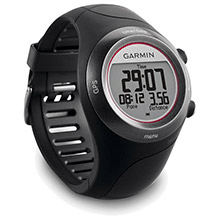
It’s been just over 6 months now since I began using my Garmin Forerunner 410. My first run with the Garmin was September 8th. As any of you who know me well know, I’ve long had concerns about using GPS devices for training. I have to say that some of my concerns have been proven correct through my own experience, while others have been allayed. At the same time, I’ve found some benefits to using GPS.

First, to go over my primary concerns and what I’ve found through personal experience:

Runners trust the GPS too much. I know it’s not 100% accurate so I haven’t fallen into this trap but I’ve seen the inaccuracies that show how dangerous this trap can be. When running on roads, it’s usually quite accurate. There is some error in the early stages when the device is still locking on to the satellites and you can always find error even late in a run but it will get your distance pretty accurate most of the time. There are exceptions, though, so you’re playing with fire if you place too much trust in your GPS. On wooded trails, it’s another story. You will get very strange results. Don’t be surprised when your readings turn out very inaccurate. I’ve heard of similar problems when surrounded by tall buildings in urban areas but I have no personal experience in this regard.

As a sidenote, certified race courses as well as many that aren’t certified are measured with far more accurate methods than GPS. Please don’t tell race directors their courses aren’t accurate based only on the fact that your GPS said it was a little off. Chances are it’s the path you took through the course and/or inaccuracies in GPS measurement that are a little off.

Runners are too dependent on the GPS, forgetting how to run by feel and focusing too much on trying to hit the "right" number. This is a real problem. Maybe it’s partly because I’ve always been a numbers guy but this has personally been a constant battle. The numbers are too readily available. I can check my current mile pace at any time in real time and it’s generally reasonably accurate. I can get reasonably accurate mile splits. This creates constant problems for a numbers guy like me. Maybe it’s different for others, though that’s not what I hear when I listen to other runners talk about using their GPS watches, but I’m constantly working on paying less attention to the Garmin. I generally do a good job but I won’t deny falling into the trap at times.

Now, a couple primary benefits I’ve found:

Workouts are even easier. Want to do mile repeats? Not a problem. Set your watch to give you an alert by distance. Want to do timed repeats? Just like any good running watch, it can also handle that. Mile repeats with timed recoveries? No problem. Of course, we can accomplish the same type of workout by time. 5 or 6 minute repeats in place of mile repeats will, for someone running 5-6 minute pace, be the same workout. However, I don’t think I’m alone when I say there’s something nice about doing mile repeats. Also, when not running on a track, it’s nice to have time and distance so you know what paces you were hitting.

Tracking your training is a breeze. This can be a double-edged sword but, used properly, can be very helpful. Just upload your data to Garmin Connect and it’s all there. I’ve been able to easily notice where in my tempo runs I might surge or let up a bit, which has allowed me to focus on those parts. This helps me get more out of my tempo runs and carry over what I learned into my racing so I can run my races more efficiently, which should translate to faster times.

I know I’m leaving off a lot of both pros and cons of GPS watches. I’ll probably touch on some or even expand on the above topics in the future. In the meantime, do you think I left off something that is a significant benefit or detriment? Feel free to comment with pros and/or cons that I left off the list.

Revival

This article was originally posted by Andrew A. at the original HillRunner.com Blogs.

With a new team for the new year, I am once again wanting to blog more. I have committed myself to a seasonal summer focus on middle distance (800m-5000m) and leading up to that will race 5K-21K on the roads. The ideal is to be ready to compete in either 1500m or 5000m at Masters Track Nationals in mid-July in Kansas. I will likely be blogging more about my own training than I have in the recent past, hence reviving the blog I had used for that in the distant past.

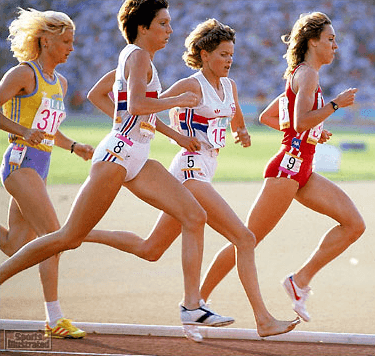
Today I went and spectated at C.U.’s early-season home meet, the Jerry Quiller Classic. It was invigorating to be around a track meet setting again, to see competitors getting after it in spikes. The crack of the starter’s pistol, the field bunching together and then dispersing, the labored gasps, the rhythmic coordination of arms and legs, the grins at the finish. Part of me wanted to be racing the 3000m, though I am keenly aware that today I would have been drubbed royally by the guy who finished last. I take that to mean that I should move one of my weekly workouts to the track, though.

The year so far –

This article was originally posted by Ed at the original HillRunner.com Blogs.

My feelings are a bit diametrical regarding my running so far this year.

On one end I have placed my distance goal of 2,013 miles for the year in jeopardy because of a bad Januray and bad February. As of tomorrow I should be hitting about 414 miles for the year so far to be on the correct pace. I am only going to be at 202 miles for the year. That is a differnce of 212 miles! That is a lot of ground to make up.

On the other end I am way ahead of where I was last year at this point. Last year at the end of March I had 62 miles and this year I will be close to 300. So I have a great shot at achieving my race goals of cutting my times down significantly and placing well overall as well as in my age group.

Scroll to Top