
2017 NYCM: Shalane! Meb!
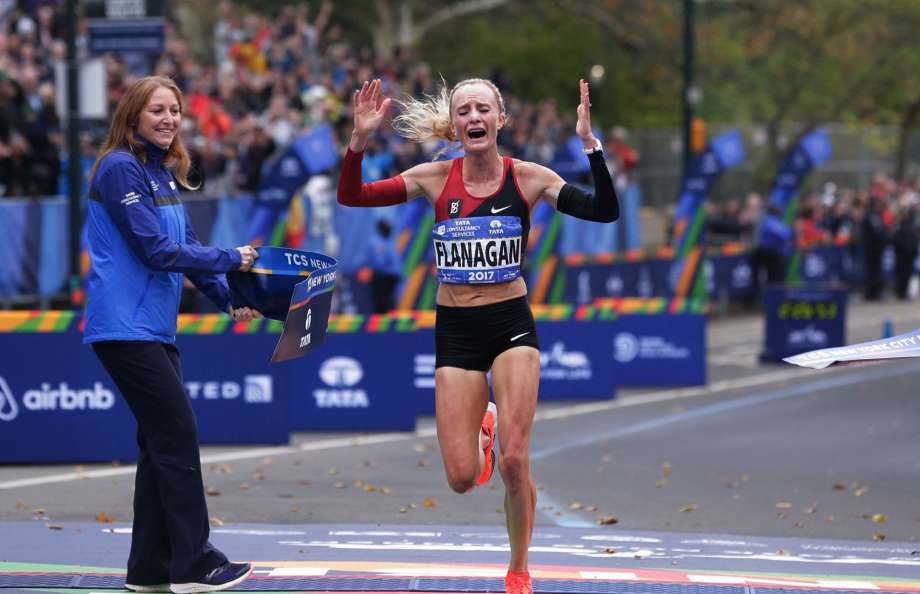
What a race, especially for American fans! We saw two long time American distance running greats in very memorable runs. …
What’s going on in the world of running?
What a race, especially for American fans! We saw two long time American distance running greats in very memorable runs. …
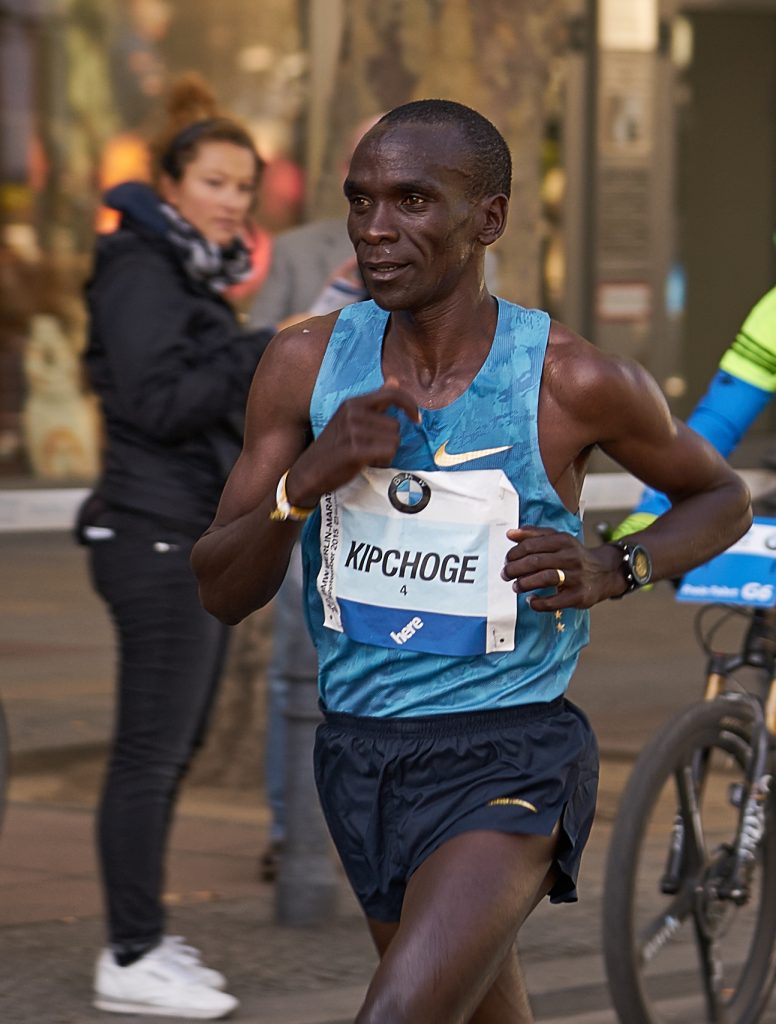
The 2017 Berlin Marathon was run yesterday. The men’s race was billed as an almost certain world record. It had the most dominant runner of recent years, Eliud Kipchoge, who was coming off his 2:00:25 “Breaking 2” effort. It had Kenenisa Bekele, who last year came up just seconds short of the world record. It had former world record holder and serial 2:03 runner Wilson Kipsang. How could this race not produce a world record?
Well, Kipchoge won in 2:03:32. 35 seconds short of the world record. Bekele and Kipsang didn’t finish. Instead, first time marathoner Guye Adola pushed Kipchoge, even taking the lead late in the race, before finishing just 14 seconds back.
What did we learn from this event?
…
This article was originally posted by Ryan at the original HillRunner.com Blogs.
As I’m sure most of you are aware, Nike had its Breaking 2 run this past weekend. Three runners were given every advantage (some that broke IAAF rules, making the run record ineligible) to see if someone could break 2 hours in a marathon.
The final result? Eliud Kipchoge came closer than many, myself included, expected by running 2:00:25. The other runners ran 2:06 and 2:14. Outside of Kipchoge, the results had to be seen as disappointing. Kipchoge, though, proved how great of a marathoner he is.
Yes, I’m late to the game in talking about this but I really didn’t have anything to add to this and didn’t want to post something just because I could. Now, though, I have some thoughts after the fact that I’d like to share.
What was this all about?
This was billed as testing the human limits. In my opinion, though, it was primarily a very well executed marketing ploy by Nike. They had a product line they wanted to gain some publicity for and, through this project, they got the kind of publicity you can’t buy. Hat tip to them for the excellent marketing.
Beyond that, it was an interesting science experiment. If you put everything together, short of crazy things like running down the side of a mountain, how fast can a person run a marathon? Bring together the best of everything, bending and breaking a few rules along the way as necessary without making the whole effort seem ridiculous, and see how fast an elite athlete can go.
What it wasn’t is a race. This was purely a time trial.
What did we learn?
Eliud Kipchoge is an amazing athlete.
Nike knows how to get people talking.
Personally, I learned a lot about optimizing marathon performance. For example, the draft given by the car and clock as well as by the pacers was apparently worth probably 60-90 seconds. According to Nike, they were saving 7 seconds per aid station by having someone moving alongside them to hand their fluids off.
What about the shoes?
Nike can claim all they want that these shoes make you 4% faster. That doesn’t make it true.
For a 2:05 marathoner, 4% faster would be exactly 2:00. Do we really believe Kipchoge, with all the benefits he was given Saturday, could have only run a 2:05+ in another pair of shoes?
What did we miss out on?
If only we knew. The biggest disappointment I have in this whole process is that we missed an opportunity to see Kipchoge line up against the field in London. That was still a great race but what would have happened with Kipchoge in there? It might have been an epic race. Personally, as a greater fan of racing than of time trials, I feel like it’s a shame we’ll never know.
To be honest, I was very disappointed about this when I first heard of this attempt. After the fact, I’m still a bit disappointed but, as long as this doesn’t become an annual thing, I think it was an interesting experiment. I wouldn’t say I’m happy they did this but I’m OK with it. It was interesting to see how it worked out and hear the analysis of what these different factors do to an elite marathoner’s time.
What comes next?
I thought this would be a one off thing. We’d see the attempt, they would come up 1-2 minutes short of the goal, and this would fade into memory. Now, with Kipchoge coming in 1 second per mile short of the goal, I have to wonder if there will be another attempt in the near future. To be honest, I kind of hope not.
As much as I dislike time trialing and uncompetitive record attempts, I kind of hope Kipchoge will run Berlin this fall and see what happens if he takes a shot at the world record. At this point, I think that’s the most likely thing to happen. At first, when I thought about his run on Saturday, I figured he could take a minute off the world record. The more I think about it and read about what likely led to this performance (such as this analysis by Ross Tucker) the more I suspect something more in the 20-30 second range if everything works out. That said, to think about a 2:02:30 is pretty amazing itself.
Beyond that, I have no idea what’s up. Hopefully, Kipchoge has some races left in his legs and can keep going for a while. That said, he’s not a young guy. The next generation is already here but there is no obvious successor to Kipchoge’s level of brilliance. Not that someone won’t come along but I don’t think we know who that will be yet.
This article was originally posted by Ryan at the original HillRunner.com Blogs.
A bit of a different post this month. Earlier this month, Nike announced that they will be fielding an attempt to break 2 hours in the marathon in the spring of 2017. Shortly later, Adidas announced that they had a similar initiative in the works. Both have apparently been working on this for years.
I’ve written about breaking 2 hours in the marathon in the past when the topic has come up. In 2014, I said don’t expect to see a 1:59 in the next decade (by 2024) and I’m not even convinced it would happen in the next 20 years (by 2034). So am I writing this off as something that never will happen? Well, not completely. Here’s why.
There are routes to a faster marathon time. Some are illegal when it comes to record consideration, some are of questionable legality, some are perfectly legal but are not likely to happen in a normal race. I’ll list out an example or two from each category in order to give you an idea of how this might happen. This is not a comprehensive list of what we may see attempted, just a few examples of what we may see.
Course or schedule modifications: The current word is that Nike is not planning a record ineligible course, such as an all downhill course or one that can guarantee a tailwind the whole way. That said, they can do other things. Such as developing a course with few or no sharp turns, which slow down runners at elite paces.
They can also mess with the schedule. They can say something like we’re planning this attempt on Saturday morning but, if the wind is unfavorable or if it’s a bit too warm, we’ll postpone to Sunday. This would make the attempt not record eligible but wouldn’t seem to be all that outrageous.
Shoe modifications: Adidas already has their energy return foam technology, which has been in the shoes of recent marathon world records including the current one. These haven’t been controversy free but have been largely accepted.
What is raising more eyebrows is the fact that Nike recently filed a patent for shoes with spring plates. Springs in shoes are currently in a legal limbo. By the letter of the IAAF law, they are illegal. However, the Court of Arbitration for Sport (CAS) in a ruling related to Oscar Pistorius called that rule into question. I’m not sure what the ruling would be if the ban on springs in shoes was challenged but, if this type of shoe were used, I’d personally have a little trouble swallowing this one and I know I’m not alone.
Logistical modifications (beyond flexible scheduling): What if Nike or Adidas brought in their "second tier" runners, guys who can run sub-2:05 in the marathon, as pacers to take the primary runners through 24 miles? What if the runners are given incentives that encourage them to work together for the fastest time possible instead of a traditional race where the incentives encourage winning over all else? What if fresh pacers were brought in at the halfway point?
The first two would be technically legal for record purposes and seem plausible to do for corporations with big bank accounts. Bring in some incredibly fast runners to serve as pacers and tell them to go as far as possible. A big enough group of pacers would also allow for drafting advantages. The primary runners could be told that there is no financial incentive for "winning" but financial incentives will be shared between the runners based on the "winning" time. This gives them all the reason in the world to work together to ensure the fastest time possible. No tactical racing, just all runners focused on getting to the finish line as fast as possible.
The last would be illegal for record purposes and would make things look a little funny to a lot of people. One simple rule of races: if you’re there, you have to be there from the start. Pacers need to start the race, they can’t jump in mid-race. Obviously, the benefit would be significant as the primary runners would have pacing and likely drafting help the whole way, including through the most difficult last miles when fatigue makes everything harder.
Conclusion?
I’m not sure there is one. The potential to do this, via record eligible and non-record eligible means, is there. Things wouldn’t have to get too crazy for the potential to be there. I saw one statement that a good pack of pacers who also work as a good wind break could be worth over a minute. A course with minimal hard turns could supposedly be worth around another minute over a course like Berlin, the current world record course, with all of its turns. Now, you’re talking about being within a minute. How much would having the runners being incentivized to work together for the fastest possible time rather than going tactical to win be worth? How about a few "bent" rules like flexible scheduling to ensure the best possible weather conditions?
To be clear, I don’t think it’s highly likely that either Nike or Adidas succeed in these goals. In the marathon, it’s always safe to bet on a world record to not happen. For a monumental time like this, it’s even safer to bet it won’t happen. That said, given the possibilities, including possibilities that would make this attempt not eligible to be ratified as a world record, I wouldn’t say 1:59 is impossible.
I won’t editorialize on whether I think these attempts are a good idea beyond this. Initially, I thought these were absolutely ridiculous. I’ve relaxed that line a bit, to the point of saying this isn’t going to excite me but it’s probably not going to leave me feeling like it’s a complete sham.
This article was originally posted by Ryan at the original HillRunner.com Blogs.

It’s what we’ve all been waiting for. Once every four years, our sport gets center stage of the sporting world. Tomorrow, track and field’s time starts.
A few things to keep an eye on with a couple of notes. First, no field events. I’ll be honest, I don’t know enough about them. Second, this is a bit American heavy and I’ll skim over a few events that I don’t know a lot about.
Men’s 100: Can Usain Bolt continue his dominance at championship events? Last year, he seemed very vulnerable and Justin Gatlin seemed primed to beat him at the World Championships. It didn’t happen. Bolt didn’t look dominant but he was good enough to win. He again looks vulnerable but why would you bet against him? There are others, primarily the other Jamaicans and Americans, but it’s basically Bolt and whether Gatlin can beat him.
Women’s 100: This to me looks like a battle between Jamaican veterans and younger Americans. If she weren’t overshadowed by Bolt, we would all be talking about the greatness of Shelly-Ann Fraser-Pryce. Can she keep it going? I wouldn’t bet on it but I wouldn’t be shocked if she does more than expected.
Men’s 200: Bolt is even more dominant in the 200 than the 100. Is he beatable? Gatlin is still there and an intriguing new opponent is coming down from the 400 this year and looks like a potential threat. LaShawn Merritt has the 400 meter strength to close strong. He could make it an interesting race. At the very least, it won’t be over with 50 meters to go just because Bolt is even or slightly in front.
Women’s 200: Dafne Schippers has been amazing since transitioning from a multi-event athlete to a sprinter. Can anyone challenge her? With Allyson Felix not qualifying in her signature event, that makes it a little easier but runners like Tori Bowie won’t make it easy.
Men’s 400: This is one of the races I’m most looking forward to. At Worlds last year, the 400 was an amazing race. Wayde van Niekerk ran himself into the ground to win, LaShawn Merritt ran a PR for second, and Kirani James, only 0.60 seconds away from the World Record, got the bronze. 0.30 seconds separated van Niekerk and James and all three medalists went under 44 seconds. An amazing race, both in terms of competition and times. Let’s hope the rematch is just as fast and dramatic.
Women’s 400: Allyson Felix is already a living legend. This was supposed to be the year where she went for the 200/400 double. The schedule was even changed to allow the double. However, she hurt her ankle in a "freak" accident this spring and didn’t make it through in the 200. With only the 400 to run, she will be more focused but it’s still not a given that she wins, especially with the injury concern.
Men’s 800: David Rudisha. One of the most memorable moments of the 2012 Olympics was his gutsy and completely dominant run. Straight to the lead, he simply ran away to the gold and the World Record. He was also a great rabbit, leading the field to a flood of personal records. He’s not still the dominant runner of 2012 but I would still pick him as the favorite. Who can beat him? Maybe Boris Berian? Maybe but I doubt it.
Women’s 800: Caster Semenya is back, as is the controversy surrounding her. Like it or not, she will be running and she has looked utterly dominant this year.
Men’s 1500: Asbel Kiprop. The prohibitive favorite. Never discount the possibility of an upset in an event like the 1500, where anything can happen, but Kiprop is (almost) as solid of a favorite as you can possibly have at this distance.
Women’s 1500: More controversy. Who will cross the finish line first? If Kiprop is almost as solid of a favorite as you can have at this distance, Genzebe Dibaba is that one step above. She is simply head and shoulders above the rest of the field.
So where’s the controversy? Right here. In June, her coach was arrested at a hotel in Spain with EPO and syringes in his room. Dibaba, as well as some of his other athletes, was staying at the hotel at that time. She will be running because she hasn’t tested positive and there is no hard evidence yet that she used anything but, needless to say, this doesn’t look good for her. I always hate accusing someone without hard evidence but I have to say I wouldn’t be shocked if she wins, only to later be disqualified. What evidence we know about right now isn’t hard evidence but it is as close as you can get.
The Americans have contenders. Most of us probably know what Jenny Simpson has accomplished. She’s still a strong contender. Shannon Rowbury is also a strong contender. If it comes down to a kick, I wouldn’t even rule out Brenda Martinez with her 800 speed.
Men’s 5000: Mo Farah. There are other contenders but, until I see someone find a way to beat him in a championship race, I will keep picking him. Caleb Ndiku will likely give him a run for his money but hasn’t figured out yet how to beat him.
41 year old American Bernard Lagat proved he has the tactical skill and still has the strong finish at the Olympic Trials. I’m not sure he still has enough to have that kind of finish in medal contention at the Olympics, though.
Women’s 5000: Almaz Ayana is the class of the field here. At Worlds last year, she led the Ethiopian sweep (with Dibaba finishing third – this year, Dibaba won’t be doing the 1500/5000 double).
Men’s 10,000: Mo Farah again. Geoffrey Kamworwor was closest at Worlds last year. He might be again but can he match Farah’s kick? I doubt it.
Women’s 10,000: Vivian Cheruiyot just edged Gelete Burka last year at Worlds. This will be the rematch. Ayana is apparently also going to try the double. With how good she is in the 5, she will likely be a factor here.
On an American note, this is the race where Emily Infeld nipped the early celebrating Molly Huddle at the line for the bronze at Worlds last year. Don’t expect Huddle to celebrate before she is past the line this year but both clearly established themselves as medal contenders. Huddle looked like a woman on a mission at the Olympic Trials.
Men’s 110 hurdles: The American men used to be as strong in world rankings as the American women currently are (see below). The stars of a few years ago didn’t come through at the Olympic Trials but the Americans are still fielding a strong team. While a sweep is highly unlikely, all three Americans seem like contenders. The French also field a strong team.
Women’s 100 hurdles: Last year, we went to Worlds with many expecting the Americans to sweep the medals. They ended up with no medals. How deep are the Americans this year? Keni Harrison didn’t qualify, then went out and ran a World Record. Not as many people are talking about a sweep this year but it wouldn’t be impossible.
Men’s 400 hurdles: I’d consider all the Americans in the race medal contenders but don’t expect a sweep. Kenya extends its range with last year’s World Champion Nicholas Bett.
Women’s 400 hurdles: Again, the Americans are all contenders but don’t count on the sweep.
Men’s steeplechase: The event most dominated by the Kenyans still looks that way, with Evan Jager being the most likely to break up a Kenyan sweep. Last year, even the Kenyans were speaking highly of him after he looked like he would go under 9:00 before falling over the final barrier and still getting up to set an American Record at a race shortly before Worlds. Unfortunately, he didnât come through at Worlds but he’s back for another shot this year.
Ezekiel Kemboi is the favorite in this event and also one of the more colorful personalities you will see in distance running. The Kenyans are as likely to sweep this event as any country is to sweep any event on the track.
Women’s steeplechase: The Kenyans aren’t as dominant on the women’s side as they are on the men’s side but they are still good. Emma Coburn will likely be in the hunt for a medal.
Men’s marathon: Good news for the rest of the world: Kenya and Ethiopia can only enter 3 runners each and selectors from both countries always manage to make their picks controversial. Don’t be surprised if both of these countries are well represented in the front of the race but also don’t be surprised when runners like Galen Rupp or the timeless Meb Keflezighi manage to mix it up with the leaders.
Women’s marathon: Again, Kenya and Ethiopia are hamstrung by both the 3 runner limit and controversial team selections. The American team is quite strong with Shalane Flanagan and training partner Amy Cragg being joined by the always tough Desi Linden. I could see any one of those three runners as a contender for the medals. Linden especially runs with a very smart strategy that could see her coming from behind in the late miles if the weather is tough and/or others put in crazy surges that burn off everyone who goes with.
Men’s 4×100 relay: It’s hard to bet against a Usain Bolt anchored team or bet for a USA team that can always find a creative way to drop the baton. That said, the USA team is deeper. If they can get the stick around, they have a chance.
Women’s 4×100 relay: Same problem for Team USA as the men. Can they get the stick around and not trip over each other? If so, they have the best depth.
Men’s 4×400 relay: I’d be surprised if the Team USA depth doesn’t bring them the gold.
Women’s 4×400: relay. Again, Team USA’s depth should carry them through.
NBC is doing a lot of streaming this year. Here’s the live stream schedule for Track and Field.