Training

All things training. Mostly advice and tips but maybe questions, general comments, or who knows what else.

Don’t overhydrate

This article was originally posted by Ryan at the original HillRunner.com Blogs.

Image

Back in 2002, a local runner told me with pride how he finishes all his marathons weighing more than what he did at the start. He was incredibly proud of this and insisted that I would be far better off if I followed his fueling plan. The idea was simple: the more hydrated you are, the better you run.

At the time, though, that idea bothered me. If you’re starting well hydrated or even slightly over hydrated as most runners do, why do you want to be even more hydrated at the finish line?

As it turns out, I was on to something. Since that time, we’ve seen a major change in opinions on hydration. Hyponatremia caused by overhydration has become a major concern and research has shown that moderate dehydration does not affect health or performance. In fact, some research has shown that the fastest marathoners finish fairly significantly dehydrated.

Now, the problem is creeping into other sports. It’s the same problem, people being told they must "get ahead of" dehydration and drink before they are thirsty.

The fact is we now know thirst is a very good indicator. You don’t need to get ahead of thirst. In fact, if you get too far ahead of thirst, the consequences can actually be far greater than if you fall behind.

This doesn’t mean you shouldn’t make sure you’re staying well hydrated. Just be careful to not overhydrate. And, while you’re running, there’s no problem with drinking to thirst.

Don’t trust your GPS on the race course

This article was originally posted by Ryan at the original HillRunner.com Blogs.

Image

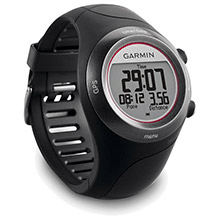
If you rely on your GPS device to determine your race pace and don’t build in a buffer, you will almost certainly fall slightly short of your goal.

Do you run races with a GPS device? Have you noticed that your GPS usually measures the races as longer than the advertised distance? Your last 5K was 3.2 or 3.3 miles, your last 10K was maybe 6.4 miles? Heck, your last marathon was probably at least 26.5 miles, very possibly 27 miles.

Don’t go yell at the race director before you read on. There’s a reason for this.

Proper race course measurement takes the shortest possible route. Because they need to make sure nobody can complete a race in anything short of the advertised distance, they need to measure the shortest possible route.

However, virtually nobody actually runs the shortest possible route. You simply can’t run in the very inner line of every turn, take perfect tangents between all turns and actually turn on a dime at race pace at every hairpin turn. Other runners may get in the way, your momentum at race pace may prevent you from turning sharp enough to take the shortest possible route. Many things can happen.

In addition, GPS devices aren’t perfect. Earlier this year, I covered why they often measure short on tracks. On a race course, they may measure short or long. It’s hard to say and a lot might have to do with the layout of the course.

In the end, expect to run longer than the advertised distance. I would recommend for most people aiming for a goal time and pacing by a GPS device to aim for about 5 seconds per mile faster than goal pace.

This means you also have to train that way. Are you running race pace workouts and making sure you stay on target by using a GPS device? If so, make sure you’re accounting for the faster pace you need to run on race day.

“Push” weeks

This article was originally posted by Ryan at the original HillRunner.com Blogs.

The runners I have coached for some time can probably think of times where I said something like feel free to challenge yourself because next week is a cutback week. I don’t say it often and I’ve been saying it even less often recently (maybe I should increase my frequency again).

One of the runners who I know I’ve told this to sent me this link that does a nice job of explaining the concept behind what I was getting at with the idea of challenging yourself with the cutback week coming up.

I might write more on this later but, for now, I thought this was a good primer on the topic. Consider adding some "push" weeks to your training. Just make sure you are using them sparingly.

Move over beet juice

This article was originally posted by Ryan at the original HillRunner.com Blogs.

I’m sure we’ve all heard about beet juice as a performance enhancing supplement. Well, we may now have a more tasty (in my opinion) alternative.

Watermelon juice appears to have similar benefits:

The increase in time-to-exhaustion in a test that lasted about 10 minutes was 12 percent, which might correspond to a time-trial improvement of a bit less than 1 percent. There are many, many unanswered questions, such as whether trained athletes would get similar benefits.

I’m left wondering a few things that I suspect future studies will answer:

1) Is this real? Will future studies corroborate this result?

2) How does the benefit compare to beet juice?

3) Will taking both increase the benefit of taking either separately?

Obviously, more research is needed in this area and I’m sure it will be coming. The initial results, though, seem very interesting.

What makes a champion?

This article was originally posted by Ryan at the original HillRunner.com Blogs.

Image

Last year, I listened to a TED Radio Hour podcast episode titled Champions. I wanted to write about it at the time but never got around to it. That episode ran again last week and I’m not going to let it slip by again.

In the podcast, the host interviewed three speakers, two athletes and a sports journalist. All had some interesting comments on what makes a champion. I highly recommend listening to the whole episode but I’d like to highlight a few points raised.

From Diana Nyad (first person to swim from Cuba to Florida without a shark cage) on what makes a champion:

The fear of failure is stronger, more motivating, than any other fear they’ve got.

What a great answer! They don’t let anything stand in their way because their biggest fear is not accomplishing the goal.

What can we take from this? Well, we may have fears that are greater than our fear of failure. Not everyone is trying to swim from Cuba to Florida or become an Olympic champion and that’s fine. However, I always think of the Michael Jordan quote here:

I’ve missed more than 9000 shots in my career. I’ve lost almost 300 games. 26 times, I’ve been trusted to take the game winning shot and missed. I’ve failed over and over and over again in my life. And that is why I succeed.

If we put ourselves out there, we’re going to fail. Fearing that failure will hold you back from taking the chance at success. Sometimes you have to take risks. Of course we need to consider the pros and cons. I’m not telling you to show up at the Boston Marathon next year and run with the elites because you no longer fear failure. However, be willing to take a chance. Push the pace a little harder than you normally would at your next race. Challenge someone you always seem to finish right behind. You can’t succeed without risking failure.

From David Epstein (sports journalist and a great speaker and writer – I highly recommend his talk and reading some of his other work) there were several interesting topics but I’d like to focus on this one:

Actionable goals: Set more proximate goals that tell you what you need to do today.

There were other parts but I’m going to focus on this. Listen to his whole talk because there is a lot of good material in there.

What can we take from this? We all (hopefully) have goals for our next race. Those are great and we need to have those goals. However, we also need to have more immediate goals. What are you going to do today to get to that longer term goal? Think about that every day when you wake up.

Also good advice for other parts of your life.

From Amy Purdy (amputee snowboarder, Paralympic medalist):

Instead of looking at our challenges and our limitations as something negative or bad, we can begin to look at them as blessings. Magnificent gifts that can be used to ignite our imaginations and help us go further than we ever knew we could go. It’s not about breaking down borders. It’s about pushing off of them and seeing what amazing places they might bring us.

Another great line! I love this!

What can we take from this? I know it may seem a little cliche but try reframing "obstacles" as "opportunities". At the very least, don’t let an obstacle block you. Find your way around. If possible, catapult off that obstacle and find a way to use it as a positive.

For example, you can’t run in the evening because you have to practice soccer with your child. Why not turn this into a training opportunity? Get some running in. Practice some agility drills that will improve your strength and neuromuscular coordination, making you a better runner. Maybe the run can happen in the morning and the evening soccer session with your child becomes a second training session.

We can’t all be Olympians or do amazing feats that seem impossible to the normal person. However, we can take ideas from the people who are doing these things or have achieved those levels of greatness and apply them to our lives. Above are just a few things we can take from this episode to make ourselves better, in and out of running. Listen to the episode and you might get even more ideas. I know I did.


Scroll to Top