Training

All things training. Mostly advice and tips but maybe questions, general comments, or who knows what else.

Nutrition

This article was originally posted by cesar at the original HillRunner.com Blogs.

Hey,

I have been very consistent with my trainig, but my diet is terrible, i am 192 pounds and when I ran my best times I was about 155-160 pounds, so I think the only way that I ll run that fast again is in that weight.

Could you please put an example of the food and snacks that you eat on a daily basis, do you eat junk food here and there?

Thanks a lot

Become a writer

This article was originally posted by Ryan at the original HillRunner.com Blogs.

Just one link this week but I think it’s a very good one.

We’ve probably all heard by now about the importance of keeping a training log. I hope we all are keeping a training log.

In addition, have you considered writing before a race about not just your training but also your upcoming race? Especially if you’re nervous about the race, it could be helpful.

This article about writing about your running makes a good case for writing more about your running.

It covers the training log aspects. The idea of reviewing your training to gain confidence in the work you have done, seeing where your strengths and weaknesses lie and so on.

In addition, it puts a real focus on writing about your race ahead of time. By getting your aspirations, apprehensions and other feelings about a race down on paper (or, I suppose, pixels) before the race, I believe that allows you to deal with your emotions ahead of time. As mentioned in the article, it also allows you to remember what your goals are, why you set those goals in the first place and plan out the best strategy, including backup plans in case something doesn’t go as originally planned, to accomplish those goals.

Writing out your plans and reviewing your logs also allows you to ensure your goals truly fall in line with where you are in your training. Maybe you find that your original goal was too aggressive and you can back off it a little. Or it was a little too conservative and you can bump it up a little.

So, if you’re not keeping a training log right now, what are you waiting for? Get started! If you are, great but are you doing more? Try writing down your goals and your plan to accomplish those goals before your next race.

Do you understand what’s being said?

This article was originally posted by Ryan at the original HillRunner.com Blogs.

Image

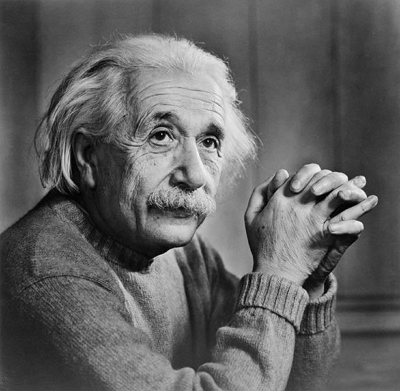
"If you can’t explain it to a six-year-old, you don’t understand it yourself." – Albert Einstein

We all know the person who knows it all. This person has no trouble talking your ear off with big words and scientific names. You’re blown away by this person’s knowledge. You can’t keep up with all the terminology. Unfortunately, a lot of what this person has to say is lost on you because you simply can’t follow along.

However, here’s something to think about. Does the person really know what he or she is talking about? How are you to know? All you know is you don’t know what he or she is talking about.

It’s easy to memorize and use a few big words. For certain personality types, it can also be quite fun. It makes them feel smart, even if they aren’t totally sure of what they are talking about.

In my experience, the bigger the words and more inaccessible the language the person uses, the less the person actually knows about what he or she is talking about. The better one’s ability to explain things in plain, everyday language, the better grasp of the topic that individual has. The Einstein quote above articulates this phenomenon quite well. If a person can’t explain what he or she is talking about in plain language that anyone can understand, how well does that person really understand what he or she is talking about?

More important, if you don’t understand what that person is talking about and that person can’t or won’t use plain language, what are you getting out of the discussion? Frustration? Confusion? Certainly not useful, actionable knowledge.

Next time you encounter someone using big words, don’t hesitate to ask them to explain in more plain language. If they are truly knowledgeable on the topic, they will appreciate your request and gladly do so. If they don’t, they probably don’t know the topic as well as they would claim and you’re not going to get anything out of the conversation anyway so you’ll know all you need to know to end the conversation with the confidence that you’re not losing anything by doing so.

Priorities

This article was originally posted by Ryan at the original HillRunner.com Blogs.

Image

I’ve seen more of this than my running shoes over the past few days

I’m purposely scheduling this to appear while I’m on a family vacation. I’ll have spent 3 days at Disney parks with my wife and 7 year old daughter by the time this appears. I have no idea what my training will have looked like during those 3 days or in the days following as I’m spending time in airplanes and visiting family I see very infrequently. You know what? I don’t really care what my training looks like. I hope I can get out for some runs but I’m not worried about what those runs will consist of.

I say that just as I’m approaching my spring racing season. Seems crazy, doesn’t it?

We all need to decide where running fits into our list of priorities. I can only hope that, for anyone reading this, family comes before running. Beyond that, there may be other priorities ahead of running or there may not. When you figure out your priorities, though, you have to keep them in mind. For me, this week at least, that means running takes a back seat. I’ll be back at it soon enough but, for now, I’m busy creating memories that I will have for the rest of my life and I can only hope my daughter also will. That’s far more important than one week’s worth of training.

So, next time you have to decide between running and something else, decide what your priorities are and make the wise decision. I believe that, this week, I’m making the wise decision even if it means I’m a few seconds slower in my next 5K. I won’t regret missing out on those few seconds at all.

Running in polluted air

This article was originally posted by Ryan at the original HillRunner.com Blogs.

Just one topic this week. The reason will be more clear if you read Thursday’s blog post.

This is a very interesting question, though. I think we’ve beaten the "running is good for you" topic to death recently.

But what about in pollution? This is a question I’ve wondered about frequently. I’ve always felt that running in pollution is probably better than not running at all and what limited research has been available has mostly confirmed that. However, there has been a lack of long term research on this topic.

Well, Alex Hutchinson found a study that covered this topic.

The result?

There were a few hints of possible interactions. For example, people who cycled or gardened were 45 percent less likely to die from respiratory diseases during the study than non-exercisers if they lived in low- or moderate-pollution areas, but only 23 percent (for cycling) or 19 percent (for gardening) less likely in high-pollution areas.

Common sense of course says breathing polluted air is bad for you and that’s clear in these results. That means, as much as possible, it is wise to avoid the most polluted areas. Try to stay away from busy highways when running and things like that. However, more importantly, exercise is better than none regardless of the air you’re breathing.

Scroll to Top