Ryan

Get off the roller coaster

This article was originally posted by Ryan at the original HillRunner.com Blogs.

Image

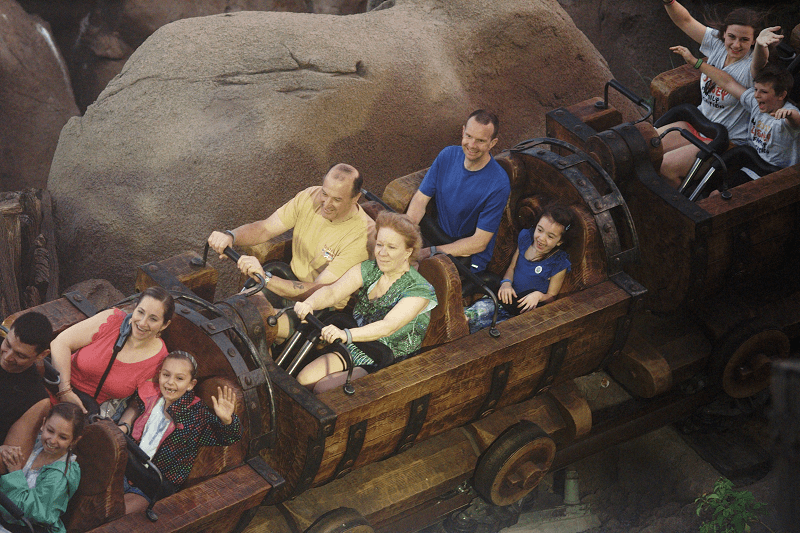
This kind of roller coaster is fun – the running roller coaster is not

It’s theme park month for me. I recently visited Six Flags and have a coming trip to Wisconsin Dells.

Those are fun roller coasters. The running roller coaster? Not so much fun.

What’s the running roller coaster?

The running roller coaster is the training routine I see so many people get stuck on and I’d like to encourage you to break. It’s the pattern where you train very hard for a few weeks, maybe even a month or two, then you get burned out or injured. You reduce your training significantly or stop running for a while to recover, then when you start back up you feel like you’re behind plan so you jump right back in to very heavy training and the cycle starts over.

So how do I avoid the running roller coaster?

I find myself repeatedly saying that I’d rather see you training at 90% of your capacity 100% of the time than training at 110% of your capacity 80% of the time. You’ll get much better results with that consistency than you will pushing harder but breaking down and missing time.

Some people like workouts where you go all out. They say it teaches toughness or it instills some ability to push harder on race day. I don’t believe in that. I believe they break you down. I would prefer you finish your workouts feeling like you had a little more left. Likewise, make sure other aspects of training are sustainable. Just because you can do a 50 mile week once or twice doesn’t mean you should. You will be better served sticking with 45 consistently.

I’m not suggesting you shouldn’t challenge yourself. However, do so judiciously. Make sure you’re not challenging yourself too frequently or too severely.

And save the all out efforts for race day.

Sweating the details? Take care of the big picture first

This article was originally posted by Ryan at the original HillRunner.com Blogs.

Image

Should I do a 15 mile long run or a 16 mile long run this weekend?

Should I do 4 strides or 5 before my workout/race?

Should I be doing my easy days at 8:20 pace or 8:30 pace?

Should I be doing my easy days at a heart rate of 150 BPM or 155 BPM?

Are these questions you find yourself thinking about? If so, stop for a moment.

Before asking those questions, you should be asking yourself the big questions. Are you getting in a long run on most weeks? Are you running on as many days as you can and need to meet your goals?

I see so many runners sweat these little details while missing the big picture. You may see incremental improvements by taking care of these little details. However, you’ll improve by leaps and bounds if you start asking yourself the big questions.

Kenosha YMCA Firecracker Run 5K

This article was originally posted by Ed at the original HillRunner.com Blogs.

Was not planning on this race at all it came up as a last minute opportunity so Coach Hill and I fit it into the schedule. Had a little something to eat about 2.5 hours prior to race start time as that worked very well for the Hootie Hustle last year and the Deer Run this year. The family and I left early as it was a long drive from Port Washington to Kenosha. I tried some meditating to ease my pre-race anxiety and nerves.

We got there in plenty of time, I registered and eventually warmed-up for two miles at an easy pace. I felt like I was almost walking yet it was at a 7:34 per mile pace – that gave me some confidence going into the race. I ran over the end 1.2 mile of the course so I knew what I was in for at the end. I stretched a bit then did some strides. I should have held the strides down to the goal pace of between 10.2 and 10.3 MPH but I ran them fairly hard.

Lining up for the race which tried hard to have a corral system it was apparent that folks were not listening. At the start lots of people took off hard and fast and I had to weave through those that didn’t listen about the corral system. I didn’t let that fast start group pull me out too much but I did realize I was still a bit too much over the pace I knew I could maintain.

I went through mile one in 5:47 – very close to where I wanted to be – maybe a bit fast. I was with the lead group of folks some of whom were running the 10K and they formed an echelon so I tucked in behind center and let them break the air for me. During the second mile I was wondering how I was going to hold the pace. The sun was very warm and I was sweating pretty hard. I was considering trying to grab a water but decided against it since I have never tried to drink at this pace. Hit mile two at 11:39 so the second mile had slowed too much to a 5:52 pace. I then knew that mile three would be a mental battle.

Going into mile three the pack was broken up and I was hanging with some really young guy who was doing the 10K. We chatted a tiny bit (it was pretty tough to chat at all.) The sun at this point felt very hot and I was afraid of the wheels falling off and my crashing. I kept thinking that my wife and children were at the finish line waiting for me and I wanted them to be proud so I fought hard.

Right around 2.75 miles I was again in no-man’s land. Too far behind the guy in front of me to catch him and enough of a lead on the guy behind me that I just had to maintain and not blow up to beat him. If I had a greater lead on the guy behind me I may have pushed harder sooner but I didn’t. At mile three (17:34) I had slowed even more to a 5:55 pace – not happy with that at all and knew that a sub 18 was out but I was determined to make a hard final kick.

I made the final turn and people were cheering nice and loud. I could hear my wife cheering for me and I surged as best I could – it wasn’t much but it was what I had. I hit the final .128 miles in a slow 40 seconds.

Not a bad race at all. Took fifth overall once again and again won my age group. I won my age group by an impressive time of 4:43 which is huge for a 5K!

The announcer even stammered a bit when he read my time – that made me proud!

Thank you Coach Hill for all your guidance you are helping me achieve some great results!

https://www.itsyourrace.com/results.aspx?id=5959

June 2016 update

This article was originally posted by Ed at the original HillRunner.com Blogs.

June overall was a decent month – while I had a number of consistency issues they are not nearly as bad as they have been in the past. I missed a total of 5 runs getting 25 runs completed. I ran a total of 216 miles averaging a 7:02 pace for the month. (I need to slow it down some and increase the quality of the workouts.) June’s total mileage brings me to a yearly total of 1,283 miles (last year was only 702 miles.)

Looking forward to a great July with two races planned. One in the books (read the Race report on these blogs) and one on July 16th – Fish Day.

Does caffeine help? A way to prevent overeating after a long day at work?

This article was originally posted by Ryan at the original HillRunner.com Blogs.

Does caffeine help? It depends…

Many years ago, I played around with caffeine before a couple of low key races. The results were not good. I just wasn’t myself on the course and couldn’t really seem to push. I didn’t know what was wrong but I never tried caffeine again. I figured maybe I had done something wrong but, even if I did, the stated benefits just weren’t worth it for me.

Well, maybe I didn’t do anything wrong. Maybe I’m just a slow metabolizer.

But the interesting results came when you break down the results by genotype. The fast metabolizers (GG) rode 1.2 minutes faster; the intermediate/slow metabolizers (GA) rode 0.5 minutes faster (not a statistacally significant change); and the slowest metabolizers (AA) rode 2.5 minutes slower.

So if, like me, you find that you just can’t run well after taking caffeine, there might be a reason for it other than you’re doing something wrong. The solution? It should be obvious: don’t bother with it.

A way to prevent overeating?

Whether it’s a long day at work or some other mentally challenging task, have you ever noticed how you get the munchies? Well, there may be a simple solution: exercise.

In this case, the exercise was an interval workout. However, at this point, I’m not aware of any reason to believe the intervals did anything special that a simple aerobic workout or any other type of workout wouldn’t do.

Scroll to Top