
Ryan

March Update

This article was originally posted by Ed at the original HillRunner.com Blogs.

Hello one and all,

March was a pretty good month overall. While I only got 26 runs in for the month it was my fourth highest monthly total mileage ever. I ran a total of 212.90 miles in a total time of 28 hours and 13 minutes. That is some serious base training (for a recreational competitive runner.)

I had a minor injury issue that took me out of running for three days and I had a cold that made it tough for four days. Both of my calves were experiencing a lot of pain right where they connect to the Achilles Tendon – I could not run at all. But three days off and I was good to go. The cold – well – it was a cold.

This is turning out to be a great year so far. First quarter of 2015 I had only 42.52 (yes less than 50) miles. Compare this to first quarter of 2016 where I have 660.26 miles.

Add to this – fourth quarter of 2014 compared to fourth quarter of 2015 and you get a serious difference. Fourth quarter of 2014 was only 4 (four) miles. Fourth quarter of 2015 was 386.22.

So in the past six months I have run 1,046.48 miles compared to 46.52 miles over the same time period the previous year! That is 1,000 more miles!!!!!!

I am in a much better place now and looking forward to the change from base to race training.

Ditch the ice bath for hot baths? Ditch beet juice for dark chocolate?

This article was originally posted by Ryan at the original HillRunner.com Blogs.
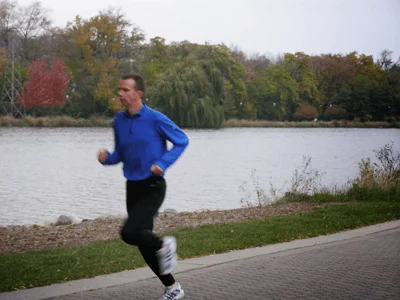
I’m having some computer problems at home and I have a backlog of articles I’ve wanted to write out. So, as I’m in the process of ditching my old computer for a new one, it seems fitting that I write about a couple things runners may soon consider ditching.

Ditch the ice bath?

Who likes ice baths? I’m going out on a limb and guessing nobody. Those of us who use them don’t do them because they are enjoyable. We do them because they help us recover.

I do question whether that’s always what we want (see here and here). However, more importantly, can bigger gains be made by taking a hot bath or, better, hitting the sauna after your workout? Maybe.

It’s not the same effect. In short, this is heat training, not a recovery aid. It’s similar to why some cold climate runners overdress when preparing for warm weather races. You can increase your blood plasma volume, which helps performance. In this case, a hot conditions (90+ degrees F) 5K time trial improved by 5% on average. Unfortunately, in more moderate conditions (just short of 65 degrees F) performance didn’t improve. I do wonder if it might be more beneficial in more moderate conditions if the distance were longer. 65 isn’t all that taxing when running a 5K, it can be when running a marathon.

I’m not saying we should all jump on the hot bath or sauna train. However, if you’re training for a race in hot weather or I’d argue a longer race in more moderate weather, this is a result worth considering.

Ditch beet juice?

Most of us have probably heard of beet juice as a performance enhancing supplement. The nitrate in the juice is converted into nitric oxide, which has been shown to improve blood flow and delivery of oxygen to the muscles.

However, beet juice tastes…well…not so good. What if you could get the same effects by having something more appetizing? Such as, let’s say, some dark chocolate.

As noted, this isn’t perfect because you can’t guarantee a consistent dosage but it sure sounds better than the alternative. This seems worth keeping an eye on at least.

I’ll hopefully be back with some more original content next week once the new computer is up and running.

Slowing down

This article was originally posted by Ryan at the original HillRunner.com Blogs.

We don’t want to slow down, right? Unfortunately, we all know that there are those things that do slow us down. Two of those things? The hot sun and starting too fast. Well, here’s some information on how much the sunlight can slow us down as well as why fast starts slow us down.

How much does sunlight slow you down?

Answer: pretty much when it’s already hot outside.

This probably isn’t surprising but it’s a good reminder that the temperature and relative humidity aren’t the only things that matter. Cloud cover, or lack of, can make a big difference in what pace we can hold.

Why do fast starts slow you down?

We all know not to start too fast, right? It’s been drilled into us. Still, we occasionally do so by accident and pay the price. What’s happening when we make that mistake?

We might now have an answer.

It appears that, when you start fast, you are less efficient. In the case of the study at hand, the fast starters would be 3 minutes slower in an hour run or 8.5 minutes slower in a 2.5 hour run.

Does it really matter that efficiency is the reason we slow down? Probably not. The main thing is that we still know that going out too fast slows us down later. However, I always think it’s nice to know what’s going on and now we have a better picture of that.

A very late February update

This article was originally posted by Ed at the original HillRunner.com Blogs.

Despite a slight injury February was a very good month.

I ran a total of 24 runs missing four planned runs due to a sore meniscus and had one planned off day. I logged a total of 202.24 miles in slightly over 26.5 hours for an average pace of 7:53 per mile.

I felt very good for most if not all of those miles even though the route was pretty hilly. Got some great training done.

In comparison to last year –

Jan – Feb 2015 = 2.86 miles, yes less than three miles.

Jan – Feb 2016 = 447.38 miles, much better.

Also –

September 2014-June of 2015 = 519.11

January 1 through March 11, 2016 = 492.35

“Altitude training” masks – worth it?

This article was originally posted by Ryan at the original HillRunner.com Blogs.

I’ve recently seen several people ask about “altitude training” masks. Recently, I was asked by a runner I coach. Because this seems to be a hot issue, I thought I’d cover what I’ve seen as of now.

What is an altitude training mask?

First, what is an altitude training mask? This is the one I’ve come across in discussions. Maybe you’ve seen them around. I’ve never yet seen someone running with one but I have seen a couple people wearing them while weight training at the local Y.

What’s the goal?

Next, let’s have a quick review of what endurance athletes are trying to accomplish when going to altitude. We are trying to live in air with relatively low oxygen levels in order to stimulate the production of red blood cells as well as their ability to carry oxygen. In recent years, it’s been discovered that you can get the benefits of altitude while living at altitude without suffering the drawbacks (primarily not as much oxygen available) if you travel to low altitude for training. That’s why we have the concept of “live high, train low” and why quite a few elite runners these days have altitude tents in their bedrooms. They can sleep at simulated high altitude but train at low altitude.

Altitude training? Not quite…

This specific mask’s promotional material states:

Training Mask 2.0 does not “change on the o2 molecular level” however your body does make adaptations for this “Simulation” to be considered “Altitude Training” also known as the “BOHR EFFECT”

So it’s not reduced oxygen. That’s a good thing because, if you were reducing oxygen levels, wearing the mask while running would have the opposite effect of what you’re looking for. You want to “live high, train low” and this would have you living low, training high if you wore it while running and not at other times.

Resistance training? Possibly…

But what does this mask actually do, then? It appears that the claim is that it simulates high altitude by restricting your air flow.

Elsewhere on the same site, I see the claim of resistance while breathing building diaphragm strength and surface area and elasticity of alveoli, improving anaerobic thresholds and lung capacity. They mention studies but don’t offer references.

Well, that’s not what training at altitude does. Instead, the mask is a type of resistance training. The restricted airflow would add resistance that your respiratory muscles have to overcome. While that’s not altitude training, is there a benefit to this?

I have now come across some references that help answering this question. In re-reading Science of Running by Steve Magness, I came across the topic of “respiratory training”.

As Magness notes (with references, unfortunately, to studies I can’t find online) a study by Romer evaluates the effect of respiratory muscle training and finds that it improves 20km and 40km cycling time trials by 3.8% and 4.6% respectively.

However, Magness also notes that similar studies have had mixed results and it appears the benefits are less significant in less well trained runners.

As noted in the book:

As we have seen, the degree to which the respiratory muscles contribute to VO2max varies based on training level. … For this reason, higher-level runners should consider respiratory training, while lower level runners probably will not see the same degree of benefit.

Note: The site mentions building surface area and elasticity of the alveoli, improving anaerobic thresholds and lung capacity. The anaerobic threshold claim would seem to have some credence based on what I noted from the Magness book. I still have found no evidence for the claims related to the alveoli and lung capacity.

Conclusion

At this point, given the science I’ve seen and what we currently know about the benefits and drawbacks of altitude, I see limited benefit in this product. In fact, it might be counterproductive for some if used while running.

For the record, I attempted to contact the company linked to above so I could discuss benefits and concerns with them directly but, over a year after my first attempt to contact them, I never received a response.

Scroll to Top