Ryan

Race day emotional control

This article was originally posted by Ryan at the original HillRunner.com Blogs.

Image

A different runner than 15 years ago

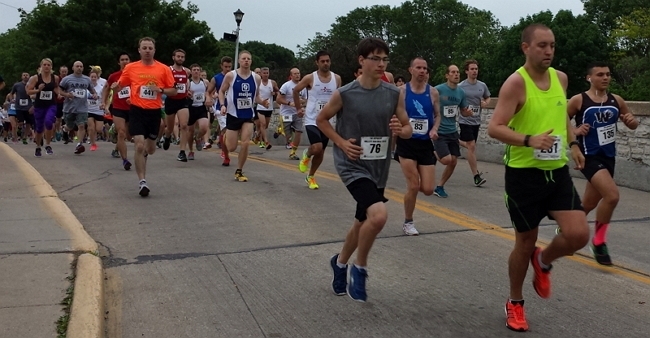
During my high school, college and even early post-collegiate years, I was an inconsistent runner. Anyone who knew me in the late 1990s and early 2000s knew I could put up a sub-16 5K or struggle to get home under 17 minutes in any given race. In any given 10K, I could go sub-33 or struggle to break 35 minutes.

Why? I was obviously capable of sub-16 and sub-33. It had nothing to do with my fitness or physical preparation. It had everything to do with what was going on above my shoulders.

At times, I’d enter a race with what I would now call a calm confidence. I’d be relaxed, knowing what I was capable of and knowing what I had to do in order to execute the good race. I’d feel the anticipation and excitement of race day but my mind was in a good place. My thoughts were positive, focused on executing the plan and knowing that the execution would lead to a good result.

Other times, for whatever reason, I’d enter a race a nervous wreck. I remember one race my sophomore year of college where I stopped during my warmup to retie my shoe. I put my foot up on a bleacher and I was so nervous I couldn’t even hold my foot still. I got myself too worked up about going after the result and I wasn’t centered and focused on executing the plan I knew I was capable of executing. I wasn’t thinking positively about how executing the plan would lead to a good result. I was thinking "I have to…" Those three words lead to bad thoughts, which lead to bad performances.

These days, I’m a different runner. Not every race is going to be a good race for anyone. No matter what, we all have bad days. However, I’ve stopped putting pressure on myself. I go in knowing that the best result will come from that calm confidence in going in with a plan that, once executed, will lead to the best possible result. I know what result I want but I also don’t put pressure on myself to hit that result. I know the best I can do is execute the race as close as possible to perfectly and see where that leads me.

So how did I get from where I was to where I am now and how can you follow the same path to more consistent results?

There are a few keys that I’ve learned along the way. Mostly alluded to above but I want to lay them out clearly.

1) Know what you can do and believe in it: Look at your training and how it has gone. Be honest with yourself about how your training has gone. Learn what this means and what result is possible. It can also be good to have a handful of workouts that you know well enough to know what kind of race times they indicate based on how you run them.

I would also note that it’s better to be a little conservative with estimating what you can do than to be too aggressive. Because…

2) Have confidence in your goal: …you need to believe you are 100% capable of what you’re setting out to do. This is why, when I’m helping runners set their goals, I let them set the goals. I want them to set a goal they fully believe in. I’d rather see someone say they want to run a 3:30 marathon than 3:20 if they don’t believe they can run 3:20. Even if I believe they can.

3) Focus on the process more than the goal: Plan your race to meet your goal. Then execute the plan. Focus on the plan. Because it was planned to meet the goal you have 100% confidence in, it should be a plan that you have 100% confidence in. If you execute the plan, which you have full confidence in executing, the result will come.

4) Roll with the punches: There are a lot of variables on race day. Something won’t go perfectly to plan. Be prepared for that and ready to adjust the plan as necessary. Most surprises aren’t as serious as we think they are when they first happen. If you can remain calm, you can adjust the plan usually pretty simply and still hit your goal.

If you get caught with a big surprise like a strong headwind or extreme heat, you may need to adjust your goal but everyone will either adjust their goals and plans in that situation or pay the price.

In the end, it’s about heading to the line with that calm confidence. Sure, you’re excited for the race but you’re also standing at the line ready because you know what you can do and how you’re going to go about doing it. When something unexpected happens, you’re ready for it because you know something was going to happen and you can calmly make the best adjustment to get back on track.


Recent events at HillRunner.com

This article was originally posted by Ryan at the original HillRunner.com Blogs.

I’m sure most of you have noticed some of the recent events that have been going on at HillRunner.com. I just wanted to fill you all in with what has been going on.

For those of you who don’t want the long story, scroll down to the Bottom Line heading.

For those of you who don’t know how small operations like myself handle our websites, we don’t have computers ourselves that they run on. I basically buy server space from a company that then hosts the website. The host then takes care of keeping the hardware HillRunner.com is on up to date, running and connected to the Internet 24/7.

Several years ago, I outgrew the host I was on at that time and transferred to a new host. At the time, the host I transferred to was one of the best in the business. They had a great reputation for reliability and top of the line service. Unfortunately, about 2-3 years ago, they were bought out by a parent company that tends to buy hosting companies with great reputations, then cuts costs in order to boost profit margins. Of course, when costs are cut, the first thing to go is customer service. The second is the latest, fastest, most reliable hardware.

Ever since the buyout, things have been gradually degrading. In the past few weeks, I hit my breaking point. HillRunner.com was not staying up reliably. My emails at times were not going through, especially to Yahoo and Hotmail recipients. Generally, things were just not working well. So I started researching other hosts to move to.

Just over a week ago, I made the decision of what host I would transfer HillRunner.com to. They have a great reputation for keeping websites up and customer service. In addition, they have cutting edge hardware that allows faster load speeds for websites they host. They also offer "no downtime" transfers.

A week from this evening, I pulled the trigger and began the process of moving HillRunner.com to the new host. As you probably know by now, the move wasn’t complete until 4 days later. Also, unfortunately, it was not "no downtime". There was an error in server configuration and HillRunner.com was completely down for most of the day Friday. It turns out I didn’t know all the details of how the new host’s support system works. Now that I do, I know how to get urgent issues looked at in a more timely manner.

However, the transfer is done now. We’re on a new server that, through the first few days once up and running on it, has proven to be a fair bit faster and much more reliable.

Bottom Line

I’m sorry for any troubles you may have faced in the past few weeks. Fortunately, those should now be behind us. HillRunner.com is on much better hardware and has a better support staff on hand in case the hardware or any of the systems on it fail. In addition, we should see speeds improve.

If you have any questions or concerns, please don’t hesitate to ask.

Racing in bad conditions

This article was originally posted by Ryan at the original HillRunner.com Blogs.

Image

Mudder’s race

What do you do when you wake up on race morning and it’s incredibly windy? Or raining? Or cold? Or cold and snowing?

I hope you adjust your race plan accordingly (if you didn’t already know this weather was coming and make those adjustments). Then I hope you embrace the elements.

I got thinking about this topic this past weekend when I was at the WIAC Cross Country Championships at a soggy Lake Breeze Golf Course just outside of Oshkosh. It wasn’t too cold and the rain/drizzle was pretty light but it had been a wet week leading up to race day and the course was saturated. The high spots were like a wet sponge and any low spot, no matter how minor, had standing water. It was a mudder’s race.

I was talking with someone at the meet about the conditions and said I liked these conditions when I was running cross country. I was not a mudder. I was too light and too much of a rhythm runner for a muddy course to not slow me down but I told myself everyone has to face the conditions. A lot of guys are psyching themselves out over the conditions and those are guys who I have the opportunity to beat because I’m preparing to deal with it and just run my best.

Of course you have to adjust your race plan accordingly. When I ran the Lakefront Marathon in 2002, there were some runners who didn’t adjust their plans. The wind beat them down and I made easy work of guys I had no reason to think I would be anywhere near on an ordinary day.

Once you adjust your plan, though, embrace the elements. Have fun with them. If you have your plan down and are ready to execute, you can enjoy the elements. Be a kid splashing through the mud puddles. Think of how great the stories of overcoming the heat, cold, wind or whatever else you’re facing will be once it’s over. Make a snow angel at the start line (I guarantee this will help you psych out some of your competitors while keeping yourself relaxed).

Whatever you do, don’t let the elements get to you. If you convince yourself that the elements will cause you to fail, you do nothing but ensure that you will be right.

Why do I coach?

This article was originally posted by Ryan at the original HillRunner.com Blogs.

Image

Coach Conway: a big part of the reason I’m coaching now

A few people have asked me recently why I got into coaching and, specifically, why I got into coaching adult runners. I think that’s a very fair question so I’d like to share the story. This will also offer some background in my running.

In 1990, I got talked into going out for track by two friends. I didn’t really want to be there so I signed up for the sprints. I figured, in the sprints, at least it would be over quickly.

Fortunately, Coach Conway was the head coach of the middle school track team. He quickly realized that I didn’t have what it takes to be a sprinter but I might be a decent distance runner. Somehow, he convinced me to give distance running a shot and, as bad as I was at first, I stuck to it.

In high school, I still had Coach Conway guiding my running through my cross country seasons but, during my track seasons, I had Coach Knickerbocker. Both were incredible influences on my life, inside and outside of running.

I went on to college and had the opportunity to run under Coach Hall (now at the University of Chicago) who, like Coaches Conway and Knickerbocker, passed on an incredible amount of knowledge about running.

Along the way, I wanted more than anything to pay back all that my outstanding coaches gave me. However, all three were "pay it forward" kind of people. So I looked for ways to pass along the knowledge. That’s where HillRunner.com originally came from. In the spring of 1999, I decided it was time to establish a website where I could both learn from others and share what I had learned along the way.

As time went on, through HillRunner.com and other online sources, I saw a large segment of the running population that needed some guidance from experience. Many of us are runners who came up through the high school and maybe even college system. We learned things from our coaches that we simply take for granted. From generally what a year’s worth of training should look like to simple day to day things like how to avoid blisters and what to do if you get one or what to do if you twist your ankle.

However, many of us are also what I call "adult onset" runners. These runners didn’t start running until they were on their own. They didn’t have the benefit of having a high school coach to tell them all of these things. I tried sharing all the tips I could when I was asked or saw concerns raised but there was still something these people were missing. Through no fault of their own, they didn’t understand how to structure a training plan and how to adjust it as their training went on. They simply never had the guidance to learn such a thing.

In addition, I found that some runners who were coached at the beginning of their running lives either didn’t have the luxury of the outstanding coaching I was so fortunate to have or were typical high school kids and didn’t learn the lessons that were being taught. Or they simply wanted an outside perspective and guidance in their training, which can be a very large benefit for even the most knowledgeable, experienced runner.

In the interest if paying it forward, I wanted to serve these runners. I started working informally with runners in a limited capacity as early as 2001 or 2002. This worked well but my impact was limited. I could share some knowledge but I couldn’t really get in deep.

In 2010, I dove into the deep end. Not because I thought I’d get rich (I charge a lot more now than I did then but, if you shop around, I think you’ll still find I charge below market rates for someone with my experience). Because I was still looking to pay it forward. This blog itself is evidence that I want to continue to reach as many people as possible in a broad way. However, the coaching is a way to reach a relatively small segment of people in a very deep way through that close interaction that comes with a coach/athlete relationship. This year, of course, I also added a middle layer for people who want a deeper dive than the blogs offer but who feel they don’t need or can’t afford the full coaching option.

So that’s the story. For me, it’s all about giving back to the running community by "paying it forward" to thank the wonderful running community for all I was given by my coaches.

A cure for muscle cramps? Sugar and running

This article was originally posted by Ryan at the original HillRunner.com Blogs.

In this past week, I came across two articles I just have to share.

Cure for muscle cramps on the way?

Muscle cramps are probably one of the most annoying but least well known problems runners can face. We don’t really know what causes them. We thought it might be dehydration but that appears to not be a significant, if any, factor. Same for sodium and potassium. All three of those things might make a difference but, if they do, the difference isn’t significant. We thought it might be fatigue. While that seems to be a still leading candidate, it seems like it’s more than just that.

Well, there is a new idea out there.

I’ve noticed that some exercise physiologists I respect are pretty excited about this. It doesn’t appear to be another gimmick that someone is throwing out there just to make some money. This one may be serious and may be out in the near future. Definitely something to keep an eye on if you suffer from muscle cramps.

Sugar and running

Runners have an interesting relationship with sugar. We know that, in the form of refined grains or processed foods, it’s not good for our health when we’re not running.

What about when we are running, though? The truth is that the sugar itself isn’t bad. It’s bad when it hits the bloodstream at a time when we’re not going to immediately burn it.

So here’s a handy little guide on when sugar is good for us and when it’s not.

Maybe a more simple guide: Stick with whole foods while not running. Go ahead and use sugar while running long to supplement your fuel stores.

Scroll to Top