Ryan

Warm up

This article was originally posted by cesar at the original HillRunner.com Blogs.

Hi,

Warm up always has been an interesting topic for me because, I have read several opinions on warming up, and I would like to know how you warm up before races..

I have seen several types of warm up such as, easy running,easy running + some strides at race pace, easy running + LT pace running for 2-3 mins, drills+ strides just before the gun. The only people that I see doing strides before the gun are the top athletes, medium pack and back pack people are just running easy till " go" time.

Personally I warm up just running easy for 1k-1 mile, and in the starting line, I am not very warmed up, but I am afraid to try something new on race day, because on workouts I warm up that way, run easy for 3k or so ( on workouts), stretch, and start the workout.

Also, Doing strides before the gun would make me look like a top gun there, and I am not even close to that.

How do you warm up?

Race report: going for two decades

This article was originally posted by Ryan at the original HillRunner.com Blogs.
I have a feeling this is going to get long so I’ll break it into sections.

Background

For those of you who aren’t aware, one of my proudest personal accomplishments as a runner is my streak of consecutive years with a sub-17 minute 5K. It may seem monumental for some to run a single sub-17 5K, while for others such a run is barely a workout. For me, it took a lot of work to get under 17 minutes in the first place and it takes a lot of work to stay there.

How much work did it take to get there? Well, I graduated high school with a 17:06 PR. Anyone who knew me in high school could tell you how hard I worked for that 17:06. It wasn’t until indoor track during my freshman year of college, 1996, that I finally broke through the 17 minute barrier. Every year since, through continued hard work and surely some luck I’ve gone under 17 minutes at least once.

This year, I wanted more than anything to continue that streak. To be able to say that I’ve gone under 17 minutes every year for two decades meant a lot to me. I’ve never been a superstar but one thing I’ve always taken pride in is my consistency. Sure, I have bad races but I bounce back and, year after year, I’m always there. When you don’t get hurt, you are always willing to work both hard and smart, and you are willing to lay it all on the line on race day, that’s the result.

Leading up to race day

So it’s with that background that I entered today’s race. I had a shaky spring racing season. In the fall season, I was fighting some lower right leg problems that I believe can be traced back to my perpetually tight hamstring. Through that, though, I fought through my races and had a high before today at the Hootie Hustle 5K, winning with a 17:15 on a course that seems to be both challenging and relatively fast. At Hootie Hustle, though, I felt like I left something on the course. I was in a relatively close race and didn’t want to leave myself hung out to dry in the last half mile so I saved something. That wouldn’t be a problem today.

In the past couple of weeks, I felt like I had done some solid work since my semi-disappointing run at Al’s Run. I felt like I was coming in fit and the taper was working perfectly. In fact, even the lower leg problems were disappearing. In the two days immediately preceding the race, I even found myself saying I felt better than I have for months. I felt ready to roll. After yesterday’s run, I told myself I felt like I could have run a 16:45 5K (remember that).

Race day

This morning, I got up and checked the weather. At 6:30, it was 24 degrees at the nearest weather station to the race course. The race was 10:00. I knew it would warm up but I also didn’t want to take anything for granted so I threw some extra gear in my bag just in case and the family packed up and we headed out to the race.

As we arrived, a parking space right next to the finish line was available. I grabbed it and had myself parked with my front bumper virtually even with the finish line. With the course for many years starting at the finish line, this was perfect.

We went inside and I relaxed until warmup time. I went out for my usual warmup, initially keeping the pace very relaxed before opening up a few times after a very slow opening mile. Much like yesterday’s run, I didn’t feel the greatest when running slowly but I felt invincible when I picked up the pace. Sounds fine to me. As long as I feel good at a fast pace, that’s all that matters.

After some strides, the walkers started going past to get lined up. As I was waiting for the crowd to clear so I could line up in front, one of the runners I see every year at this race came over and asked me about the new course. Huh? New course? Oh, shoot. Maybe I should have hung around to listen to the pre-race instructions. So I went over to one of the organizers and got the scoop. There’s a new rec trail, which I happened to notice while warming up, and for safety reasons they are moving the course to there.

One problem, the rec trail is a crushed limestone trail. Anyone who is familiar with crushed limestone trails, especially newly established ones, should know this means some loose gravel on the trail. Not bad footing but there is definitely some slippage every step and you lose just a bit from your toe-off on every step. Combined with the fact that this was a new course, not the one I’ve run 14 times before and had the utmost comfort and familiarity with, this shook my confidence just a bit. Then I reminded myself. 20 years. I’m not letting that go without a fight. So I lined up with that in mind.

The race

The air horn sounds and I’m off. Straight into the lead as usual and running hard from the gun. I quickly settle into an aggressive but not insane pace. I feel calm and relaxed but I know I’m holding a very solid pace. I follow the trail around some baseball fields, then out of the park and onto an old railroad bed. Up a quick, steep rise to the highway, then across with the assistance of a police officer as traffic control. I did notice that an SUV did not want to stop when the police officer stopped it but, as it was inching forward to make the cross, the officer stepped right in front of it and put his hand on its hood. That stopped it and I crossed without incident. There was a bike going across the far sidewalk and we looked like we were on a crash course but I didn’t break stride or adjust my path. Fortunately, the bike stopped very quickly right before we met and the guy on the bike cheered me on "Go number 34!" I cruise down the other side of the highway and I’m on the way to the mile mark.

There was someone there calling times but I couldn’t quite hear what he said. 5:24? 5:34? I thought it was 5:34. A little slow and I felt like I just ran a fairly fast mile. Not good but I’m not giving up this streak without a fight. I push harder, harder, out to the turnaround. This, fortunately, was not a hard turnaround. We come out to a road, take a left, then take another left on a spur from the trail before merging back in with the trail. Not as good as the old course with no turnaround but not nearly as bad as it could have been.

Now, I’m on my way back and I can see I have a good lead as usual but not quite as big as usual. That’s fine, though. I know what I’m here for. Keep pushing with all I have. I see more of the runners go by, then I come up on the 1 mile mark. The guy gives me my split as I go by there, 10:20. At that point, I tell myself I’m going to go out on a limb and assume that’s not 2 miles. A little later, I see someone calling out "2 mile" and she gives me a split of 11:30. I instantly assume that the 2 mile was somewhere between 10:20 and 11:30 but likely not quite either one of those. Quickly after, I’m up the incline, across the highway and down the other side. I know I either have 5 minutes or less to go at this point or I don’t really care so I’m pushing with all I have. Then I start coming across walkers. Most move over and give me plenty of room but a few must be staring at their feet and don’t see me coming. I’m breathing so hard I can’t even grunt so I’m just working my way through. Fortunately, with no serious problem.

As I turn back into the park with what I figure to be about 1/2 mile to go (it turns out it was just a hair over 1/2 mile so that was a good guess) I pour it on with everything I have. Around the baseball fields, past the start line and onto pavement. Once I hit the pavement, I kick with whatever I have. Not sure if I got faster but the effort level definitely reached 100% there.

I couldn’t see the clock until I was almost at the finish line but, when I did, I saw it clicking through the 16:40s. As I crossed, it was at 16:45.

Result

So that’s what it was. 1st in 16:45. Just what I figured I was ready for. I didn’t let the course change beat me, I overcame the lower leg problems and I extended the streak to 20 years.

Needless to say, I’m thrilled with this race. 20 years means a lot to me. I’m so proud to say I’ve run a sub-17 5K every year for two decades (and counting). This means a lot to me and I look forward to extending it next year.

That said, I’m done. Physically and mentally, I’m ready for the 2015 racing season to be over. Time to take a break, then focus on 2016 with the goal of my 21st consecutive year with a sub-17.

Numbers vs. Perception

This article was originally posted by Ryan at the original HillRunner.com Blogs.

Image

Modern technology is amazing, isn’t it?

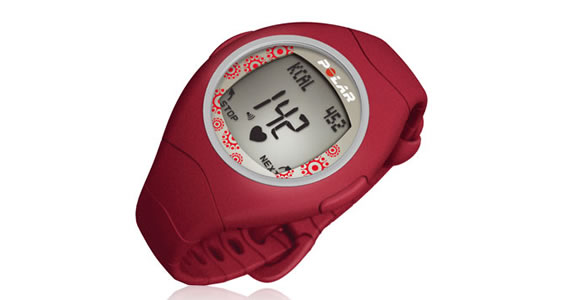
We have devices these days that can measure all kinds of things. You can get a single device that can measure your heart rate, stride rate and a close approximation of your pace at any moment in your run.

While not running, it’s not nearly as hard as it used to be to get a VO2max or lactate threshold test.

You can get an approximation of your body fat percentage in your own bathroom. You can easily track your sleep, your resting heart rate. I’m sure I’m leaving things out.

In short, we have no shortage of numbers that we can use to track everything about not just our training but also about how our bodies are responding to the training.

Is all of this useful, though? Does it make us better runners?

Back in the early 2000s, I got a heart rate monitor for myself. I’m a numbers guy and I believed the additional feedback with hard numbers that couldn’t be refuted would make me train smarter.

What I quickly discovered and, over the intervening months, couldn’t get past was that the numbers told me what I already knew and took longer to tell me those things. If I was beginning to run too hard, I could feel that before my heart rate began climbing. If I was slacking off, I could feel that before my heart rate dropped. If I was training too hard, I knew before I even saw that my morning heart rate was climbing.

The problem was that, with the heart rate monitor, I wasn’t always paying attention. I began relying on the device instead of paying attention to my body. I ended up reacting more slowly to these errors because I wasn’t listening to the early warning signals. So I stopped using the monitor. Today, I don’t even know where it is. I think I gave it away but I’m not even sure. It could be in a box in my basement somewhere.

As it turns out, a recent study suggests my gut feeling on this was right.

Subjective measures reflected acute and chronic training loads with superior sensitivity and consistency than objective measures.

In other words, paying attention to things like perceived effort and changes in our mood worked better than using "objective" measures such as heart rate, oxygen consumption or blood hormone levels.

I’m not suggesting that we should ignore these objective, numerical measures. However, if they get in the way of paying attention to your body’s responses, you might be better off either without them or finding ways to be less reliant on them in order to keep paying attention to how you actually feel.

Let the watch report, not direct

This article was originally posted by Ryan at the original HillRunner.com Blogs.

Image

Used properly, a great tool

Last week, I was listening to the Science of Running podcast with Steve Magness and Jon Marcus when I heard Marcus drop the line "Let the watch report, not direct".

I’ve wanted to write on this topic for a while but that perfect quote left me needing to write about it.

My view on racing with watches is pretty well established. What about training with watches, though? I’m not opposed to wearing a watch while training, am I?

Of course I’m not. However, I think too many people use their watches in the wrong way. Instead of letting the watch report on their training, far too many runners let it direct their training.

What does that mean? It means you’re checking your mile splits on your easy and long runs and adjusting pace to hit some "ideal" or, worse, checking more frequently than every mile to hit that "ideal". It means you’re checking splits in workouts instead of working by effort. Essentially, it means you’re letting the watch dictate what you’re doing while you’re doing it.

What should you be doing instead? Keep wearing the watch unless you can’t break the habit of checking it while you’re running. It is a great tool for reporting on how things went after the run is over. If you can’t stop looking at it, run watchless for a while to break the habit. Then bring it back out.

On easy and long runs, try to not check your watch at all unless you need to in order to determine when to turn around. Instead, let effort dictate your pace. I’m a big fan of "conversational pace" for easy and long runs. Essentially, if you’re running with someone, you should be able to hold a conversation. You might not be able to recite poetry but you should be able to say more than just a few words without having to stop and catch your breath.

In workouts, run by effort instead of targeting a pace. I drive the runners I coach crazy at times (I probably drive some of them crazy all the time) because, for the most part, I try to avoid giving them target paces for workouts in favor of target efforts (5K effort, 10K effort, half marathon effort, etc.).

In the end, look at your watch less during your runs and let it be a data recorder while you’re running. Then, once you’re done, you can look at the data and see what it’s telling you.

Are all elites running the wrong way?

This article was originally posted by Ryan at the original HillRunner.com Blogs.

Image

Believe it or not, these people know how to run

Someone sent me this earlier this week. I was writing up a response to it for a blog post when I saw that Alex Hutchinson beat me to the punch.

As for what I was going to write, it was going to cover all that he stated but probably not as well. The simple fact is that gravity pulls you down, not forward. If you use it to pull you forward, it’s going to also pull you down in the process and you’ll have to expend energy to push yourself back up. In short, there is no free lunch.

One other point, though. People keep looking for what all of the elites are doing wrong and what will make all of them look foolish. I remember over a decade ago someone came up with the idea that the elites were all simply more talented than everyone else (there’s some truth to that, of course, but they also train more effectively – it’s the combination of the two that makes them elite) and that he had the training philosophy that was going to revolutionize the sport. Once it caught on with the elites, they would be demolishing all the world records.

The fact is the elites have things mostly right. If they had it all wrong, are we really to believe that someone wouldn’t come along doing things right and blow them away. We’d have a new crop of elites? Let’s get real. Maybe they don’t have everything right but all the low hanging fruit has been picked. There’s no one thing that’s going to make them suddenly get 20%, 10% or even 5% faster instantly. If there was something that significant, it would have been discovered already. What is left to find are the things that will make them fractions of a percent faster.

So let’s stop paying homage to these snake oil salesmen who make these fantastical claims about how they can make elites 10% faster overnight. Let’s take a dose of reality and realize that what the elites are doing is mostly right. Then, let’s learn all we can from them and maybe find ways that things can be improved around the edges.

Scroll to Top