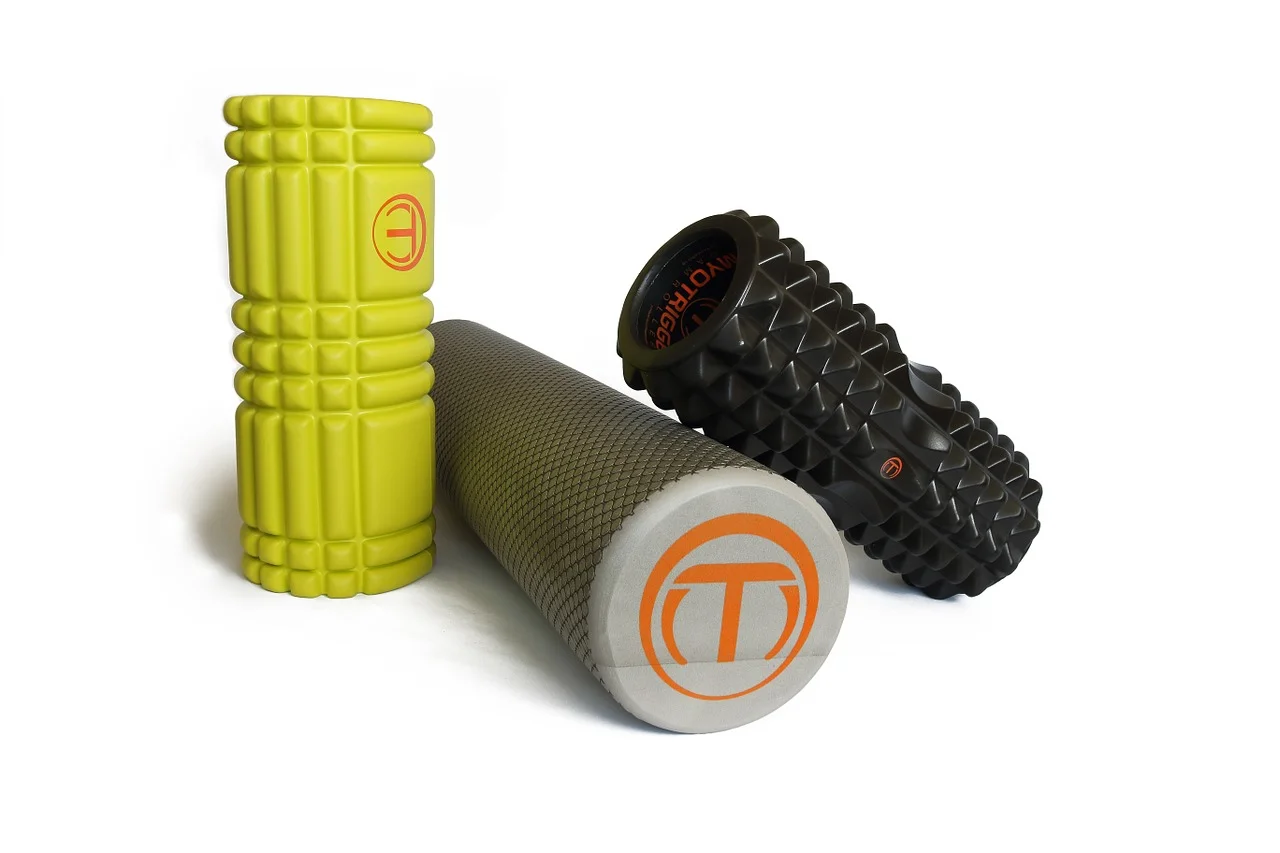
New study on the benefits of foam rolling

This article was originally posted by Ryan at the original HillRunner.com Blogs.

Foam rolling has become very popular for runners. As soon as I got a roller last year to attempt to rehab some hip tightness, I was convinced. Combined with stretching, it took less than a week to relieve the persistent tightness I had been experiencing for quite some time. In the intervening time, it’s helped me quickly handle relapses in the hips, as well as work through calf tightness, hamstring tightness and various other minor problems before they became major or persistent problems.

One of the nice things about foam rolling is that it improves your flexibility without the drawback of reduced power production that static stretching can cause.

However, not much study has been done on foam rolling. The benefits have been anecdotal. Now, anecdotal evidence has its place and I’ve been a strong proponent of foam rolling, as a few of the people I coach can tell you, but it’s nice to see controlled studies show what we have seen anecdotally.

Now, we have the first study.

To sum up the study, participants were tested for knee joint range of motion and muscle strength before, as well as 2 minutes and 10 minutes after foam rolling. Strength was not reduced after foam rolling but range of motion increased by fairly significant amounts.

Now, this was a small study (11 participants) but the results do confirm what we’ve believed all along. Foam rolling is an effective way to increase flexibility without reducing muscle power production.

What should we take from this? Here’s what I’m taking from it. There are good reasons to not do static stretching before a run. We all have heard about the warnings of stretching a cold muscle. Along with that, there is evidence that we do lose power production at least for a period of time after static stretching. This could result in performance decreases if you static stretch before you run. So the question is, if you are tight and need to loosen up before a run, what do you do? Based on this, foam rolling seems like one alternative.

I’ve done pre-run foam rolling before early morning runs just because it feels good and I feel like it helps “wake up” my legs before a run. These results don’t surprise me at all, as I can feel a lot of that early morning tightness disappear after those sessions.

What do you think? Have you tried pre-run foam rolling?

New features added to the blogs – and more coming!

This article was originally posted by Ryan at the original HillRunner.com Blogs.

Image

I’ve added some new features to the HillRunner.com Blogs over the weekend that should make it more robust as the blogs grow. Some of what you will see now:

Profiles: You can now update your profile (if you’re logged in) or view profiles (here’s mine). You’ll also notice that, when viewing someone’s profile, you will also see their most recent posts and comments.

Recent posts and comments: You can now view recent posts and comments in the right sidebar. This should help you keep up with what’s happening on the blogs. More features to keep updated on what’s happening will be coming in the near future. This has now become my top priority.

Recent posts on the HillRunner.com homepage: Recent comments will be added soon. Tip for those of you who want to keep up with what is going on throughout HillRunner.com: Make heavy use of the homepage. That is going to become your one stop location for updates on both the forums and the blogs, as well as other site-wide news.

Coming in the near future: More notification options for updated content on the blogs. Most notably, I’m looking into an email notification system.

Do you have any ideas? If you have an idea for what would make the HillRunner.com Blogs better that I haven’t mentioned here or elsewhere, feel free to bring them up. I’m very open to any and all ideas to make the blogging/reading experience here the best it can be.

Fall Half Marathon

This article was originally posted by Ed at the original HillRunner.com Blogs.

I have registered for a fall Half Marathon. The Chicago Monster Dash on October 20, 2013. This looks to be a very flat out and back course. I am hoping to run a PR there. My current PR in the half marathon is 1:27:00. I am aiming for 1:22:00-1:23:00 (or better of course.)

I have a lot of work to do if I am going to hit that goal. But I am willing as well as able. Hard days ahead but the prize will be worth it all.

I am glad I have Coach Ryan to guid me along!

Getting back into the habit

This article was originally posted by Ed at the original HillRunner.com Blogs.

Anyone that knows me, knows I have a history of being very inconsistent when it comes to solid training.

The best way to break that inconsistency is to make the daily run a habit.

I am motivated to have some great performances this summer and fall. I have two main goal races for the year and I have realized that sometimes the thought of the goals is not enough on my bad days. I am going to put up a sign by my alarm clock that simply says "Sub 30!" I am hoping that this will help with a sharper focus versus thinking about a "race in fall" in such generic terms.

I want to make myself more accountable to others because more often than not I care more about others than myself. However, this is a difficult situation to create. I do know that I want to be a solid scoring member of team Hillrunner to defend our title this year. Some years the team is not very deep and this means that the team could be seriously counting on me.

I have set the bar pretty high for myself in a goal of sub 30 at the 8K for Brigg’s & Al’s. I have also set the bar very high in my goal of 1:23:00 at a 1/2 marathon in late October.

A tertiary goal that I have is to run 2,013 miles throughout 2013. I am behind on that goal but can still achieve it through hard work and dedication.

Running through a snowstorm

This article was originally posted by Ryan at the original HillRunner.com Blogs.

Here in southeast Wisconsin, we dodged a bullet with this week’s storm. We got snow but not like Minnesota, Illinois and other parts of Wisconsin did or the mid-Atlantic region is expecting. That said, we’ve got our fair share this year. I, for one, appreciate the reprieve this time.

For those of you in the mid-Atlantic who may not be used to running in storms like this, what should you do? Well, the easy answer is to take it inside. Hit the treadmill, find an indoor facility, whatever works. That will surely work and, if available to you, may be the best option for the next day or two.

What if indoors isn’t an option? Well, first think about your safety. When I think safety, I usually say the same thing whether running or driving. I know how to take care of myself. I’m not worried about myself, I’m worried about some idiot out on the roads who is going to hit me. A couple of tons of steel vs. 100-some pounds of flesh and bone is not a fair fight. If you don’t have an outdoor option that you feel is safe from crazy drivers available, think about your safety first, even if that means taking a day or two off.

If you do have a safe place to run, next consider what you need to do for traction. Are you dealing with snow, ice or both? If you’re dealing with just snow, trail running shoes (cross country flats are an option if you’re a minimalist) with good off-road tread should handle the snow well. If you’re dealing with ice, consider something metal on the bottom of your shoe that will cut into the ice and give you some traction is very useful. The screw shoe is a very effective and cost-efficient option. You can also look up YakTrax or other similar slip-on traction tools. At least in Wisconsin, most sporting goods stores or department stores with sporting goods departments have these in stock during the winter months. A final option for the minimalists is to buy a pair of rubber soled cross country spikes. I’ve been using a pair of Saucony Kilkenny spikes the past two winters and they have worked amazingly well. They are also great for snow on top of ice because the spikes work on the ice and the tread is good for the snow.

If the snow is falling or blowing when you are heading out for a run, the next thing you need to think about is visibility. If you have lights for visibility while running in the dark, use them. If you don’t, dressing for visibility in a snowstorm is a little different. Dark or very bright colors that will contrast with whiteout conditions are best. Black, red, orange, colors like that.

Once you’ve figured out what to wear, all that’s left is figuring out where and how to run. If you have a speed workout planned, forget about it. Plan to be slower and, if necessary, plan to go a little shorter. Just get out and log the miles. As for direction, it’s best if you can start into the wind and return with it. Be careful on turns and avoid dangerous situations, especially anything involving cars. Remember, even if you are acting completely safely, you can’t be assured that the driver in the car going past you is doing the same. Have an escape plan and watch the cars as they pass to make sure you can get out of the way if you see them starting to slide.

Have fun out there! Running through a snow storm or in fresh snow after a storm can be a very fun experience if you take a few precautions and approach it with the right mindset.

Scroll to Top