Training

All things training. Mostly advice and tips but maybe questions, general comments, or who knows what else.

Effect of weight loss (dehydration) and muscle break down on performance

This article was originally posted by Ryan at the original HillRunner.com Blogs.

Image

Writing about another study (I promise this blog won’t become all about reviewing studies but this will be a part of it). This time, a study of how weight loss as a proxy for dehydration and myoglobinuria as a proxy for muscle breakdown are related to reduction in muscle power. Essentially, the idea of this study is to determine what the correlation is between late race muscle fatigue and two commonly held explanations for that muscle fatigue.

In a break from commonly held assumptions, body mass loss (the proxy for dehydration) did not seem to affect muscle power output. Participants in the study ranged from gaining body mass to losing more than 4% of body mass (that would be 6 pounds for a 150 pound person) during a marathon but loss of power output was not correlated with body mass loss.

On the other hand, there is a quite strong correlation between myoglobinuria production (the proxy for muscle breakdown) and muscle fatigue.

What does this tell us? Well, I would still strongly suggest not ignoring fluids during a marathon, especially a warm weather marathon. However, don’t go to extremes. I recall a few individuals telling me that I should follow their hydration plans because they actually gained weight during marathons. Why should we believe that this is ideal? It’s been shown that the best marathoners tend to lose weight during marathons, typically in the range of 5% of body weight but some even more. Now, we have more evidence that this singular focus on hydration may not help.

Instead, we should be focused on not breaking down our muscles. So how do we do that? We train our muscles. Nothing all that new here. Lots of long runs, lots of volume at faster paces. In addition, though, I think this suggests again the importance of not going out too fast. If you go out too fast, your muscles are going to break down earlier. This will reduce their ability to keep performing at an optimal level earlier than if you go out on pace or even negative split a bit.

With Boston coming, here’s another thought. The early miles are downhill. Getting too carried away on early downhills will damage your muscles, especially the quads, even more. We all know (I hope) it’s important to not get too carried away early at Boston. This likely explains one reason for that. Your muscles will break down earlier and you’ll again lose your ability to perform at an optimal level earlier than if you play it safe on the early downhills.

Breaking news: Hill repeats are good for your 5K

This article was originally posted by Ryan at the original HillRunner.com Blogs.

Image

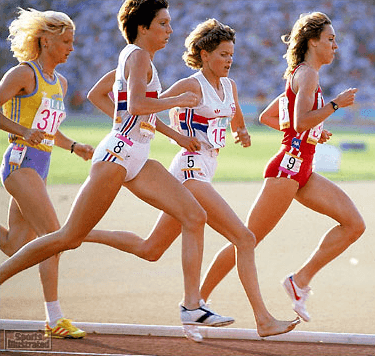
Hill repeats will of course help if you’re racing here

Well, maybe not exactly breaking but a recent study backs up what we’ve known for some time. It also adds to the picture a bit.

This study found that hill repeats of any kind improved a runner’s 5K performance by about 2%. That’s a pretty significant number. For a 20 minute 5K runner, 2% would be a 24 second improvement.

What I found interesting here is that they looked at repeats at different intensities and how that affected running economy and 5K performance. The result was that the highest intensity hill repeats improved running economy the most but, to quote the author, "there was no clear optimum for time-trial performance". In other words, while running economy improved most with the highest intensity hill repeats, other factors played into making 5K performance gains similar across all intensities.

What to take from this? First, hill repeats are good. No news here. Second, high intensity repeats are great for running economy. This shouldn’t be a huge surprise. We’ve known that short bursts of high intensity work are good for running economy already. That’s why we all do strides, even marathoners. Many runners would already at times take those strides to a hill to get a little more intensity. Third, there are other benefits to longer repeats. Again, we already knew this. That’s why hill repeats have been popular for decades.

So why am I writing about something that just tells us what we already know? First, it’s always good to make sure the science confirms what you already believe. Second, it never hurts to remind ourselves of what we’ve already known. We all know strides are good for us but I know I’ve forgotten this lesson at times and gotten away from doing strides. Have you gotten away from hill repeats? Maybe this is an opportunity to consider whether it would be a good idea to add them back.

Barefoot running: It’s about how you run more than what you run in

This article was originally posted by Ryan at the original HillRunner.com Blogs.

Image

Another study on barefoot running is out. I find this one to be of particular interest because it’s asking a question I would like to see asked more often: is the benefit of barefoot running due to what you’re running in (nothing or next to nothing) or how you’re running (eliminating the heavy heel strike)? I have my opinion on this answer but I’d like to see science back it up.

This is a small study (only 12 runners) so it hardly closes the book on the question but it’s a step forward in beginning to explore the question.

As for the answer itself, it seems to conclude the same thing many people, myself included, believed. The benefits (and risks) of barefoot running have to do more with how we run (forefoot plant) when barefoot than what we’re running in.

Specifically, the runners, whether wearing shoes or not, gain shock absorption when switching to a forefoot plant. Going barefoot and keeping your heel plant, not surprisingly, increases injury risk. The risk of switching to a forefoot plant, also not surprisingly, is an increased load on your calf muscles. Specifically, the gastrocnemius, which is the outer muscle of the calf.

What’s the takeaway of this? Here’s what I’m taking out of it. If you’re going to consider minimal or "barefoot" shoes or barefoot running itself, remember, the shoes are a tool. It’s not the shoes that improve your running, it’s the form changes that the lack of cushioning in those shoes forces. At the same time, proceed with caution. Your calves will need to work harder than they are used to if you currently heel plant. As with anything, build up slowly.

In other words, the same thing some of us have been saying for years, going back even before Chris McDougall’s book was published.

Thoughts on GPS watches after 6 months with one

This article was originally posted by Ryan at the original HillRunner.com Blogs.

Image

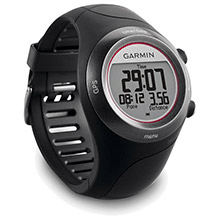
It’s been just over 6 months now since I began using my Garmin Forerunner 410. My first run with the Garmin was September 8th. As any of you who know me well know, I’ve long had concerns about using GPS devices for training. I have to say that some of my concerns have been proven correct through my own experience, while others have been allayed. At the same time, I’ve found some benefits to using GPS.

First, to go over my primary concerns and what I’ve found through personal experience:

Runners trust the GPS too much. I know it’s not 100% accurate so I haven’t fallen into this trap but I’ve seen the inaccuracies that show how dangerous this trap can be. When running on roads, it’s usually quite accurate. There is some error in the early stages when the device is still locking on to the satellites and you can always find error even late in a run but it will get your distance pretty accurate most of the time. There are exceptions, though, so you’re playing with fire if you place too much trust in your GPS. On wooded trails, it’s another story. You will get very strange results. Don’t be surprised when your readings turn out very inaccurate. I’ve heard of similar problems when surrounded by tall buildings in urban areas but I have no personal experience in this regard.

As a sidenote, certified race courses as well as many that aren’t certified are measured with far more accurate methods than GPS. Please don’t tell race directors their courses aren’t accurate based only on the fact that your GPS said it was a little off. Chances are it’s the path you took through the course and/or inaccuracies in GPS measurement that are a little off.

Runners are too dependent on the GPS, forgetting how to run by feel and focusing too much on trying to hit the "right" number. This is a real problem. Maybe it’s partly because I’ve always been a numbers guy but this has personally been a constant battle. The numbers are too readily available. I can check my current mile pace at any time in real time and it’s generally reasonably accurate. I can get reasonably accurate mile splits. This creates constant problems for a numbers guy like me. Maybe it’s different for others, though that’s not what I hear when I listen to other runners talk about using their GPS watches, but I’m constantly working on paying less attention to the Garmin. I generally do a good job but I won’t deny falling into the trap at times.

Now, a couple primary benefits I’ve found:

Workouts are even easier. Want to do mile repeats? Not a problem. Set your watch to give you an alert by distance. Want to do timed repeats? Just like any good running watch, it can also handle that. Mile repeats with timed recoveries? No problem. Of course, we can accomplish the same type of workout by time. 5 or 6 minute repeats in place of mile repeats will, for someone running 5-6 minute pace, be the same workout. However, I don’t think I’m alone when I say there’s something nice about doing mile repeats. Also, when not running on a track, it’s nice to have time and distance so you know what paces you were hitting.

Tracking your training is a breeze. This can be a double-edged sword but, used properly, can be very helpful. Just upload your data to Garmin Connect and it’s all there. I’ve been able to easily notice where in my tempo runs I might surge or let up a bit, which has allowed me to focus on those parts. This helps me get more out of my tempo runs and carry over what I learned into my racing so I can run my races more efficiently, which should translate to faster times.

I know I’m leaving off a lot of both pros and cons of GPS watches. I’ll probably touch on some or even expand on the above topics in the future. In the meantime, do you think I left off something that is a significant benefit or detriment? Feel free to comment with pros and/or cons that I left off the list.

New study on the benefits of foam rolling

This article was originally posted by Ryan at the original HillRunner.com Blogs.

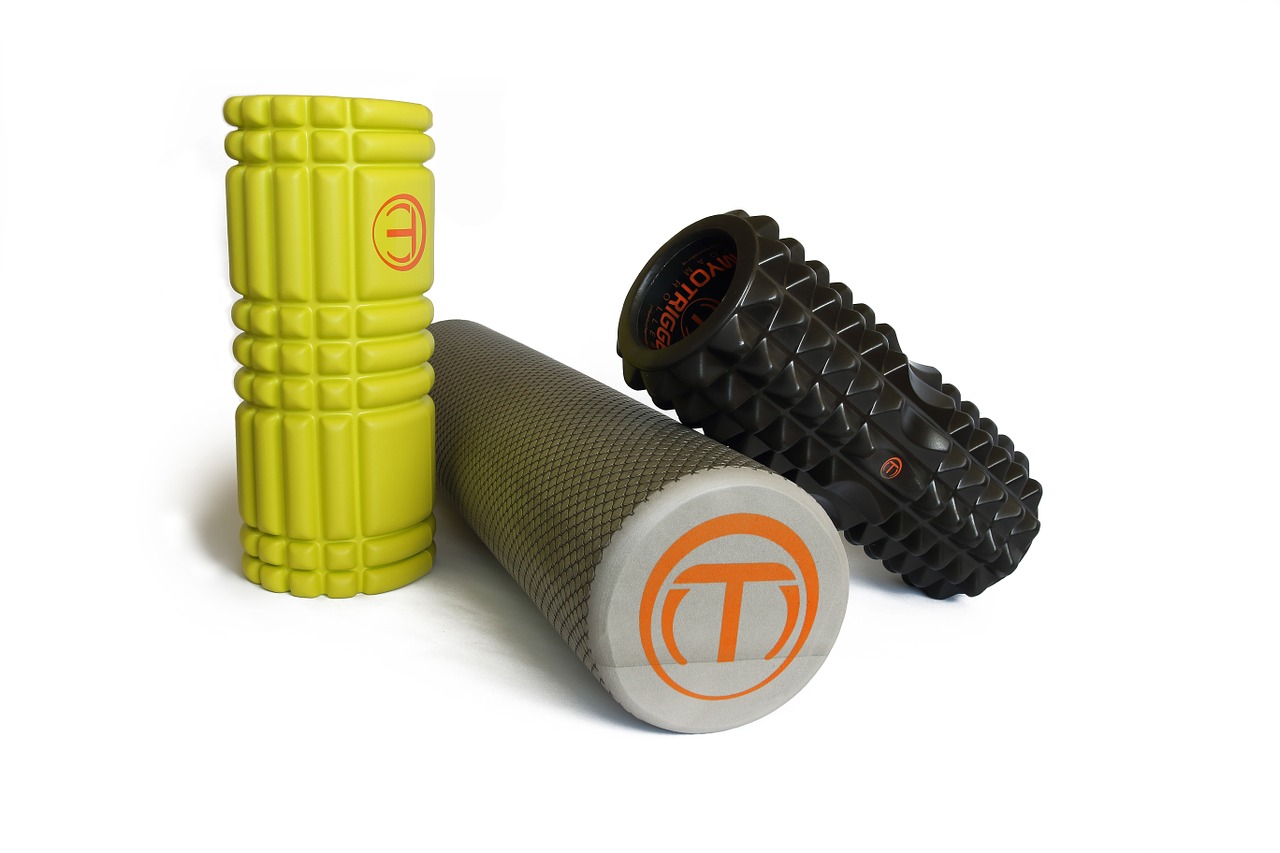
Foam rolling has become very popular for runners. As soon as I got a roller last year to attempt to rehab some hip tightness, I was convinced. Combined with stretching, it took less than a week to relieve the persistent tightness I had been experiencing for quite some time. In the intervening time, it’s helped me quickly handle relapses in the hips, as well as work through calf tightness, hamstring tightness and various other minor problems before they became major or persistent problems.

One of the nice things about foam rolling is that it improves your flexibility without the drawback of reduced power production that static stretching can cause.

However, not much study has been done on foam rolling. The benefits have been anecdotal. Now, anecdotal evidence has its place and I’ve been a strong proponent of foam rolling, as a few of the people I coach can tell you, but it’s nice to see controlled studies show what we have seen anecdotally.

Now, we have the first study.

To sum up the study, participants were tested for knee joint range of motion and muscle strength before, as well as 2 minutes and 10 minutes after foam rolling. Strength was not reduced after foam rolling but range of motion increased by fairly significant amounts.

Now, this was a small study (11 participants) but the results do confirm what we’ve believed all along. Foam rolling is an effective way to increase flexibility without reducing muscle power production.

What should we take from this? Here’s what I’m taking from it. There are good reasons to not do static stretching before a run. We all have heard about the warnings of stretching a cold muscle. Along with that, there is evidence that we do lose power production at least for a period of time after static stretching. This could result in performance decreases if you static stretch before you run. So the question is, if you are tight and need to loosen up before a run, what do you do? Based on this, foam rolling seems like one alternative.

I’ve done pre-run foam rolling before early morning runs just because it feels good and I feel like it helps “wake up” my legs before a run. These results don’t surprise me at all, as I can feel a lot of that early morning tightness disappear after those sessions.

What do you think? Have you tried pre-run foam rolling?

Scroll to Top