Ryan

Let the watch report, not direct

This article was originally posted by Ryan at the original HillRunner.com Blogs.

Image

Used properly, a great tool

Last week, I was listening to the Science of Running podcast with Steve Magness and Jon Marcus when I heard Marcus drop the line "Let the watch report, not direct".

I’ve wanted to write on this topic for a while but that perfect quote left me needing to write about it.

My view on racing with watches is pretty well established. What about training with watches, though? I’m not opposed to wearing a watch while training, am I?

Of course I’m not. However, I think too many people use their watches in the wrong way. Instead of letting the watch report on their training, far too many runners let it direct their training.

What does that mean? It means you’re checking your mile splits on your easy and long runs and adjusting pace to hit some "ideal" or, worse, checking more frequently than every mile to hit that "ideal". It means you’re checking splits in workouts instead of working by effort. Essentially, it means you’re letting the watch dictate what you’re doing while you’re doing it.

What should you be doing instead? Keep wearing the watch unless you can’t break the habit of checking it while you’re running. It is a great tool for reporting on how things went after the run is over. If you can’t stop looking at it, run watchless for a while to break the habit. Then bring it back out.

On easy and long runs, try to not check your watch at all unless you need to in order to determine when to turn around. Instead, let effort dictate your pace. I’m a big fan of "conversational pace" for easy and long runs. Essentially, if you’re running with someone, you should be able to hold a conversation. You might not be able to recite poetry but you should be able to say more than just a few words without having to stop and catch your breath.

In workouts, run by effort instead of targeting a pace. I drive the runners I coach crazy at times (I probably drive some of them crazy all the time) because, for the most part, I try to avoid giving them target paces for workouts in favor of target efforts (5K effort, 10K effort, half marathon effort, etc.).

In the end, look at your watch less during your runs and let it be a data recorder while you’re running. Then, once you’re done, you can look at the data and see what it’s telling you.

Are all elites running the wrong way?

This article was originally posted by Ryan at the original HillRunner.com Blogs.

Image

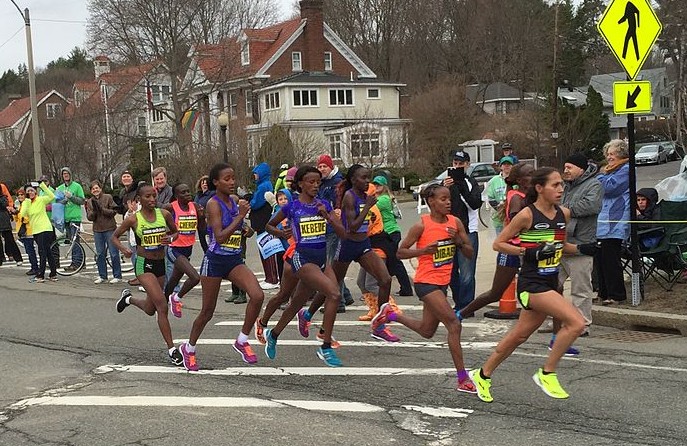
Believe it or not, these people know how to run

Someone sent me this earlier this week. I was writing up a response to it for a blog post when I saw that Alex Hutchinson beat me to the punch.

As for what I was going to write, it was going to cover all that he stated but probably not as well. The simple fact is that gravity pulls you down, not forward. If you use it to pull you forward, it’s going to also pull you down in the process and you’ll have to expend energy to push yourself back up. In short, there is no free lunch.

One other point, though. People keep looking for what all of the elites are doing wrong and what will make all of them look foolish. I remember over a decade ago someone came up with the idea that the elites were all simply more talented than everyone else (there’s some truth to that, of course, but they also train more effectively – it’s the combination of the two that makes them elite) and that he had the training philosophy that was going to revolutionize the sport. Once it caught on with the elites, they would be demolishing all the world records.

The fact is the elites have things mostly right. If they had it all wrong, are we really to believe that someone wouldn’t come along doing things right and blow them away. We’d have a new crop of elites? Let’s get real. Maybe they don’t have everything right but all the low hanging fruit has been picked. There’s no one thing that’s going to make them suddenly get 20%, 10% or even 5% faster instantly. If there was something that significant, it would have been discovered already. What is left to find are the things that will make them fractions of a percent faster.

So let’s stop paying homage to these snake oil salesmen who make these fantastical claims about how they can make elites 10% faster overnight. Let’s take a dose of reality and realize that what the elites are doing is mostly right. Then, let’s learn all we can from them and maybe find ways that things can be improved around the edges.

September’s Monthly Update

This article was originally posted by Ed at the original HillRunner.com Blogs.

September was a mixed month. I started out great having recovered well from an injury running the first seven days. On the eighth day I had a great workout but then tore my calf in the cool down period two miles from home. Hopped and limped home for two full miles. I was just 10 days out from my big goal race of the year – not good. Had five days with no running and then little slow two milers to feel out the calf. Race day was, in my opinion, a poor performance of where I should have been and I was not yet at 100%.

I finished the month out strong while slowing getting back to 100% Last day of the month was an outstanding workout. I did a ten by one minute interval session – the intervals averaged a 5:32 pace!

I only ran on 22 days for a total of 125 miles and 15 hours and 20 minutes of running at an average pace of 7:23 per mile.

Looking forward to one more race this season if I can get enough people together for a 5K team event on November 1st. Otherwise, I’ll settle into late Oct as a “take it easy” month before hitting another base building phase to prepare for an amazing 2016.

Bouncing back from a bad race

This article was originally posted by Ryan at the original HillRunner.com Blogs.

Image

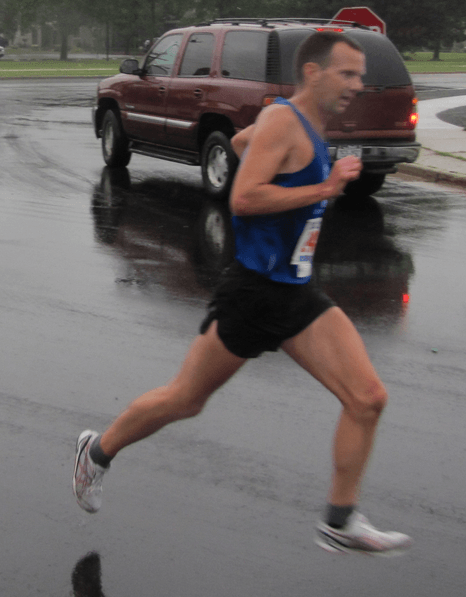
I know I’m still as fit as when I ran 17:15 without the perfect race, if not fitter

Those of you who know me probably know I don’t often run back to back bad races. When I have a bad race, it usually is followed by a very good race. Sometimes, after a bad race, I surprise myself with what I do next.

After having a rough day at Al’s Run, someone emailed me asking about this. Essentially, the question was how do I keep focus and keep training hard after a bad race?

That’s a good question. I see some people go into a downward spiral after a bad race. Personally, I can’t remember many instances where I went into such a spiral. I typically bounce back pretty well after a bad effort. But why?

I think there are a few reasons and I’d like to break them down in the hopes that I can help someone else bounce back from a race.

1) You’re as good as your best race: One of my past coaches, I believe Coach Hall at UW-Stout, once told me after I had a bad race you’re as good as your best race, not as bad as your worst race. Good races are the true indication of your fitness, bad races usually are a result of something else. You can’t race beyond your fitness but you can race short of your fitness for many reasons.

This is about keeping your confidence. It’s easy when you have a bad race to lose confidence but you shouldn’t. You’re still as fast as your best race. If you ran an 18:00 5K a month ago and you ran a 19:00 5K today, unless something drastic happened in the past month, you’re still capable of at least close to 18:00. Believe in that and you can bounce back to 18:00 or even better.

2) Know what went wrong and fix what you have control over: When I have a bad race and write the report on it, I’m not shy about going through the race just how I do in my mind. That includes asking myself what went wrong. I’ve been told I’m just making excuses when I do that but, to me, it’s not about making excuses. It’s about understanding the reasons so I can accept what I didn’t have control over and fix what I did have control over.

For example, in my Al’s Run report, I mentioned three things. The wind, the confusion and frustration with my registration mix-up and the oncoming head cold. Next time out, no matter what happens with my registration or anything else like that, I’m going to try to keep calm and not waste any more energy than necessary or let it take me out of my focus. If people around me are sick, I’m not going to quarantine myself but I’ll take every precaution reasonable to avoid getting sick myself. As for the wind, I’ll adjust as well as I can and accept that I can’t control everything.

3) Use it as motivation: Thinking back to my junior year of high school, I had a horrible race at the Conference cross country meet. I went out harder than I should have and faded to a finish well short of where I should have been. My bad race probably cost our team a conference title and definitely cost me an all-conference honor.

A week later, at the Sectional meet, I had one of the best races of my life. After barely hanging on to a top 20 finish at Conference, I finished 7th or 8th in a race with I believe all the teams from our conference plus many more teams, several of which were very good teams. I was a part of our team going from finishing second at Conference to a surprise second place finish at Sectionals, beating I believe two teams ranked in the top 10 of the state and qualifying for the State meet.

How did I make such a dramatic turnaround? After taking some time to be furious at myself for the stupid mistake I made, I refocused. I wanted to make it up to myself and my teammates. I didn’t get myself nervous with "I have to…" kind of statements but I did everything I could to ensure I would have the best race possible. I kept a level head in the preparation but made sure I did everything as perfectly as possible. Then, once the race started and I made sure I didn’t get out too fast in the first half mile, I channeled the frustration of the prior week into the determination to do everything in my power to help my teammates. I felt like I could have run through a brick wall in that race. I was so focused, so determined to do my absolute best, that nothing was going to get in my way.

To me, that’s the biggest key to bouncing back after a bad race. Keep a level head in your preparation for the next race, keeping that frustration there not as motivation to do something stupid but as motivation to get all your preparations right. On race day, keep it around early on to again do everything right. Then, when it’s time to let loose and run your hardest, let it drive you.

I know some would say you should think positive and not hold on to those negative feelings but I think, channeled properly, that frustration from a bad race can be an excellent motivator. Don’t be afraid to use it.

What do you think?

I know there are some aspects I didn’t cover here. I’d like to hear your thoughts. What do you do to bounce back from a bad race? Do you use the ideas I mentioned above? Do you do something else?

Al’s Run 2015

This article was originally posted by Ed at the original HillRunner.com Blogs.

I was the first of Team Hillrunner to arrive but I always like to be early for races – I get anxious if I am not. As always, I also have a lot of nervous energy before a race and usually pace around like a caged animal. So this time I made sure that I drank water, used the facilities and then meditated. I concentrated on my breathing to relax myself. Eventually, three of our team members showed up; Josh Jackett, Gerald Cameron and Dave Dehart. We chatted and I pinned the bib on my Team Hillrunner shirt. I was still worried a bit about my recent tear to my calf muscle as I was not 100% and would have to monitor that closely so I wouldn’t get carted to my car and hurt the team.

Eventually Ryan Hill came by and we all chatted some more while waiting four our other two teammates Peter and Mike Diamond. When they arrived, we decided to get out there for a warm-up but they opted out due to recent training issues. The warm-up was uneventful but we shared some light conversation and were cheered on by some cheerleaders along the course.

We headed back to our meeting location for final race prep (drink more water and again hit the facilities – just to be sure.) I did some light stretching of the injured calf in hopes of preventing a re-injury. We then headed out to the starting line.

We each worked our way up to a place we felt most appropriate for our skill level but saw some people that clearly didn’t belong there – but hey – that happens at most races. They started the countdown and then we were off and running.

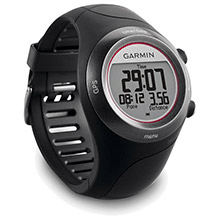
I was checking my pace on my Garmin to be sure I didn’t get out to fast. I wanted to get miles one and two in 6:15s, then miles three and four in 6:10s and mile 5 in whatever I had left. Based on my recent 5K I should have been fairly ready to accomplish that goal. Hit the first mile mark in 6:15 and was exactly where I wanted to be and I was feeling good. The swirling winds didn’t affect me at this point. I felt like I was slowing during mile two so I checked my Garmin – sure enough – SLOW! I kept trying to get myself up that long hill but kept losing speed – there seemed to be more headwind than the first mile. Sure enough – hit mile two in 13:00 even. That was a major let down. I lost 30 seconds and knew that would be nearly impossible to make back up. I also felt a light bit of pain in my injured calf – now I need to be very measured and very mindful.

I knew I could pick up several seconds during the steep downhill during the third mile so I tried to push myself to get back on pace for a 6:10 mile. I was careful but fast in the steep downhill worried about my calf. Sadly, I was slow yet again this time hitting a 6:15 mile. Now I am 35 seconds off pace. I begin to also strategize on finding runners from the Performance Running Outfitters Team to pass as many of them as I can.

Mile four can be a tough mile I fought hard not to fade and looked for someone to try and draft – but the end of the fourth mile really got me – a 6:28 mile. Now I am 51 seconds off pace and felt crushed but knew I had to fight for the team. Somewhere in the last half mile Double (Dave Dehart) caught me gave some encouragement and passed me. I tried to fight to keep up with him but slowly lost some ground. I focused on not getting passed by others and tried to pass as many people as possible. As I rounded the last turn before the finish line Coach Hill was yelling encouragement and telling me that every second counted – this is where I went for broke. Pushed hard and passed several runners.

I was disappointed in my performance because I was hoping to PR and get in under 31 minutes. My final time was 31:59.2 – 60 seconds slower than I wanted to be. Now I was worried about the team as I was the fourth man – and I was so much slower than I should have been.

In retrospect though – coming off of two injuries I did fairly well. I managed 81st out of 2,560 runners and took third in my age group of 88 guys. So I am walking away with some hardware once again. The team did ok especially considering we were missing so many people.

We all had fun and are looking forward to next year!

Scroll to Top